
Electric vehicles in the domestic market are no longer viewed merely as an experimental purchase for efficiency-minded consumers, driven instead by escalating petroleum expenses, expanding fast-charging infrastructure across urban centres, enhanced government subsidies, and more affordable, durable energy storage units. Purchasing an EV currently carries far less uncertainty than it did over the past one to two years, giving prospective owners a solid array of choices under the ₹15 lakh threshold that deliver substantial operational ranges, contemporary amenities, and economical running expenses. This ranking details the five most affordable battery-powered automobiles worth considering in the country, assessing them by practical driving distance, energy capacity, maintenance support networks, and total expenditure rather than sticker costs alone.
Motivations For Purchasing An EV Currently
Reductions in energy expenditure continue to mount—roughly saving ₹60,000 annually—as liquid fuel remains expensive while power replenishment tariffs stay stable. Options have likewise expanded from a single viable choice in 2022 to five distinct lineups today, highlighting why a thorough evaluation of distance capabilities and cell sizes holds greater significance than upfront retail figures.
The market features diverse propositions, from hatchbacks equipped with lifetime battery guarantees to compact utility vehicles utilising innovative rental models such as Battery-as-a-Service to lower initial acquisition barriers.
Comprehensive Overview Of Affordable Electric Automobiles
Prior to examining individual models in depth, buyers can review the following comparative table detailing pricing, energy capacities, and advertised distance figures for all five contenders.
| Variant | Price | Battery Size | Driving Range |
|---|---|---|---|
| Tata Nexon EV | ₹12.49 lakh onwards | 45 kWh | Up to 489 km claimed |
| Tata Punch EV | ₹6.49 lakh (BaaS) / ₹9.69 lakh (Outright) | 30 kWh or 40 kWh | Up to 468 km claimed |
| MG Windsor EV | ₹14.00 lakh onwards | 38 kWh or 52.9 kWh | Up to 449 km claimed |
| Mahindra XUV 3XO EV | ₹13.89 lakh onwards | 39.4 kWh | 456 km ARAI-claimed |
| Tata Tiago EV | ₹6.99 lakh onwards | 19.2 kWh or 24 kWh | 226-285 km claimed |
Detailed Model Breakdown And Specifications
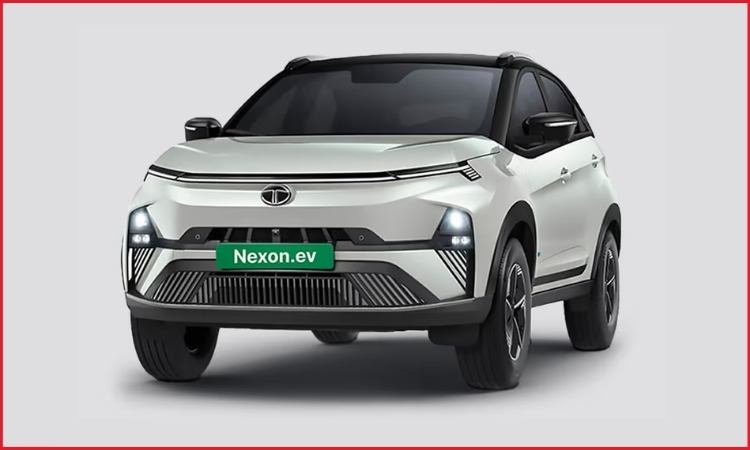
Leading the segment is the Tata Nexon EV, serving as the benchmark against which competitors are judged after spending five years on the market, surpassing one hundred thousand sales, and establishing the most extensive maintenance grid nationwide. It undercuts most alternatives while matching or exceeding practical operational metrics, featuring a 45 kWh unit rated for up to 489 km, though daily driving typically yields 380 to 420 km. Fast replenishment from zero to 80 percent takes 40 minutes using a 60 kW plug, whereas a full replenishment via a 7.2 kW wall box requires roughly six hours and 36 minutes, complemented by a 350-litre cargo hold and a lifetime battery guarantee restricted to the initial purchaser.
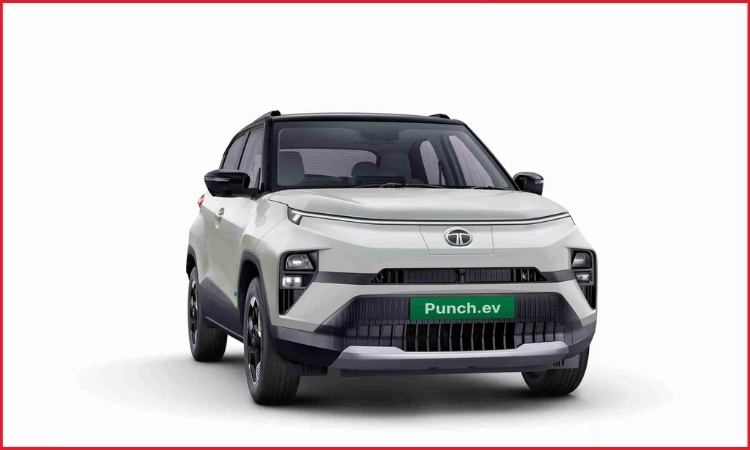
Securing the second spot is the Tata Punch EV, which employs pricing strategies to lower entry thresholds to roughly ₹6.49 lakh via its BaaS structure, or ₹9.69 lakh when purchased outright. It provides either a 30 kWh or 40 kWh configuration yielding a maximum advertised distance of 468 km, with daily use returning 335 to 355 km on the larger pack. Replenishing from 20 to 80 percent takes 26 minutes on the 40 kWh variant, and a complete wall box cycle requires about six and a half hours, while luggage capacity totals 366 litres alongside a 14-litre front storage compartment.
- Tata Nexon EV: Features a 45 kWh pack, 350 litres of boot space, and a lifetime battery warranty for the first owner.
- Tata Punch EV: Offers 366 litres of cargo volume plus a 14-litre frunk, with a choice of 30 kWh or 40 kWh batteries.
- MG Windsor EV: Incorporates reclining rear seats, a maximum storage capacity of 579 to 604 litres, and a 52.9 kWh battery.
- Mahindra XUV 3XO EV: Built on INGLO architecture, delivering 147.51 bhp from a 39.4 kWh cell.
- Tata Tiago EV: Serves as a hatchback option with a 240-litre boot and quick replenishment adding 100 km of distance in 18 minutes.
Concluding Industry Assessment
The MG Windsor EV occupies the upper limit of this financial bracket at ₹14.00 lakh, distinguished by its large 52.9 kWh energy storage unit and a spacious cabin equipped with reclining rear accommodations. It delivers a certified 449 km distance on the bigger pack, replenishment times of 45 to 50 minutes on a 60 kW apparatus, and a luggage volume ranging between 579 and 604 litres, alongside the same lifetime original-owner cell protection.
Mahindra’s entry, the XUV 3XO EV, enters from ₹13.89 lakh utilising a dedicated platform with a 39.4 kWh configuration that puts out 147.51 bhp, promising 456 km under test conditions though company estimates suggest 285 km in regular traffic. Replenishing from flat to 80 percent occupies 50 minutes on a 50 kW charger, with a wall box requiring six and a half hours and an 8-year or 160,000 km warranty backing the energy unit. Finally, the Tata Tiago EV addresses cost-sensitive buyers starting at ₹6.99 lakh with 19.2 kWh or 24 kWh options, delivering up to 285 km of certified distance, a 240-litre cargo area, and a lifetime unlimited-kilometre cell warranty.