
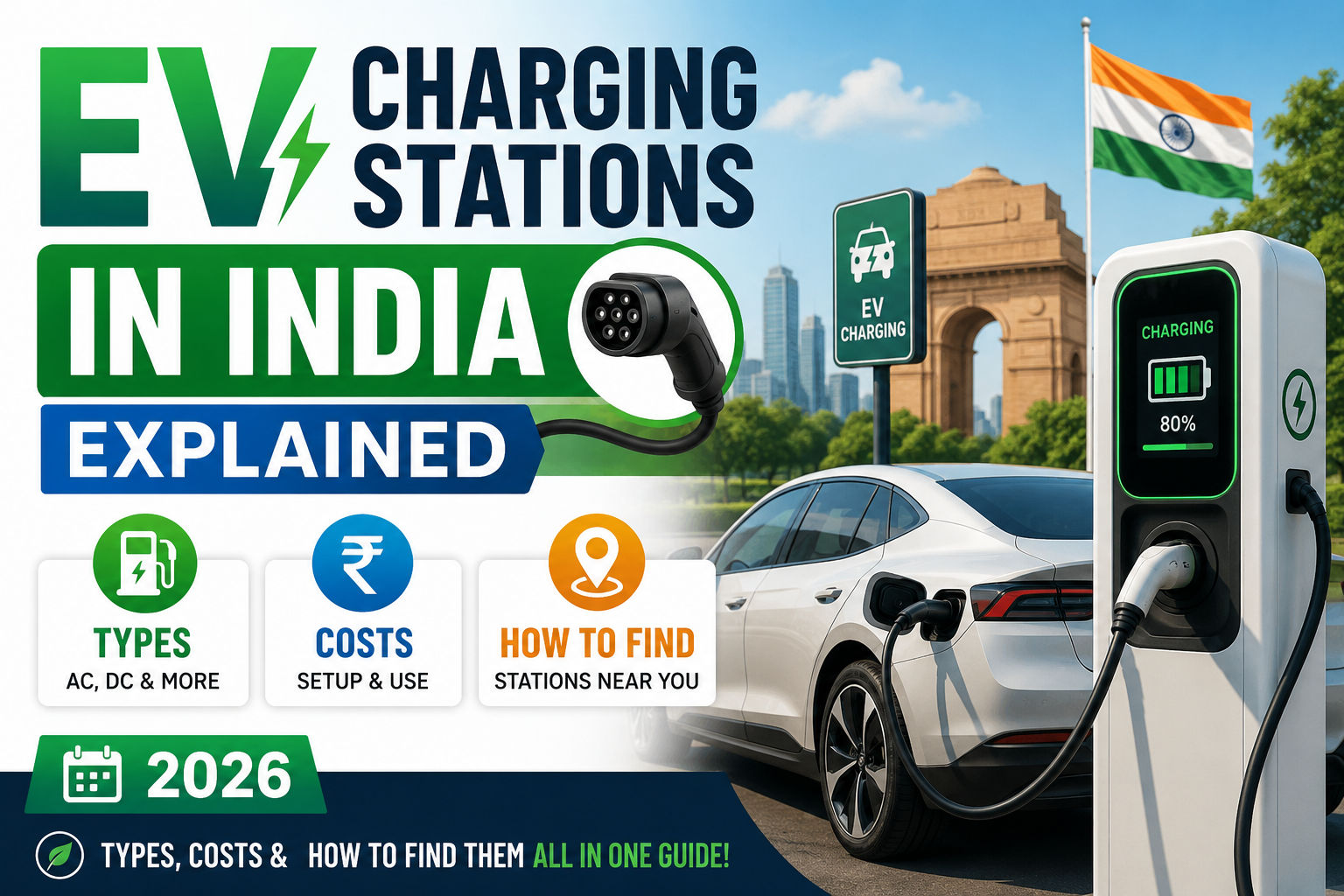
Entering the electric vehicle market can initially seem intimidating due to technical abbreviations like AC, DC, CCS2, and kilowatts. However, understanding the fundamentals eliminates range anxiety and simplifies everyday operation. This overview breaks down public charging infrastructure across India, detailing the operational categories, pricing structures, and methods for locating functional plugs.
AC And DC Charging Categories
Virtually all electric vehicle replenishment relies on two primary categories, distinguished solely by charging velocity. Alternating-current (AC) charging operates slower because the internal vehicle charger handles the power conversion. This method suits locations where vehicles remain parked for extended durations, such as domestic overnight setups, workplaces, or retail car parks, utilizing home wall boxes and destination units.
Direct-current (DC) fast charging bypasses the onboard converter to deliver energy directly to the energy storage system at high speeds, typically achieving a 10 to 80 percent replenishment within 30 to 60 minutes. These installations are positioned along highway corridors and dedicated urban hubs for rapid mobility needs.
Modern passenger electric vehicles operating in India predominantly utilize the CCS2 standard for rapid DC connections, ensuring compatibility across most public fast infrastructure. Standard Type 2 plugs serve everyday AC applications.
Public And Domestic Charging Expenses
| Charging Type | Cost Per Unit | Application |
|---|---|---|
| Home Charging | Rs6-9 per unit | Domestic overnight setup |
| Public AC Charging | Rs8-15 per unit | Extended parking stops |
| Public DC Fast Charging | Rs18-25 per unit | High-speed highway top-ups |
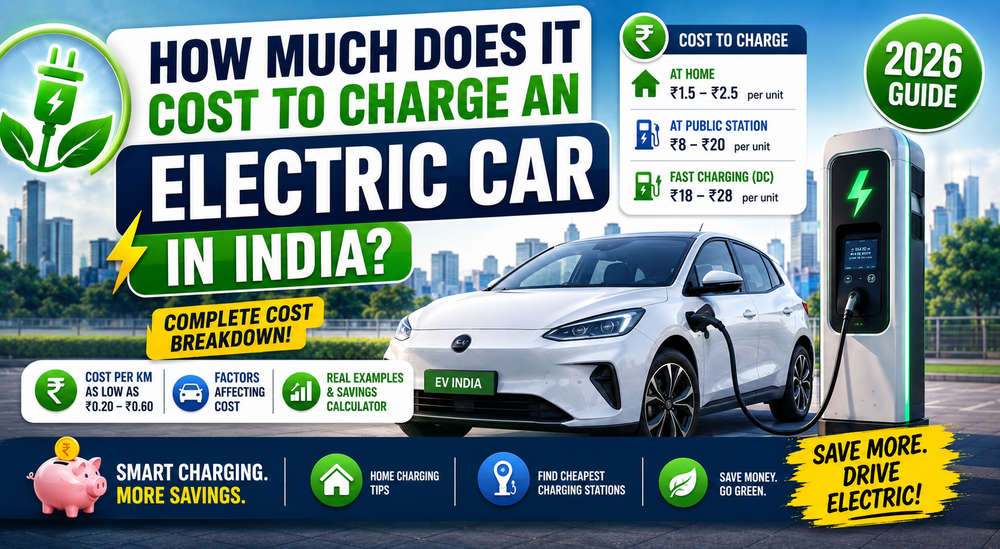
Domestic energy supply provides the most economical refuelling at approximately Rs6 to Rs9 per unit, translating to roughly Rs1 to Rs1.5 per kilometre. Public AC installations cost between Rs8 and Rs15 per unit, whereas public rapid DC hubs range from Rs18 to Rs25 per unit to account for the delivery speed.
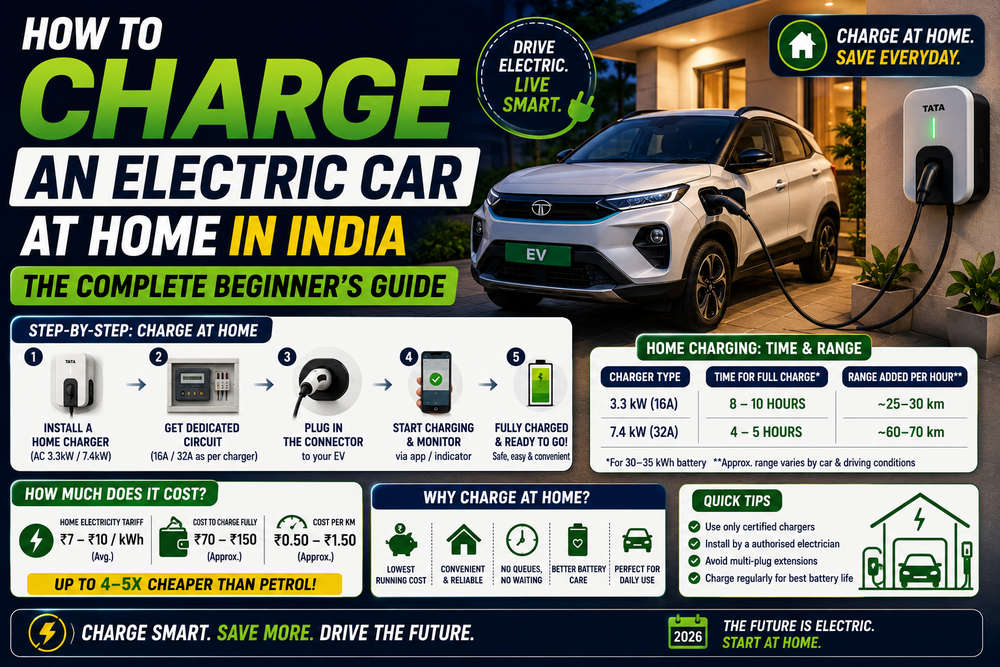
A full battery top-up that might total Rs300 at a domestic residence can exceed Rs800 at a high-speed public corridor. Experienced owners typically prioritize home or workplace alternating-current connections for daily use, reserving rapid public outlets specifically for long-distance journeys.
Locating Stations And Network Growth
Drivers can track availability through several discovery tools. Network operators including Tata Power, ChargeZone, and Statiq maintain dedicated applications that display live unit availability and process transactions. Modern electric cars frequently integrate nearby charger mapping directly onto the dashboard display, often providing real-time operational status.
The upcoming government-backed Unified Bharat eCharge platform aims to consolidate diverse networks into a single application for streamlined location and payment processing. Additionally, oil marketing companies such as BPCL, HPCL, and IOCL continue integrating rapid chargers across retail fuel stations and highway routes.
- Dedicated network applications for live status and billing
- In-car satellite navigation systems
- The upcoming Unified Bharat eCharge platform
- State-owned fuel forecourts along highways
India has surpassed approximately 29,000 active public charging locations, with expansion accelerating significantly over a short period. The central PM E-DRIVE initiative allocates around Rs2,000 crore toward public infrastructure with a projected goal exceeding 72,000 units.
Practical Charging Strategy For Owners
Adopting a structured routine ensures seamless electric vehicle operation. Daily commuting needs are best met by connecting the vehicle to an alternating-current source overnight at home or the workplace to ensure a full battery every morning. Long-distance itineraries require planning one or two high-speed direct-current stops aligned with meal breaks or rest periods.
Emergency needs are supported by a widespread network of public AC and DC units, alongside growing availability at fuel stations. Understanding these core principles ensures efficient mobility without operational complications.