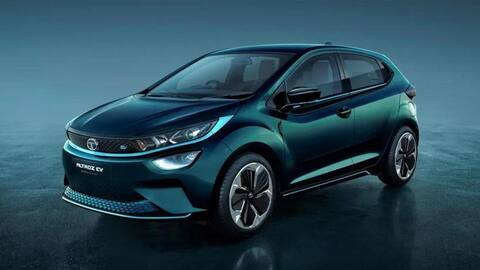
The electric vehicle revolution in India is accelerating, and Tata Motors, as the undisputed leader, is strategically expanding its portfolio. Following the massive success of the Nexon EV and the game-changing Tiago EV, all eyes are now on the next logical and highly anticipated launch: the Tata Altroz EV. This isn’t just another electric car; it represents the electrification of Tata’s premium, 5-star safe ALFA-ARC platform, poised to create a new benchmark for safety, style, and performance in the affordable EV segment. While Tata has been teasing the Altroz EV since its concept debut in 2019, the wait seems to be nearing its end as spy shots and industry whispers intensify.
This comprehensive guide consolidates everything we know, speculate, and can logically deduce about the Tata Altroz EV as of 2025. We’ll analyze spy shots, decode executive statements, and leverage Tata’s current EV strategy to paint a clear picture of its expected range, battery technology, performance figures, features, and most importantly, its potential price and launch timeline. Furthermore, we’ll delve into how it will strategically position itself to not cannibalize but complement and surpass the incredibly successful Tiago EV, offering a compelling upgrade path for EV aspirants.
The Long Wait: From Concept to Imminent Reality
The Altroz EV was first unveiled as a stunning concept at the 2019 Geneva Motor Show, showcasing Tata’s “Impact Design 2.0” language in an electric avatar. The production version has been delayed, primarily due to:
Focus on High-Demand Models: Tata prioritized the launch and production ramp-up of the Nexon EV and Tiago EV to capitalize on immediate market demand.
Battery Technology Evolution: Waiting for battery cell costs to reduce and energy density to improve, ensuring a competitive and viable product.
Supply Chain Stabilization: Navigating global semiconductor and battery supply chain issues.
Recent heavy camouflage sightings of near-production-ready test mules indicate that the development and testing phases are in their final stages, pointing towards a launch in the near future.
Expected Powertrain, Battery, and Range
The Altroz EV will be based on Tata’s proven and versatile Ziptron EV technology. However, it will feature a more advanced iteration.
Expected Battery Pack: A larger battery pack than the Tiago EV is a given. Speculations point towards two possible options:
Base Variant: ~25 kWh pack (similar to Nexon EV MR)
Long-Range Variant: ~30-35 kWh pack
Expected Range:
Claimed (MIDC): 350 – 450 km
Real-World (Estimated): 280 – 380 km
This would comfortably place it between the Tiago EV (315 km MIDC) and the Nexon EV (465 km MIDC), creating a perfect mid-tier option.
Electric Motor & Performance:
Power Output: Expected to be more powerful than the Tiago EV (74 PS) but less than the Nexon EV (129 PS). A power figure between 90-110 PS is highly likely.
Performance: This will make the Altroz EV significantly quicker than the Tiago EV, offering 0-60 km/h times that could rival many premium hot hatches, making it not just efficient but also fun to drive.
Design and Feature Expectations: An Electric Makeover
Exterior: The overall silhouette will remain true to the stunning Altroz. Expect EV-specific cues:
A sealed-off grille with a contrasting color insert and blue EV accents.
Newly designed, aerodynamic alloy wheels.
Revised front and rear bumpers.
EV badging and a dedicated charging port location.
Interior and Features: The cabin will leverage the Altroz’s premium foundations and add EV-specific tech.
A larger, free-standing touchscreen infotainment system (likely 20.32 cm or more) with dedicated EV screens showing range, consumption, and charging data.
A fully digital instrument cluster.
Enhanced iRA connected car technology with features like remote charging control, scheduled charging, and battery health monitoring.
Single-pane sunroof (a segment-first for an electric hatchback).
Ventilated seats and wireless phone charging are strong possibilities.
The Unbeatable USP: 5-Star Safety in an EV
This is the Altroz EV’s trump card. It will inherit the ultra-rigid ALFA-ARC platform that secured a 5-star Global NCAP rating for its ICE counterpart. In a segment where no other electric hatchback (including the Tiago EV, which scored 4 stars) has a 5-star rating, this will be a monumental advantage, appealing directly to safety-conscious families making the switch to electric.
Price and Launch Date Predictions
Expected Launch Timeline:Festive Season 2025 (Around Diwali). Tata has a history of making big announcements during this period.
Expected Price Range (Ex-showroom):₹ 12 – 15 Lakh
This pricing strategically positions it above the Tiago EV (₹ 8.69 – 12.04 Lakh) and below the Nexon EV (₹ 14.74 – 19.94 Lakh), perfectly plugging the gap in Tata’s EV portfolio.
Altroz EV vs Tiago EV: A Strategic Step-Up
The Altroz EV is not meant to replace the Tiago EV; it’s designed to be a compelling upgrade. Here’s how it will beat its smaller sibling:
Parameter
Tata Tiago EV
Tata Altroz EV (Expected)
Advantage for Altroz EV
Platform & Safety
4-Star GNCAP
5-Star GNCAP (Inherited)
Massive. Unmatched safety in the segment.
Segment & Space
Premium Hatchback
Premium Hatchback
More interior space, especially width and boot capacity.
Range (Real-World)
~200-250 km
~280-380 km
Significantly more, reducing range anxiety.
Performance
74 PS, 114 Nm
~90-110 PS, Higher Torque
Much quicker and more responsive.
Features & Premiumness
Good
Better (Sunroof, Digital Cluster, etc.)
A more feature-rich and luxurious cabin.
Price
₹ 8.69 – 12.04 Lakh
₹ 12 – 15 Lakh
Higher, but justified by the upgrades.
Conclusion: The Awaited Game-Changer
The Tata Altroz EV is shaping up to be the most significant EV launch in the sub-₹15 lakh segment. It promises to combine the Tiago EV’s mass-market appeal with the Nexon EV’s advanced technology and, most importantly, the Altroz’s class-leading safety. For the Indian consumer, it will offer a guilt-free, zero-emission family hatchback that doesn’t force you to compromise on space, features, or—most critically—safety. While the wait has been long, the product it promises to deliver appears to be well worth it. The Altroz EV is not just another electric car; it’s the car that could truly democratize premium, safe electric mobility in India.
FAQs
Why has the Altroz EV launch been delayed for so long?
The delays were strategic. Tata focused on establishing and meeting the massive demand for the Nexon EV and Tiago EV first. They also used the time to secure better battery technology and pricing, ensuring the Altroz EV is a competitive and profitable product when launched.
Will the Altroz EV have a fast-charging capability?
Absolutely. It will support DC fast charging, likely allowing a 10-80% charge in approximately 60 minutes, similar to other Ziptron-equipped models.
Can the Altroz EV’s battery be leased instead of purchased?
Tata offers a battery leasing program for the Tiago EV and Nexon EV. It is highly probable that a similar subscription model will be extended to the Altroz EV to lower its upfront purchase price.
How will it compete with the upcoming Hyundai Creta EV?
They will cater to different segments (hatchback vs. SUV). The Altroz EV’s primary advantage will be its 5-star safety pedigree and potentially a more attractive price point. The Creta EV will offer more space and a higher driving position.
Should I wait for the Altroz EV or buy a Tiago EV now?
If you need a car immediately and the Tiago EV’s range and size suffice, it remains an excellent choice. However, if you can wait and your budget allows, the Altroz EV will offer more space, significantly more range, better performance, and superior safety, making it a future-proof investment.
Tags: Tata Altroz EV, Altroz Electric, Altroz EV Launch Date, Altroz EV Price, Altroz EV Range, Tata EV 2025, Altroz vs Tiago EV, Electric Hatchback India, Ziptron EV Technology, ALFA-ARC EV