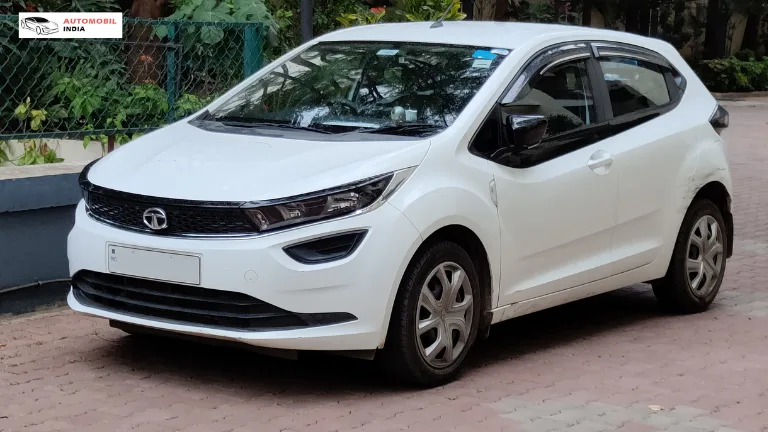
The Tata Altroz with the 1.2-liter turbo-petrol engine, branded as the i-Turbo, promised to solve the one significant criticism of an otherwise excellent hatchback – a lack of power. While the standard naturally aspirated engine is adequate for city duties, it left enthusiasts and highway drivers wanting more. The i-Turbo, with its 110 PS and 140 Nm, vowed to inject excitement into the Altroz’s sophisticated package. But how does this engine hold up over time and across the diverse, often challenging conditions of India? Promises made in a showroom are one thing; the reality of daily ownership over thousands of kilometers is another.
This is not a first-drive impression or a short-term test. This is a comprehensive, long-term ownership review after covering 30,000 kilometers with the Tata Altroz i-Turbo over 18 months. We’ve experienced it through scorching summers, heavy monsoons, endless highway cruises, and grueling bumper-to-bumper city traffic. This report card covers everything from performance and fuel efficiency to maintenance costs, niggling issues, and overall reliability, giving you an unvarnished look at what it’s truly like to live with Tata’s premium turbocharged hatchback.
The Purchase Decision and Initial Impressions
The decision to choose the Altroz i-Turbo over competitors like the Hyundai i20 Turbo or the Volkswagen Polo TSI was driven by its unbeatable 5-star safety rating, premium build quality, and the desire for a unique product. The initial delivery process was smooth, and the first 1,000 km running-in period passed without incident. The immediate difference from the NA engine was apparent: the car felt eager, responsive, and finally had the power to match its premium credentials.
Performance Deep Dive: City, Highway & Hills
City Performance (0-2,500 RPM):
Turbo Lag & Throttle Response:Below 1,800 RPM, there is a noticeable turbo lag. The car feels slightly dull until the turbo spools up. However, once past this threshold, the surge is linear and strong. In peak traffic, this requires a slightly heavier foot, but it’s easily manageable.
Maneuverability:The light steering and excellent visibility make it a brilliant city car. The clutch is light, and the gearbox, though not the slickest, is precise enough.
Verdict:8/10 – Once you learn to keep it in the powerband, it’s a potent city car.
Highway Performance (2,500-5,000 RPM):
Cruising:At 100 km/h in 5th gear, the engine sits at a relaxed ~2,700 RPM. The cabin remains quiet, and the car feels stable and planted.
Overtaking:This is where the i-Turbo shines. A downshift to 4th or even 3rd gear unlocks serious overtaking potential. The 80-120 km/h acceleration is brisk and inspires confidence on single-lane highways.
High-Speed Stability:The Altroz platform is superb. There is no nervousness even at triple-digit speeds.
Verdict:9/10 – A complete transformation from the NA version, making it a capable mile-muncher.
Hill & Ghat Performance:
Tackling the winding roads of the Western Ghats was a revelation. The combination of the torquey engine and well-tuned suspension meant steep inclines were tackled with ease without constantly rowing the gearbox. The engine braking on descents was also adequate.
Real-World Fuel Efficiency (Over 30,000 km)
This is a critical metric for any turbo-petrol car in India. Our figures are based on the tankful-to-tankful method.
Pure City Driving (Heavy Traffic):10 – 12 km/l
Mixed Driving (City + Highway):14 – 16 km/l
Pure Highway Driving (100-120 km/h):17 – 19 km/l
Best Recorded (Careful Driving):5 km/l
Overall Average (30,000 km):2 km/l
Analysis: The fuel efficiency is respectable for a turbo-petrol engine of this size. It’s not as efficient as a Maruti Suzuki K-series engine in the city, but it’s on par with or better than many other turbocharged rivals on the highway. The efficiency is highly dependent on the driver’s right foot.
Ride, Handling, and Refinement
Ride Quality:Remains the Altroz’s strongest suit. It glides over broken roads and speed breakers with a thud-free, sophisticated damping that shames many more expensive cars. After 30,000 km, the suspension feels as tight as day one.
Handling:Safe, predictable, and engaging enough for a hatchback. There is body roll, but it’s well-controlled. The Racer variant might offer slightly sharper dynamics.
Braking:The brakes are confident and offer good bite. No fade was experienced even during aggressive mountain driving.
Refinement (NVH):The engine is smooth and fairly quiet. However, a characteristic three-cylinder thrum is audible at idle and under hard acceleration, which adds to the sporty character but might not appeal to those seeking absolute silence.
Ownership Costs: Maintenance & Service
Service History & Costs:
1st Service (1,000 km):₹ 2,800 (Oil change, filter, general check-up)
2nd Service (10,000 km):₹ 5,200 (Oil, filter, air filter cleaning, wheel rotation)
3rd Service (20,000 km):₹ 7,500 (Oil, oil filter, air filter, cabin filter, brake cleaning)
4th Service (30,000 km):₹ 9,000 (All of the above + spark plug replacement)
Total Maintenance Cost (30,000 km): ₹ 24,500 Average Cost per Kilometer (Maintenance): ₹ 0.82/km
Analysis: The service costs are reasonable for a premium hatchback. They are higher than a Maruti but competitive with Hyundai and Volkswagen. The service network experience was mostly positive, though the expertise level can vary between dealerships.
Reliability & Niggles: The Good and The Not-So-Good
The Good (What Held Up Perfectly):
Engine & Turbo: No loss of power, no unusual noises, no oil leaks.
Clutch & Gearbox:Smooth and precise, with no issues.
Suspension:Rock-solid, with no squeaks or rattles developed.
Interior Materials:No unusual wear and tear on seats, steering, or buttons.
Paint & Body:Excellent build quality, no panel gaps issues, paint has held up well.
The Not-So-Good (Issues Faced):
Interior Rattles (Score: 7/10 Severity):A mild rattle developed from the driver-side door panel around the 15,000 km mark. It’s intermittent and only audible on very bad roads. It was fixed during a service but resurfaced mildly.
Infotainment Glitch (Score: 4/10 Severity):The Harman touchscreen froze twice in 18 months. A system reset (holding the power button) solved it both times.
AC Blower Noise (Score: 5/10 Severity):A slight whirring noise from the AC blower at the highest speed setting started recently. Not a deal-breaker, but noted.
Resale Value Assessment
After 18 months and 30,000 km, the car was evaluated by used car platforms. The estimated resale value stands at approximately 65-70% of the ex-showroom price, which is healthy for a Tata product and reflects its desirability, especially in its turbocharged avatar.
Pros and Cons: The 30,000 km Verdict
Pros:
Superb ride quality and high-speed stability.
Potent turbo-petrol engine that transforms the driving experience.
Best-in-class safety (5-star Global NCAP).
Premium and well-built interior with good space.
Respectable highway fuel efficiency.
Cons:
Noticeable turbo lag at very low RPMs.
Intermittent interior rattle.
Fuel efficiency in heavy city traffic is just average.
Three-cylinder thrum might not appeal to everyone.
Conclusion
Is the Tata Altroz i-Turbo Worth Your Money? Absolutely, yes. The Tata Altroz i-Turbo is a compelling package that successfully addresses the primary weakness of the standard car. Over 30,000 km, it has proven to be a reliable, enjoyable, and practical companion. The performance boost is significant and tangible, making it not just a safe and premium hatchback, but a genuinely fun one to drive. The few niggles encountered are minor and typical of cars in this segment. If you value safety, comfort, and now, performance, the Altroz i-Turbo is arguably one of the most well-rounded hatchbacks in the Indian market today. It’s a car you can buy with your heart, without your head having to protest.
FAQs
Is the turbo lag in the Altroz i-Turbo a deal-breaker?
Not at all. It’s a characteristic of most small turbocharged engines. Once you adapt your driving style to keep the revs above 1,800 RPM, the car feels responsive and quick. It becomes second nature.
How expensive is it to maintain compared to the normal Altroz?
Maintenance costs are only marginally higher, primarily due to the requirement for full synthetic engine oil. Other consumables like filters and spark plugs are similarly priced.
Has the performance degraded over 30,000 km?
No noticeable degradation in performance. The engine feels as strong and responsive as it did when new, provided regular servicing is done on time with the correct grade of oil.
Is the Altroz i-Turbo suitable for a first-time car buyer?
Yes, but with a caveat. The turbocharged performance requires a more mature right foot, especially for a new driver. The standard NA engine might be a safer and more forgiving choice for an absolute beginner.
Would you buy it again?
Without a doubt. The combination of safety, comfort, and now, genuine performance, makes it a unique and highly satisfying package that has aged well over our ownership period.
Tags: Tata Altroz i-Turbo, Altroz Long Term Review, Tata Altroz Ownership, Altroz Turbo Reliability, Altroz Fuel Efficiency, Tata Hatchback Review, Altroz Performance, Indian Car Long Term Test, Turbo Petrol Car India