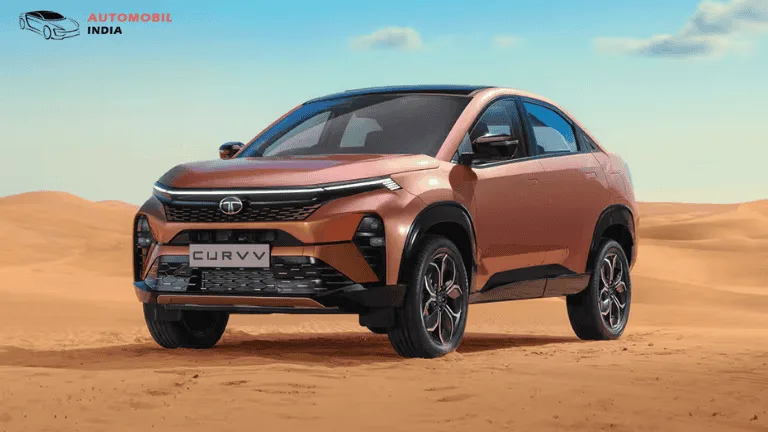
In the modern automotive landscape, safety has evolved from passive protection to active prevention. The pinnacle of this evolution is ADAS, or Advanced Driver-Assistance Systems. As features like Adaptive Cruise Control and Lane Keeping Assist become key differentiators in the premium segments, all eyes are on new launches to see if they keep pace. The Tata Curvv, poised to be a flagship model, carries the weight of Tata’s “safety first” reputation. A critical question for potential buyers is: Will the Tata Curvv be equipped with ADAS?
This in-depth analysis explores the compelling evidence, strategic rationale, and technical feasibility of ADAS coming to the Tata Curvv. We’ll examine Tata’s current trajectory with this technology, dissect the features we can expect, and assess how a Curvv with ADAS would position itself against tech-savvy rivals like the MG Astor, Volkswagen Taigun, and Hyundai Creta. For the safety-conscious buyer looking toward the future, this article provides a clear picture of the Curvv’s potential as a technologically advanced guardian on the road.
The Evidence: Why ADAS on the Curvv is Almost a Certainty
Segment Benchmarking:The compact SUV segment where the Curvv will compete has already embraced ADAS. The MG Astor, Volkswagen Taigun/Tiguan, and Skoda Kushaq/Slavia all offer Level 1 or Level 2 ADAS. For the Curvv to be a true top-tier contender, omitting this technology would be a significant competitive disadvantage.
Tata’s Upward Mobility:Tata Motors is on a clear mission to move upmarket. The Curvv, with its premium price tag and positioning, is the perfect vehicle to introduce their most advanced safety and convenience technology. ADAS is a hallmark of a premium modern vehicle.
Existing R&D and Testing:Spy shots of heavily camouflaged Curvv test mules often show suspicious hardware in the front grille and windshield—prime locations for radar sensors and camera modules essential for ADAS functionality.
The Safari & Harrier Precedent:Tata has already introduced a sophisticated ADAS suite in the facelifted Safari and Harrier. This proves that Tata has the technology developed, calibrated, and ready to deploy on other models. Trickling this down to the Curvv is a logical and cost-effective next step.
Expected ADAS Features: A Level 2 Capability
If the Curvv gets ADAS, it will almost certainly be a Level 2 system, meaning it can control both steering and acceleration/deceleration simultaneously under specific conditions, with the driver remaining fully engaged and responsible.
Here are the key features we can expect, likely bundled in a top “Fearless” or “Adventure” variant:
Adaptive Cruise Control (ACC):
What it does:Maintains a set speed, but more importantly, automatically adjusts that speed to maintain a safe distance from the vehicle ahead.
Indian Context:A game-changer for highway driving, reducing driver fatigue on long journeys.
Lane Keeping Assist (LKA) & Lane Departure Warning (LDW):
What it does:LKA provides gentle steering inputs to keep the car centered in its lane. LDW provides an alert (visual, audible, or haptic) if you unintentionally drift out of your lane.
Indian Context:Crucial for preventing accidents caused by driver drowsiness or distraction on highways.
Autonomous Emergency Braking (AEB):
What it does:Uses sensors to detect an imminent collision with a vehicle, pedestrian, or cyclist and automatically applies the brakes if the driver fails to respond.
Indian Context:Potentially the most life-saving feature, especially in chaotic urban and semi-urban traffic conditions.
Forward Collision Warning (FCW):
What it does:Provides an early audio/visual warning of a potential frontal collision, prompting the driver to take action.
High Beam Assist (HBA):
What it does:Automatically switches between high and low beams based on oncoming traffic or preceding vehicles, improving nighttime visibility without dazzling other drivers.
Potential Additional Features:
Blind Spot Detection (BSD):Alerts the driver to vehicles in the blind spots.
Rear Cross Traffic Alert (RCTA):Warns of approaching traffic while reversing out of a parking spot.
The Hardware: Sensors and Cameras
To enable these features, the Curvv will need:
A Front-Facing Camera:Mounted behind the windshield, this is the primary sensor for lane detection, traffic sign recognition, and pedestrian/vehicle detection.
A Front Radar Sensor:Typically placed in the lower grille, this radar is crucial for Adaptive Cruise Control and Autonomous Emergency Braking, as it accurately measures the distance and relative speed to the vehicle ahead.
Additional Sensors:For a comprehensive system, ultrasonic sensors in the bumpers and potentially rear-facing radars would be needed for Blind Spot Detection and Rear Cross Traffic Alert.
Challenges and Calibration for Indian Conditions
Implementing ADAS in India is notoriously difficult. Tata’s engineers will have to ensure the system is robust enough to handle:
Unpredictable Road Users:Stray animals, jaywalking pedestrians, and erratic two-wheeler movement.
Poor Lane Markings:Faded, non-existent, or confusing lane markings on highways and city roads.
Complex Traffic Scenarios:The sheer chaos of Indian traffic, especially at intersections.
The work done on the Safari and Harrier will provide a valuable foundation for calibrating the Curvv’s system to be effective yet not overly sensitive, preventing constant false alarms.
Competitive Landscape: How Would it Stack Up?
A Curvv with ADAS would immediately become one of the safest and most technologically advanced choices in its segment.
vs MG Astor:The Astor offers a very similar Level 2 ADAS suite. The Curvv would match it feature-for-feature.
vs Volkswagen Taigun/Skoda Kushaq:The German twins offer a competent ADAS system. The Curvv would offer a comparable level of active safety.
vs Hyundai Creta/Kia Seltos:As of now, these rivals do not offer ADAS. This would give the Curvv a significant technological and safety advantage.
Conclusion: The Logical Next Step in Tata’s Safety Journey
All signs point decisively towards the Tata Curvv featuring an advanced ADAS suite. It is a strategic imperative for its segment positioning and a natural progression of Tata’s brand identity as a safety leader. By equipping the Curvv with Level 2 autonomous driving aids, Tata would not just be keeping up with the competition but would be making a powerful statement: that cutting-edge safety technology should be accessible in a mainstream, aspirational vehicle. For the buyer, this means the Curvv could offer the perfect blend of head-turning design, a premium interior, and a cocoon of intelligent safety features, making it one of the most complete packages launched in 2025.
FAQs
Will ADAS be available on both the Curvv EV and ICE versions?
Yes, if Tata offers ADAS, it will almost certainly be available on the top variants of both the electric and internal combustion engine versions of the Curvv. The system is based on sensors and software, not the powertrain.
How much extra will the ADAS variant cost?
Expect a premium of ₹ 1 to 1.5 lakhfor the variant equipped with the full ADAS suite over a similarly equipped top variant without it. This is in line with the pricing strategy seen with the MG Astor and others.
Does ADAS work effectively on Indian highways?
Yes, the core features like Adaptive Cruise Control and Lane Keep Assist work very well on well-marked Indian expressways and highways (e.g., Yamuna Expressway, Mumbai-Pune Expressway). Their effectiveness decreases on older highways with poor lane markings.
Can I temporarily turn off the ADAS features?
Yes, all ADAS features can be manually turned off according to the driver’s preference. For example, you can switch off Lane Keep Assist if you find its steering inputs too intrusive.
Will ADAS increase maintenance costs?
Potentially. While the software itself doesn’t need maintenance, if a sensor (like the front radar or camera) is damaged in a minor accident, the repair and recalibration cost can be significant and will likely require a visit to an authorized dealership with specialized equipment.
Tags: Tata Curvv ADAS, Curvv Safety Features, Autonomous Driving Tata, Level 2 ADAS, Adaptive Cruise Control, Lane Keep Assist, AEB, Tata Safety Technology, ADAS in India, Curvv vs Rivals ADAS