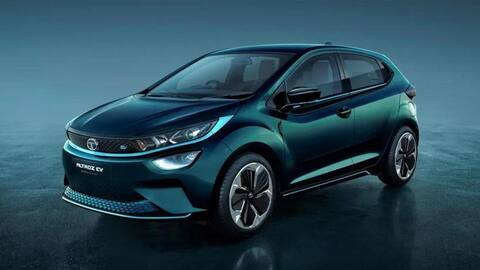
In an era of perpetually fluctuating fuel prices, the allure of Compressed Natural Gas (CNG) has never been stronger for Indian car buyers. However, the compromise has always been between fuel economy and driving experience, often sacrificing performance, boot space, and refinement. Tata Motors entered the premium CNG hatchback fray with the Altroz iCNG, aiming to break this stereotype. It promises to wrap the Altroz’s acclaimed 5-star safety, premium build, and stylish design around a modern, factory-fitted CNG system. But does it manage to deliver a stress-free, economical ownership experience without the typical CNG drawbacks?
This definitive guide for 2025 delves into every aspect of the Tata Altroz CNG. We go beyond the brochure figures to provide a realistic assessment of its real-world mileage, analyze the tangible impact on performance, evaluate the practicality with the reduced boot space, and break down the total cost of ownership over five years. If you’re a budget-conscious urban commuter or a fleet operator who refuses to compromise on safety and quality, this detailed examination will help you decide if the Altroz iCNG is the smartest financial decision you can make.
The Altroz iCNG Technology: What Makes it Different?
Tata’s iCNG technology isn’t just a simple aftermarket-like conversion. It’s an integrated system designed with specific enhancements:
Direct-Injection Technology: Allows for precise fuel delivery, improving efficiency and performance.
Dual-ECU Setup: Separate ECUs for petrol and CNG ensure optimal performance in both modes.
Intelligent Auto-Switching: The car can automatically switch from CNG to petrol when the CNG is depleted or under high engine load.
Enhanced Safety: Features like leak detection, excess flow check valve, and a robust, centrally-mounted cylinder are standard.
Performance Analysis: Petrol vs. CNG Mode
Starting and Drivability:
The car always starts in petrol mode for optimal cold-start performance and switches to CNG seamlessly once the engine reaches operating temperature.
In CNG mode, there is an expected power loss. The 1.2L Revotron engine, which produces 86 PS on petrol, delivers approximately 70-72 PS on CNG.
City Driving (CNG Mode): Perfectly adequate. The low-end torque is sufficient for crawling in traffic and navigating city streets. The throttle response is slightly duller than in petrol mode, but not alarmingly so.
Highway Driving (CNG Mode): This is where the power deficit is most felt. Overtaking requires careful planning and downshifts. The car will comfortably cruise at 80-90 km/h, but pushing beyond that requires patience.
Petrol Mode: Feels like a standard Altroz – refined and adequate. It serves as a perfect backup for when you need immediate power for a quick overtake or when climbing a steep gradient.
The Seamless Switch: The transition between CNG and petrol is incredibly smooth. Most of the time, you won’t even notice it unless you’re watching the instrument cluster indicator.
Cost per Kilometer Analysis (Assuming CNG @ ₹73/kg, Petrol @ ₹105/l):
Running on CNG: ₹ 3.32 – ₹ 3.65 per km
Running on Petrol: ₹ 6.17 – ₹ 7.00 per km
Verdict: The cost savings are massive. For a user driving 1,500 km per month, the Altroz CNG can save over ₹5,000 per month compared to running solely on petrol.
Practicality: The Boot Space Compromise
This is the most significant trade-off.
Boot Space (Petrol Altroz): 345 litres
Boot Space (Altroz iCNG): ~210 litres
The CNG cylinder is placed in the boot, consuming a substantial portion of the luggage area. The boot is now best suited for 2-3 soft bags. It is insufficient for a large family’s weekend luggage or an airport drop with multiple suitcases. This is a critical factor to consider before purchase.
Ride, Handling, and Refinement
Ride Quality: Unchanged and brilliant. The Altroz’s hallmark composed ride over bad roads remains intact. The suspension is tuned to handle the slight additional weight of the CNG kit without any issues.
Handling: The added weight at the rear can make the car feel very slightly less nimble, but the difference is negligible for normal driving. High-speed stability is still excellent.
Refinement: In CNG mode, the engine note becomes slightly more thrashy, especially when revved hard. At idle and low speeds, it’s reasonably quiet.
Ownership Costs: Maintenance and Service
Service Intervals: Same as the petrol version (1 year/15,000 km). Additional CNG-Specific Checks: The CNG lines, filters, and valves need inspection during every service. Cost Impact: Service costs are marginally higher (by ~₹500-1000 per service) due to these additional checks.
Long-Term Reliability: Factory-fitted CNG systems from manufacturers like Tata are generally very reliable. The risk of issues is far lower than with aftermarket kits.
Variant-wise Analysis and Pricing
The Altroz iCNG is available in the mid-spec XT, XZ, and XZ+ variants.
XT: For value seekers, misses out on key features like the touchscreen.
XZ & XZ+: Recommended for most buyers as they offer a balanced feature set including the infotainment screen, steering controls, and better interior ambience.
The Competition: How does it stack up?
vs Maruti Baleno CNG: The Baleno offers a slightly more refined engine and a bit more power on CNG, along with a better service network. However, the Altroz trumps it with far superior safety (5-star vs 3-star) and better build quality.
vs Hyundai Grand i10 Nios CNG: The i10 Nios is a city-focused car with a smaller footprint. The Altroz offers more space, premiumness, and a significant safety advantage.
Pros and Cons Summary
Pros:
Tremendous fuel cost savings.
Retains the Altroz’s superb ride quality and high-speed stability.
Factory-fitted safety and reliability.
Seamless auto-switching between fuels.
️ Unbeatable 5-star safety in the CNG segment.
Cons:
Significant reduction in boot space.
Noticeable power loss, especially on highways.
Engine feels rougher in CNG mode when pushed.
Conclusion
Who is the Altroz iCNG For?
The Tata Altroz iCNG is a brilliantly executed product for a very specific buyer. It is the perfect choice for:
Urban commuters with high daily running (30+ km per day).
Families and individuals for whom running cost is the single most important factor.
Buyers who prioritize safety above everything else and are unwilling to compromise for a CNG car.
It is not recommended for:
Those who frequently travel on highways and need confident performance.
Families that regularly need full boot space for luggage.
Driving enthusiasts.
If your usage pattern is predominantly city-centric and you can live with the small boot, the Altroz iCNG offers an unbeatable proposition of premium safety and incredibly low running costs.
FAQs
Is the performance drop in CNG mode very significant?
Yes, it is noticeable, especially during highway overtaking and climbing gradients. In the city, the performance is adequate for most needs.
How safe is the CNG cylinder in the boot?
Extremely safe. It is a factory-fitted unit with a robust metal casing, mounted securely. It comes with multiple safety valves and leak detection systems that are not present in aftermarket kits.
Can I fit a CNG kit in a used petrol Altroz later?
Technically yes, but it’s not recommended. It will void the vehicle’s warranty, and the reliability and safety of an aftermarket kit will not match the factory-fitted iCNG system.
What is the waiting period for the Altroz iCNG?
As of 2025, the waiting period can range from 2 to 6 months depending on the variant and city, due to high demand.
Does the Altroz iCNG have a spare wheel?
Yes, it comes with a compact space-saver spare wheel, which is stored under the boot floor, beneath the CNG cylinder.
Tags: Tata Altroz CNG, Altroz iCNG Review, CNG Car Mileage, Altroz Running Cost, Best Premium CNG Hatchback, Tata Altroz Fuel Efficiency, CNG vs Petrol, Economic Car India, Altroz Practicality