
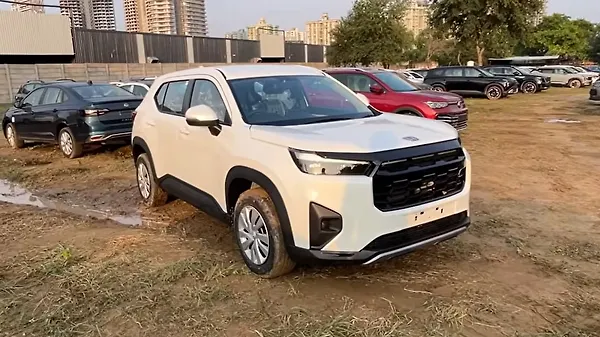
Honda Cars India introduced the refreshed Elevate earlier this month, bringing exterior and interior updates starting at Rs 11.80 lakh (ex-showroom) and topping out at Rs 18.40 lakh. While the updated SUV sticks to a single powertrain option, it competes directly against segment rivals such as the Maruti Victoris and the Hyundai Creta, both of which provide a broader selection of engine choices. Buyers looking at the Honda Elevate facelift V CVT variant will find it arriving at local dealerships following its recent market debut.
Pricing and Variant Spread
The Honda Elevate starts at Rs 11.80 lakh, which sits Rs 1.35 lakh higher than the Maruti Victoris base trim starting at Rs 10.45 lakh. On the other hand, the Hyundai Creta has a lower starting price, undercutting the Honda Elevate by Rs 89,000. Moving up the lineup, the Elevate reaches its maximum price of Rs 18.40 lakh, whereas the Maruti Victoris tops out at Rs 19.99 lakh for its strong hybrid powertrain variant. Meanwhile, the top-spec Hyundai Creta commands a higher price of Rs 20.46 lakh compared to the Elevate, giving buyers a wider pricing spread.
Recently spotted at a local dealership, the mid-spec Honda Elevate V CVT variant showcases various updates. On the outside, this trim features a blacked-out finish for the grille and fog light surrounds, LED projector headlamps, LED DRLs, faux skid plates, 16-inch steel wheels with wheel covers, body-coloured ORVMs and door handles, a shark-fin antenna, LED taillights, and an integrated spoiler.
Dimensions and Exterior Styling
When comparing physical dimensions, the Maruti Victoris is slightly longer at 4360 mm compared to the Elevate's 4312 mm, while both SUVs share a similar width. The Hyundai Creta measures 4330 mm in length, which is also slightly longer than the Elevate, while both the Elevate and Creta share an identical width of 1790 mm. Although the Honda Elevate is just on par in height with the Victoris, it is 15 mm taller than the Creta and makes up for its length by offering a 50 mm longer wheelbase than the Victoris and a 40 mm longer wheelbase than the Creta, potentially benefiting cabin space.
Colour choices for the Honda Elevate include a mix of understated metallic shades and brighter options such as Radiant Red Metallic, with select colours offering a black-painted roof for a dual-tone finish. The Maruti Victoris provides seven classy shades, including Eternal Blue, alongside dual-tone black roof variants. The Hyundai Creta offers options such as Robust Emerald Pearl and Starry Night, along with matte-finish shades and dual-tone black-painted roof configurations.
Powertrain and Performance
The Honda Elevate relies entirely on a single powertrain option across all variants, utilizing a 1.5-litre, four-cylinder, i-VTEC naturally aspirated petrol engine paired with either a 6-speed manual transmission or a CVT automatic unit. This engine is tuned to deliver 119 bhp and 145 Nm of torque in certain specifications, while output is cited as 121 PS when compared to rivals, making it more powerful than the naturally aspirated petrol unit of the Maruti Victoris by over 17 PS and outperforming the Creta's 115 PS naturally aspirated motor.
In contrast, competitor models provide significantly more powertrain diversity. The Maruti Victoris offers a 1.5-litre naturally aspirated petrol engine, a 1.5-litre petrol-CNG setup featuring a clever underbody-fitted CNG tank that clears up boot space, and a 1.5-litre petrol strong hybrid powertrain that achieves a claimed fuel efficiency figure of 28.65 kmpl. The Hyundai Creta expands choices further by adding turbo-petrol and diesel engine options alongside its naturally aspirated petrol motor.
Cabin Features and Equipment
Inside the mid-spec Honda Elevate V CVT, occupants are greeted by a dual-tone Ivory and Black theme, a seven-inch coloured MID, an eight-inch freestanding touchscreen infotainment system, wireless Apple CarPlay and Android Auto, automatic climate control, an air purifier, tilt and telescopic-adjustable steering, a height-adjustable driver seat, a four-speaker music system, Type-C charging ports for both rows, and paddle shifters. Safety features on this trim comprise Electronic Parking Brake with auto-hold, six airbags, ABS with EBD, Brake Assist, Vehicle Stability Assist, Hill Start Assist, and a reverse parking camera with guidelines.
Higher-spec variants across the comparison models introduce advanced amenities. Both the Elevate and its rivals feature LED headlamps with LED DRLs, connected LED taillamps, 17-inch alloy wheels (though Creta uses 18-inch wheels), integrated roof spoilers, black roof rails, Level-2 ADAS, and a 360-degree camera. The Creta pulls ahead with a 10.25-inch digital driver's display, a panoramic sunroof (compared to the Elevate's single-pane sunroof), an 8-speaker Bose sound system, dual-zone automatic climate control, multi-drive modes, a cooled glovebox, rain-sensing wipers, and a Tyre Pressure Monitoring System.
| Model | Price Range (Ex-showroom) | Engine Options |
|---|---|---|
| Honda Elevate Facelift | Rs 11.80 lakh - Rs 18.40 lakh | 1.5-litre naturally aspirated petrol |
| Maruti Victoris | Rs 10.45 lakh - Rs 19.99 lakh | 1.5L NA petrol, 1.5L Petrol-CNG, 1.5L petrol strong hybrid |
| Hyundai Creta | Lower starting price up to Rs 20.46 lakh | NA petrol, turbo-petrol, diesel |
Market Position and Buyer Takeaway
For buyers navigating the midsize SUV segment, the 20th-anniversary or refreshed Honda Elevate appeals to customers seeking a smooth, powerful naturally aspirated petrol engine, a spacious cabin aided by a long wheelbase, and straightforward feature layouts starting at Rs 11.80 lakh. However, shoppers prioritizing expansive powertrain choices such as strong hybrids, CNG efficiency, turbo-diesel punch, or high-end technological features like panoramic sunroofs and dual-zone climate control may find alternatives like the Maruti Victoris and Hyundai Creta better suited to their requirements despite higher top-end price tags.