
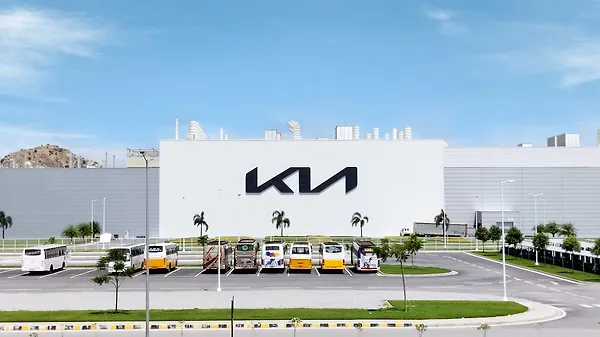
Kia India has entered into a Memorandum of Understanding with the government of Andhra Pradesh to allocate a USD 2 billion (Rs 18,800 Cr) investment toward building its second manufacturing unit located in Anantapur. Scheduled to begin production in early 2030, this upcoming facility will handle both internal combustion engine and electric powertrains, boosting the carmaker's local manufacturing footprint for both domestic buyers and export markets.
Plant Specifications and Investment Details
The upcoming manufacturing facility, alongside associated supplier operations, will span a combined area of 465 acres and yield an annual output capacity of two lakh units. This addition will increase Kia's total yearly manufacturing capacity in India to 6.30 lakh units, though the first source notes a combined output reaching six lakh units. The initial site currently spans 945 acres and boasts an annual capacity of 4.3 lakh units.
According to corporate data, the project is projected to create approximately 12,000 direct and indirect jobs. The first manufacturing facility currently supports 24,237 direct and indirect jobs and involved an initial investment of USD 2.9 billion by Kia and its supplier partners. Total cumulative investment across both plants is projected to reach up to USD 5 billion (Rs 47,000 crores). The new factory will perform stamping, welding, painting, and assembly, matching the four principal manufacturing operations executed at the existing facility.
Product Lineup and Future Expansion
While the carmaker has not yet named specific models for the new location, the current factory builds the Seltos, Sonet, Syros, Carens, Carens Clavis, Carnival, and Sorento. Production at the first site also includes the Syros EV, Carens Clavis EV, CNG variants of the Carens and Carens Clavis, and the Sorento Hybrid. Reports differ slightly on combined output figures, with one source mentioning a six lakh unit total and another citing 6.30 lakh units.
The expansion aligns with broader corporate roadmaps targeting annual sales of roughly 4.10 lakh units and a 7.6% market share by 2030, alongside eight electrified models by the decade's end. The upcoming product timeline includes the Seltos Hybrid in 2027, hybrid variants of the Sonet and Carens by 2029, and a locally made small electric SUV slated for 2029, preceding the new factory's operational start in early 2030. Furthermore, international-spec models such as new hybrids for the Seltos and Carnival, alongside potential additions like the Sportage and the Telluride, are noted as possibilities for the country.
Strategic Goals and Leadership Remarks
Gwanggu Lee, Managing Director and CEO of Kia India, stated that India sits at the heart of the company's long-term growth targets and praised customer trust since operations began in Anantapur. He added that the second manufacturing plant represents an important chapter that enhances flexibility in meeting customer demand while introducing new ICE and EV models. This development follows Hyundai Motor Group's October announcement regarding a USD 15.5 billion India investment framework spanning from 2026 to 2032.
| Facility | Land Area | Annual Capacity | Jobs Supported |
|---|---|---|---|
| Existing Anantapur Plant | 945 acres | 4.30 lakh units | 24,237 direct and indirect |
| Second Anantapur Plant | 465 acres | 2 lakh units | 12,000 direct and indirect |
Implications for Buyers
The establishment of a second manufacturing plant in Anantapur signifies improved local vehicle availability and shorter waiting times for domestic buyers. By incorporating infrastructure for both internal combustion engines and electric powertrains, the carmaker positions itself to roll out upcoming hybrid and battery-electric models more efficiently. Expanded production capacity also paves the way for new international-spec models and hybrid variants to enter the domestic market over the coming years.