
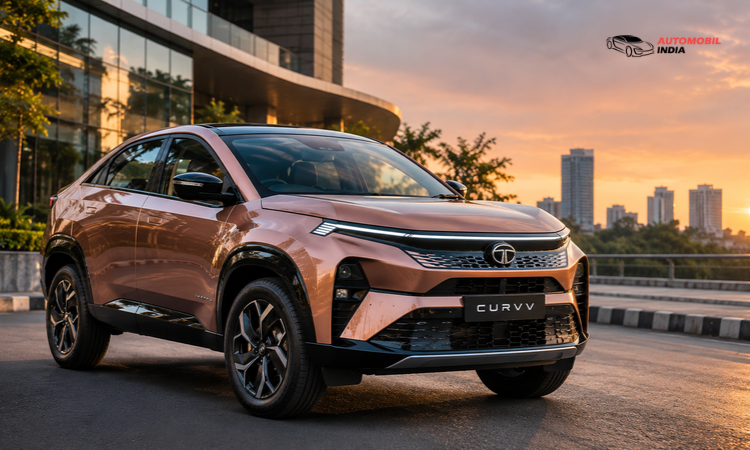
The Tata Curvv brought a distinctive design direction to India’s mid-size SUV space. Rather than follow the familiar upright proportions of a conventional sport utility vehicle, it combines SUV stance with a sweeping coupe-style roofline. The result is a vehicle designed to stand out while retaining the raised seating position, ground clearance and everyday versatility expected from an SUV.
The Curvv is more than a styling exercise. Tata Motors introduced the nameplate in internal-combustion and electric forms, giving buyers a choice between petrol or diesel power and a fully electric drivetrain. Across the range, the Curvv places emphasis on connected technology, a modern cabin, multiple powertrain choices and a strong safety proposition. Its suitability as a purchase, however, depends on how those features match a buyer’s budget, driving pattern and space requirements.
This guide examines the Curvv’s design, cabin, technology, powertrains, safety and ownership considerations. Equipment, variant names and prices can change by model year and market, so buyers should confirm the exact specification using Tata Motors’ current configurator and a written dealer quotation.
1. Coupe-SUV design: a distinctive silhouette
The Curvv’s most recognisable feature is its coupe-inspired roofline. The roof sweeps down towards the rear, creating a sportier profile than the boxier shapes commonly associated with family SUVs. Tata has paired this silhouette with a high bonnet, muscular wheel arches, pronounced body cladding and a wide-looking stance. The design aims to give the vehicle a premium, contemporary appearance without abandoning its SUV identity.
At the front, the lighting signature and sculpted bumper create a modern face, while the LED daytime-running-light treatment gives the vehicle a recognisable identity. The side profile is where the coupe theme becomes most obvious: the falling roof, rising beltline and rear-quarter treatment give the Curvv a more dramatic outline than a conventional SUV. At the rear, the full-width lighting motif and sharply styled tailgate continue the design theme.
The coupe shape brings practical compromises that buyers should inspect. Rear headroom and the sense of airiness can be affected by a falling roofline, while the steeply raked rear glass may influence visibility. Sit in the rear seat, check the view through the windscreen and assess how easily you can judge the vehicle’s corners in a tight parking space. A distinctive silhouette is valuable only if it works for the people who will use the car every day.
Tata’s ICE and EV versions share the broad design language, but they have their own front-end detailing and packaging. Do not assume every exterior trim element, wheel design or lighting feature is identical across the range. Compare the actual variant being considered rather than relying on photographs of the top-spec model.
2. Interior and comfort: a technology-led cabin
The Curvv’s cabin follows Tata’s contemporary design language, with a layered dashboard, a large central infotainment display and a digital instrument cluster on applicable versions. The overall presentation aims to feel modern and uncluttered, with screens and touch-based controls forming a major part of the user experience. Depending on trim, equipment can include a panoramic sunroof, ventilated front seats, powered driver-seat adjustment, automatic climate control, wireless phone charging and connected-car functions.
The current Series X ICE presentation highlights a 12.3-inch HARMAN touchscreen, a 10.25-inch digital cockpit, a nine-speaker JBL audio system, voice-assisted panoramic sunroof, ventilated front seats and a powered driver seat on selected higher versions. These are not universal across all variants. Buyers should compare the feature list line by line and check whether a particular item is included, optional or unavailable on the chosen powertrain.
The front seating position should be assessed for cushioning, steering adjustment, pedal placement and visibility over the bonnet. The rear bench deserves equal attention. The coupe roofline may affect headroom for taller passengers, so families should sit in the actual car before booking. Check knee room behind the driver’s preferred seating position, the comfort of the centre passenger and the usefulness of rear air-conditioning vents and charging points.
Boot practicality is another part of the decision. Tata’s ICE product information lists a 500-litre boot, but buyers should test the luggage area with real-world items such as cabin bags, a folded stroller or the shopping loads the household typically carries. Check the loading lip, parcel shelf and rear-seat folding arrangement. The EV has different packaging and additional front storage, so do not assume its cargo layout is identical to the ICE version.
3. Infotainment and connected technology
The Curvv’s technology package is one of its central selling points. Depending on variant, equipment includes a large touchscreen infotainment system, digital driver display, wireless Android Auto and Apple CarPlay, connected-car technology and voice-assisted functions. Higher versions add a premium audio system, 360-degree surround-view camera, blind-view monitor and further convenience features.
A large display can make the cabin feel more advanced, but usability matters more than screen size. During a test drive, check how quickly the infotainment system starts, whether smartphone pairing is reliable, how clearly the reversing camera shows obstacles and whether frequently used functions are easy to reach. Test the physical controls for climate and audio functions as well. A system that requires several screen taps for simple tasks can become distracting in traffic.
Connected features may depend on data plans, smartphone compatibility and software versions. Ask which services are included, how long subscriptions remain active and whether any functions require renewal. Also confirm how software updates are delivered and whether certain updates require a service-centre visit.
4. Petrol and diesel powertrains: choose around your driving pattern
The Curvv ICE range has been offered with turbo-petrol and diesel engines. The petrol line-up includes the 1.2-litre Revotron turbo-petrol and the more performance-focused 1.2-litre Hyperion direct-injection turbo-petrol on selected versions. The 1.5-litre Kryojet diesel is aimed at buyers who value stronger low-speed torque and the potential for better fuel economy on longer journeys. Manual and automatic transmission availability depends on engine and variant.
The right engine depends on usage rather than a simple petrol-versus-diesel rule. A petrol version may suit buyers with lower annual running, frequent short trips or a preference for a quieter powertrain. Diesel can make sense for higher monthly distances and regular highway use, but buyers should calculate the purchase-price difference, fuel costs, maintenance requirements and local restrictions before choosing it. An automatic can reduce effort in congested urban traffic, while a manual may appeal to buyers who prefer direct control or want to manage the initial purchase budget.
A test drive should include slow traffic, an incline, a safe overtake and a stretch of uneven road. Evaluate low-speed throttle response, gearbox behaviour, cabin noise and suspension comfort. Do not choose an engine solely from a peak output figure; the way it responds in the conditions you actually drive is more important.
Also consider the type of journeys the vehicle will make. A car used mainly for short city trips has different needs from one that regularly covers long expressway distances with a full passenger load. If possible, drive the exact engine and transmission combination you intend to buy. A test drive in a different variant may not reveal the clutch feel, gear changes or response of your chosen version.
5. Tata Curvv EV: the electric alternative
The Curvv EV shares the coupe-SUV design theme but uses Tata’s electric architecture and a dedicated battery-electric powertrain. Tata’s current product information lists a 55kWh version with an output of 123kW (167PS), 215Nm of torque and a claimed range figure of 502km. The range is a certified test-cycle figure, not a promise that every owner will achieve the same distance in everyday traffic. Battery options and variant nomenclature have changed across model updates, so buyers should confirm the current lineup.
Real-world range depends on speed, air-conditioning use, ambient temperature, road gradient, passenger and luggage load, tyre pressure and driving style. Buyers should estimate weekly travel and identify reliable charging options at home, work or along frequently used routes. If home charging is unavailable, public charging access becomes a major part of the ownership calculation.
The EV’s driving experience differs from the petrol and diesel versions. Electric torque is delivered immediately, which can make city acceleration feel smooth and responsive. Regenerative braking can recover energy while slowing down, and the Curvv EV offers multiple regeneration modes controlled through paddles. Prospective owners should test the level of deceleration and see whether the system feels natural in their usual traffic conditions.
Before choosing the EV, understand charging time at different power levels, battery warranty coverage, service support and the process for handling a breakdown or charging fault. Tata’s current EV product information also highlights vehicle-to-vehicle and vehicle-to-load functions on applicable versions. Check the equipment list for the precise variant rather than assuming every Curvv EV has every feature.
The Curvv EV is best suited to buyers who can plan charging conveniently and whose regular travel fits the vehicle’s usable range. Those who frequently undertake long, unpredictable journeys should map charging stops and allow a practical buffer rather than relying on the maximum certified figure.
6. Safety: equipment and Bharat NCAP results
Safety is an important part of the Curvv proposition. Depending on variant and powertrain, equipment can include six airbags, electronic stability control, hill-hold assist, all-wheel disc brakes, tyre-pressure monitoring, a 360-degree camera and Level 2 advanced driver assistance systems. ADAS availability and the number of functions depend on the selected trim, so buyers should verify the current brochure and vehicle configuration.
The Curvv ICE has a five-star Bharat NCAP rating, with 29.50 out of 32 points for adult occupant protection and 43.66 out of 49 for child occupant protection. Bharat NCAP’s applicability list covers specified variants and has been extended through subsequent updates. The Curvv EV has a separate Bharat NCAP assessment, scoring 30.81/32 for adult occupant protection and 44.83/49 for child occupant protection. These are separate assessments; do not treat the ICE score as the EV score or assume that every model-year variant is automatically covered without checking the official applicability list.
Selected higher variants offer Level 2 ADAS features. Depending on version, these may include adaptive cruise control, lane departure warning, lane-keep assistance, automatic emergency braking and blind-spot-related alerts. Such systems can support the driver in defined situations, but they do not replace attention or safe driving. Their operation can be affected by road markings, weather, lighting and traffic conditions. Ask the dealer to explain each system’s limitations and demonstrate how it works.
Safety equipment should be considered at the variant-selection stage, not after choosing an exterior colour or convenience package. Confirm the number of airbags, stability-control equipment, child-seat anchor points and driver-assistance features on the exact vehicle listed in the quotation.
7. Everyday practicality and ownership
The Curvv’s coupe styling gives it a distinctive presence, but everyday practicality should remain central to the decision. Check rear-seat access, child-seat installation, seat-belt reach, door opening angle and visibility. If the vehicle will regularly carry three adults in the back, assess shoulder room and the centre passenger’s comfort. Families with young children should try fitting a child seat and loading a stroller before booking.
Ride comfort should be judged on the roads the vehicle will encounter most often. Drive over broken patches, speed breakers and uneven surfaces at sensible speeds. Listen for suspension noise and assess how well the cabin controls body movement. Larger alloy wheels can influence tyre replacement costs and the way sharp road imperfections are felt, so compare wheel sizes between variants rather than treating the biggest wheel as automatically better.
Ownership costs include scheduled maintenance, tyres, insurance, brake components and fuel or charging. Petrol and diesel models have different service needs, while EV ownership brings battery and charging considerations. Ask the dealer for the maintenance schedule, warranty terms, roadside assistance coverage and the cost of common wear items. For an EV, confirm battery warranty conditions and the availability of authorised high-voltage service support in your area.
Before delivery, verify the VIN and engine or motor details on the invoice, inspect paint and panel fitment in daylight, check tyre condition and manufacturing dates, and ensure that the variant and accessories match the booking. Test all screens, cameras, sensors, lights, charging ports and keys. Keep the delivery checklist, warranty documents and service records.
8. Which Tata Curvv version should you choose?
Start by deciding between ICE and EV based on annual distance, charging access and typical routes. If choosing ICE, compare petrol and diesel using expected yearly kilometres, purchase-price difference and the type of journeys you make. Then decide on manual or automatic transmission. Only after these decisions should you compare trims for airbags, stability control, camera systems, ADAS, seat functions, lighting and infotainment. For current model details, equipment and variant information, see Tata Curvv prices and variants.
Avoid stretching the budget for cosmetic additions if a lower version already provides the safety equipment and drivetrain you need. Conversely, do not compromise on a safety feature that matters to your use simply to get a particular exterior finish. Compare the on-road price, insurance, accessories, extended warranty and finance charges as separate line items. Dealer offers can change frequently, so obtain a dated written quotation for the exact variant and city.
Buyers comparing other Tata SUVs should assess the Nexon if they want a smaller footprint, the Harrier for a larger and more conventional SUV format, or the Safari if three-row seating is a priority. The Curvv occupies a style-led position in the range, with its coupe roofline as the main differentiator. These models are not direct substitutes in every respect, so compare dimensions, passenger needs and budgets before shortlisting. For a broader market comparison, read AutomobilIndia’s Brezza, Nexon, XUV 3XO and Venue comparison.
9. Final verdict: style is the hook, the fit is the decision
The Tata Curvv stands out because it gives buyers something visually different in a segment where many SUVs follow familiar proportions. Its coupe-like roofline, technology-focused cabin and choice of petrol, diesel and electric powertrains create broad appeal. It is not simply an SUV with a sloping roof; it is a model range aimed at buyers who want design distinction alongside modern features.
Its most important trade-off is the balance between style and practicality. Rear headroom, visibility, luggage usability and passenger comfort should be tested rather than assumed. The ICE and EV versions also serve different ownership needs, so the decision should reflect driving distance, charging access and total cost of ownership.
For buyers who like its design and find the cabin suitable, the Curvv deserves a place on the shortlist. Take a thorough test drive, compare the exact variant equipment and calculate the full on-road and running costs. The strongest reason to choose the Curvv is not simply that it looks different in a showroom, but that its design, technology and powertrain work for everyday life.