
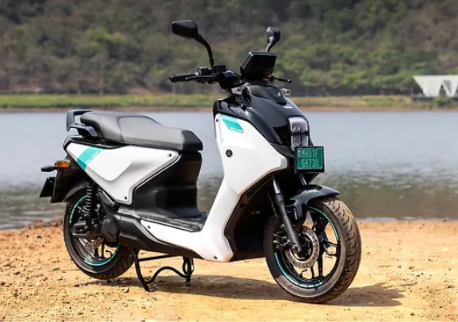
Yamaha has recently ventured into the battery-powered two-wheeler segment with the introduction of the EC-06. Positioned as an upscale daily rider, this machine shares the vast majority of its components and hardware with the River Indie. Nonetheless, our initial evaluation aims to discover whether the EC06 establishes a unique personality of its own.
Styling and Aesthetics
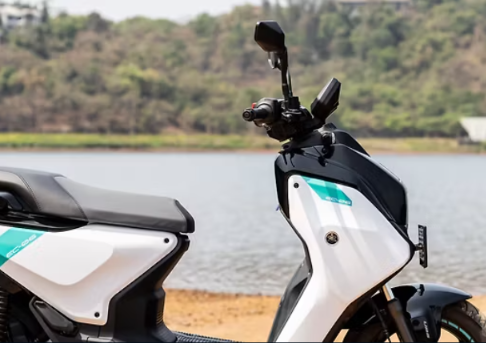
Unlike the utilitarian and rugged character of the River Indie, the Yamaha offering presents a much younger visual appeal. The front end incorporates a streamlined, vertically arranged LED headlamp arrangement alongside an aggressively styled apron that helps the vehicle stand out in a crowd.

Being an urban commuter, its bodywork is narrower, lending the vehicle an athletic stance. Craftsmanship and assembly quality are major strengths, showing zero visible cables or unsightly panel tolerances. However, specific components reveal its underlying lineage tied to the River Indie, such as the 'River' branding stamped onto the motor casing and handlebar grips.
From an appearance standpoint, the vehicle commands attention on the road, particularly in its white paint theme paired with fluorescent blue graphics and standard Yamaha insignia, boasting a high-grade surface finish.
Hardware and Specifications
Propulsion is handled by a 6.7kW electric motor boasting a rated peak velocity of 79kmph, paired with a chain drive system similar to its sibling. Energy is stored in a 4kWh non-removable battery, which requires 8 hours to replenish from 0 to 80 percent and 10 hours for a complete 0 to 100 percent charge.
Suspension duties are managed by conventional telescopic forks up front and twin shock absorbers at the rear. It rides on 14-inch alloy rims wrapped in 110-section front and 120-section rear rubber supplied by Ceat. Stopping power comes from 200mm disc brakes mounted on both axles, while the total kerb weight stands at 132kg alongside a ground clearance measurement of 145mm.
| Feature / Specification | Detail |
|---|---|
| Price | Rs. 1.67 lakh ex-showroom |
| Motor Power | 6.7kW |
| Battery Capacity | 4kWh fixed battery |
| Charging Time | 8 hours (0-80%), 10 hours (0-100%) |
| Top Speed | 79kmph |
| Kerb Weight | 132kg |
| Ground Clearance | 145mm |
- Simple LCD instrument cluster with a unique layout
- Three distinct riding modes: Eco, Standard, and Power
- Standard hill-hold assist functionality
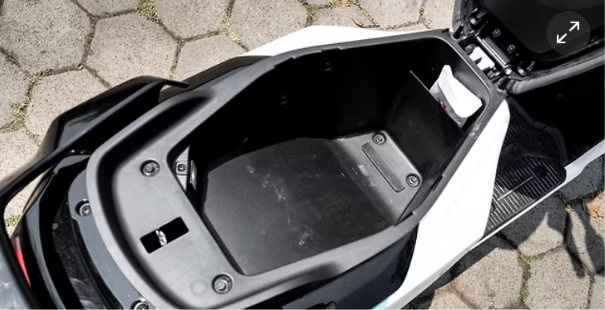
- 24.5-litre underseat storage area equipped with a boot lamp
- Apron-mounted utility hook for hanging bags
On-Road Dynamics
Settling into the saddle reveals an upright and relaxed posture. Furthermore, the low seating plane makes it simple for riders to plant both feet firmly on the pavement. On the flip side, the limited floorboard dimensions and handlebar placement create a somewhat crowded rider triangle, which might prove slightly uncomfortable for taller operators.
Once underway, the power unit operates smoothly with negligible mechanical noise, supplying adequate acceleration for metropolitan transit. Throttle calibration feels appropriate, and the three operational settings exhibit clear behavioral differences. In Eco setting, the machine feels sluggish and largely restricted to brief neighborhood errands.
Standard profile serves as the ideal choice for everyday city travels, capping velocity at 60kmph to match urban congestion safely while preserving energy. Unlocking the Power mode unleashes maximum output for a 79kmph ceiling. This represents a slight downward adjustment compared to the Indie, implemented by the manufacturer to extend travel range, though testers noted only a minor gain at the expense of highway capability.
Ride comfort leans toward the firmer side due to the shared hardware configuration, transmitting road surface flaws directly to the rider. While the larger 14-inch wheels assist in maintaining straight-line composure, a softer damping setup would better suit a daily utility machine traversing varied terrain. Braking performance is sufficient for the pace, though the front lever lacks initial bite, prompting the reviewer to actuate both levers simultaneously for confident deceleration.
Verdict and Buying Advice
The vehicle performs adequately as an everyday transporter, delivering essential amenities along with sufficient luggage capacity for routine grocery runs. Ultimately, the primary drawback centers around the retail cost, as it commands a premium of nearly Rs. 16,000 over its platform-sharing counterpart, retailing at Rs. 1.67 lakh ex-showroom. This extra expense reflects corporate branding and market positioning rather than mechanical upgrades.
For individuals seeking a dependable, straightforward utility vehicle to handle daily commutes without complications, this offering remains a viable choice, provided buyers are comfortable paying extra for the manufacturer nameplate.