
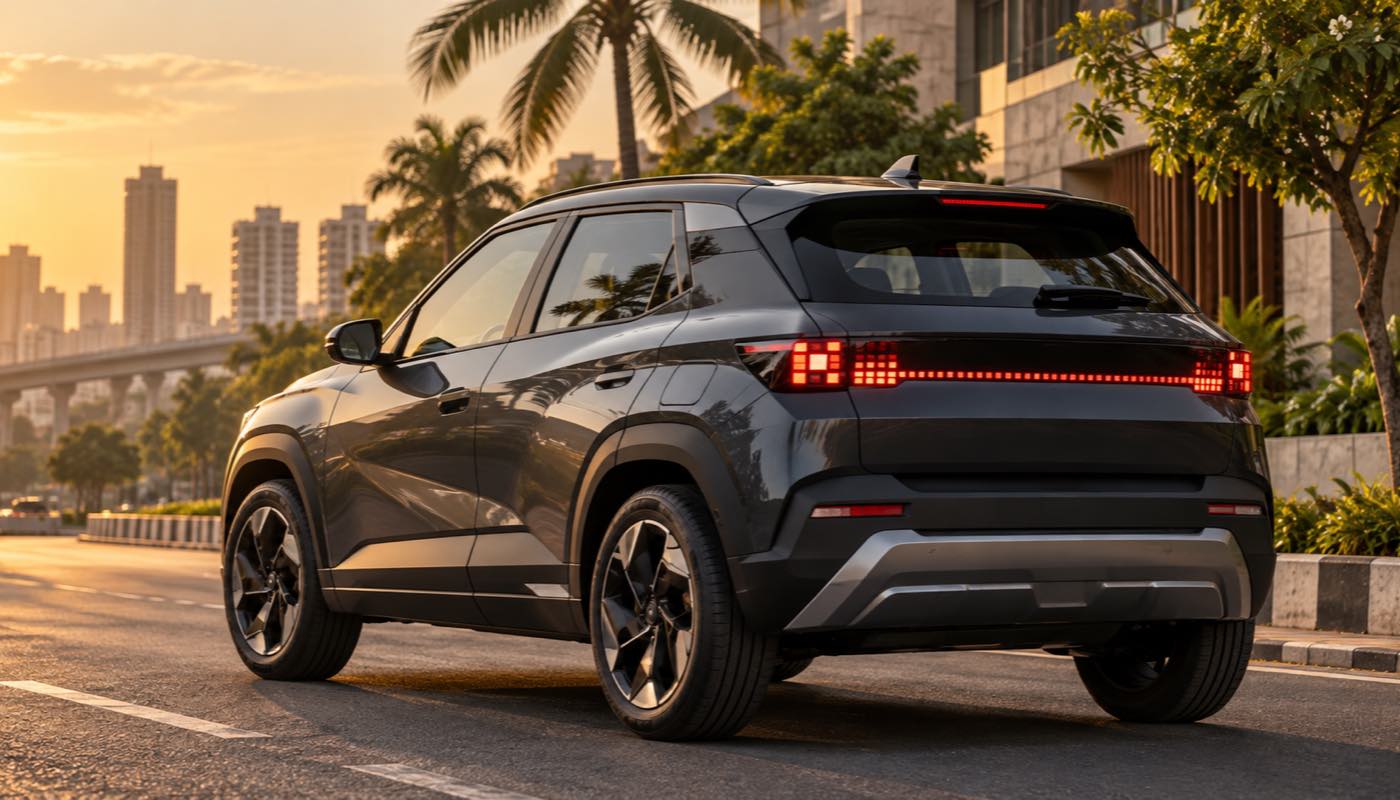
Hyundai is preparing to launch a compact electric SUV, internally designated HE1i, which is scheduled to make its global debut in December 2026. The South Korean manufacturer recently filed a trademark application for the Ioniq P moniker under Class 12 covering automobiles and related components. Although management mentioned the designation during an earnings call, its formal link to this new vehicle is unconfirmed. The HE1i is set to become Hyundai's most affordable electric offering in the country, sitting below the Creta Electric.
Platform, Dimensions and Design
The electric utility vehicle will be built on the E-GMP (K) platform, which is shared with the international Hyundai Inster. The dedicated battery-powered architecture allows the manufacturer to position the battery underneath the passenger cabin. Camouflaged test mules spotted on Indian roads reveal a relatively upright body shape, squared-off panels, and a nearly flat roofline. The front layout incorporates slender LED daytime running lights placed above the main headlights.
Along the sides, the vehicle displays prominent wheel arches, roof rails, short overhangs, and dual-tone alloy wheels. Its tall cabin sets it apart from the Creta Electric, while the general proportions show similarities to the overseas Inster. Production is slated for Hyundai's manufacturing facility located in Sriperumbudur, Tamil Nadu, where infrastructure preparations are underway.
Battery Packs and Powertrain Sourcing
The domestic model will offer two battery capacities mirroring the global Inster configuration. Battery cells will be acquired initially from Svolt due to setbacks in the local manufacturing initiative involving Exide Industries. Hyundai plans to shift to domestically produced cells once local facilities commence supply. Collaborating with local component suppliers is part of the strategy to control production costs.
Features and Safety Equipment
During the 2026 CEO Investor Day, Hyundai announced that the compact electric SUV will incorporate Level 2 advanced driver assistance systems alongside a modern infotainment interface. The safety suite is expected to include adaptive cruise control, lane keeping assistance, and autonomous emergency braking. Furthermore, the updated infotainment unit will feature a redesigned user interface and connected car capabilities.
- Upright silhouette with squared body panels and a near-horizontal roof
- Narrow LED DRLs positioned above primary headlights
- Pronounced wheel arches, roof rails, and dual-tone alloy wheels
- Level 2 ADAS including adaptive cruise control and autonomous emergency braking
- Next-generation infotainment system with connected vehicle functions
Market Strategy and Outlook
Hyundai aims for electric vehicles to account for over 7 per cent of its Indian sales within the next year, up from 1 per cent in FY26. Achieving this milestone requires significantly higher volumes than current figures. The HE1i will rival the Tata Nexon EV, Mahindra XUV 3XO EV, and Kia Syros EV in a segment where pricing is critical. Market performance will ultimately rely on pricing, real-world driving range, charging convenience, and features.