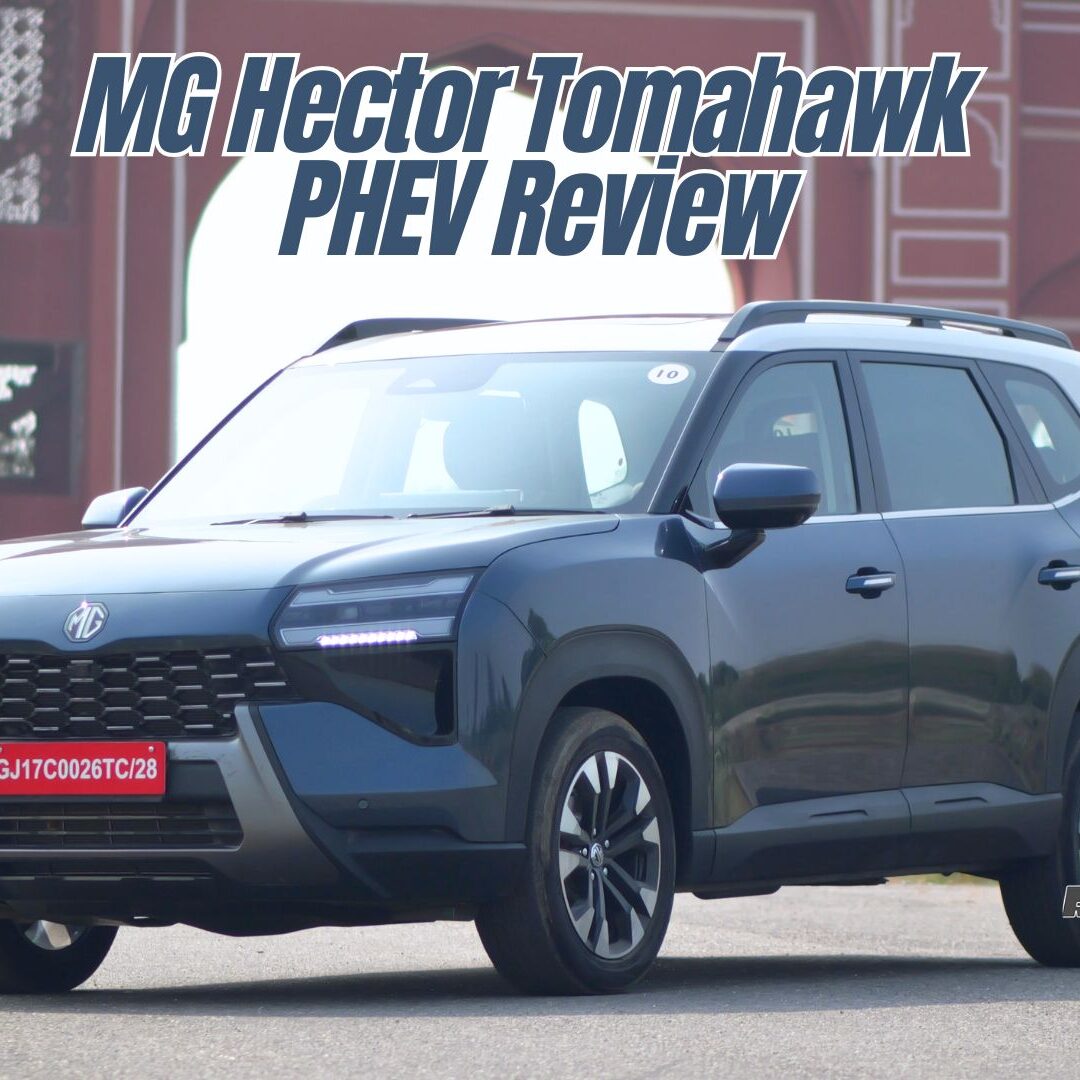
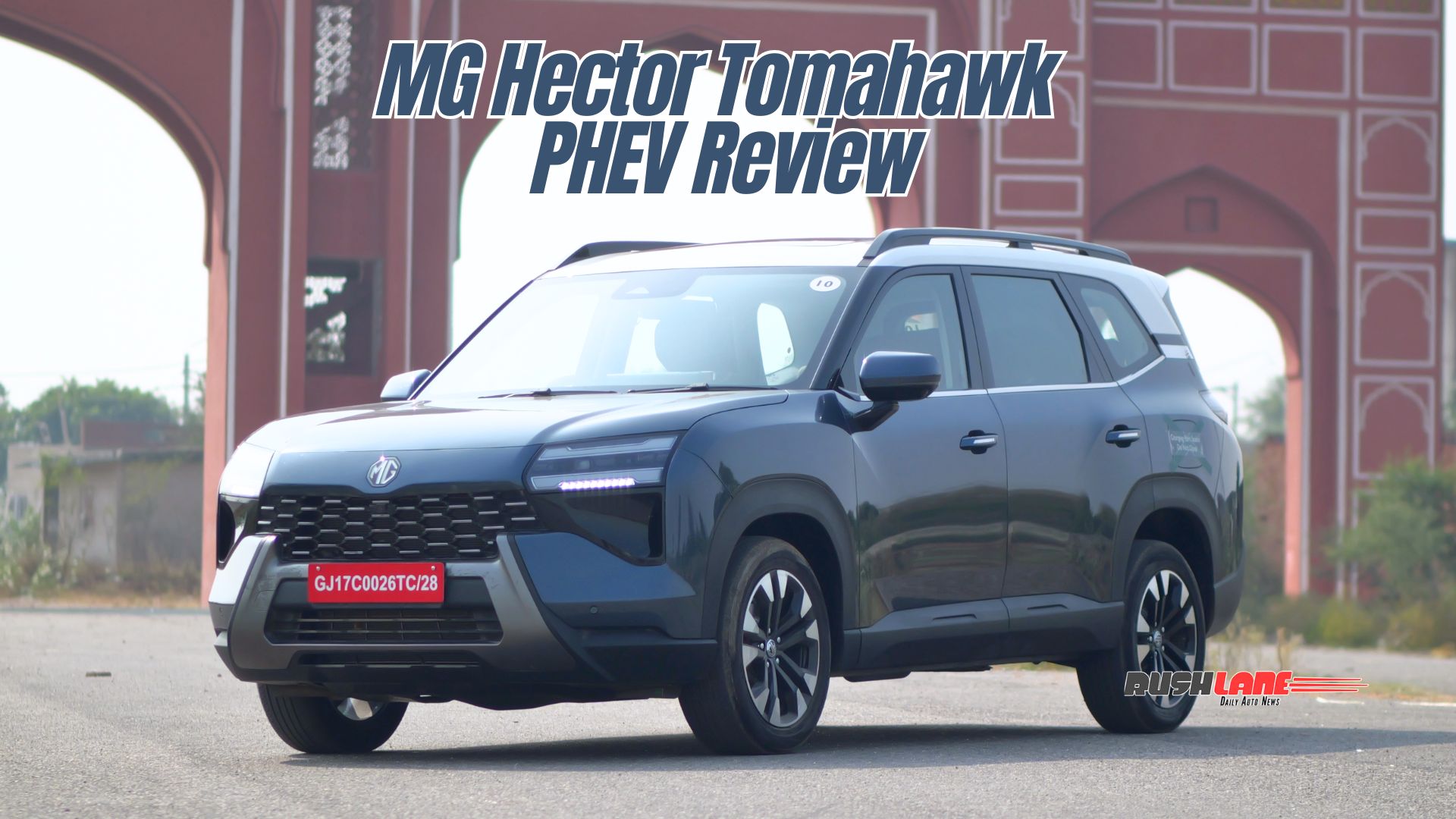
JSW MG Motor India organized a media evaluation drive for the new Tomahawk PHEV, setting a challenge to travel roughly 1,000 km from Ahmedabad to Delhi NCR on a single full tank of fuel and a single full battery charge. To verify that neither energy source was replenished during the trip, representatives sealed the fuel filler cap and charging flap prior to departure. Completing the route allowed evaluators to judge the plug-in hybrid vehicle's long-distance capabilities, how its petrol-electric setup performs during prolonged highway cruising, and its overall cabin comfort and daily usability over a two-day period.
Pricing and Exterior Design
Plug-in hybrid vehicles have historically remained restricted to the domestic luxury market, but the MG Hector Tomahawk PHEV introduces this powertrain technology at a more accessible price point. It carries an ex-showroom price of Rs 25.7 lakh for the Exclusive trim and Rs 27.8 lakh for the Essence variant. Its closest hybrid competitor is identified as the Toyota Innova Hycross, while potential buyers may also evaluate alternatives like the Mahindra XUV7XO, XEV 9S, Tata Safari, and Harrier EV based on seating configurations and powertrain preferences. The vehicle pricing appears competitive given the inclusion of a plug-in hybrid system and a 20.5 kWh battery pack, though broader policy support could improve accessibility if tax incentives account for regular charging and electric-mode usage.
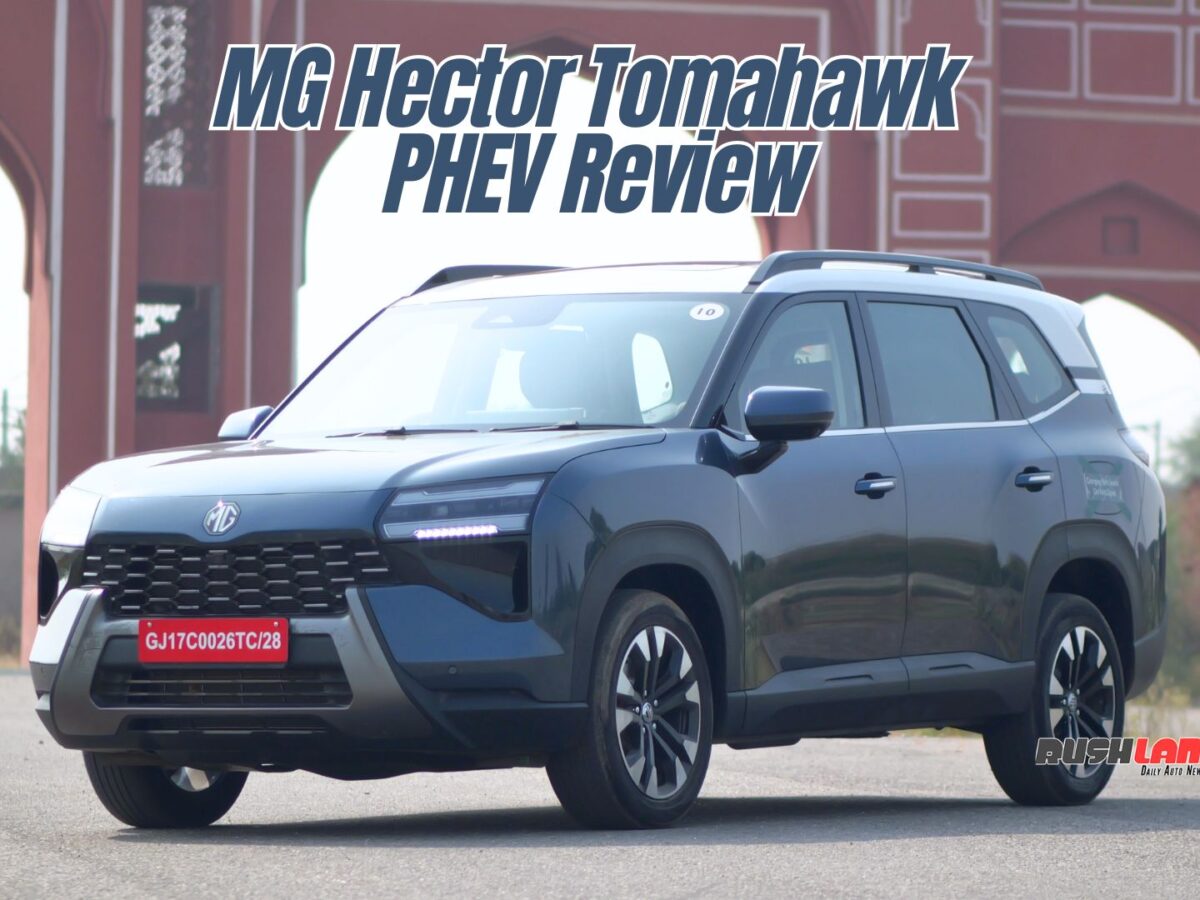
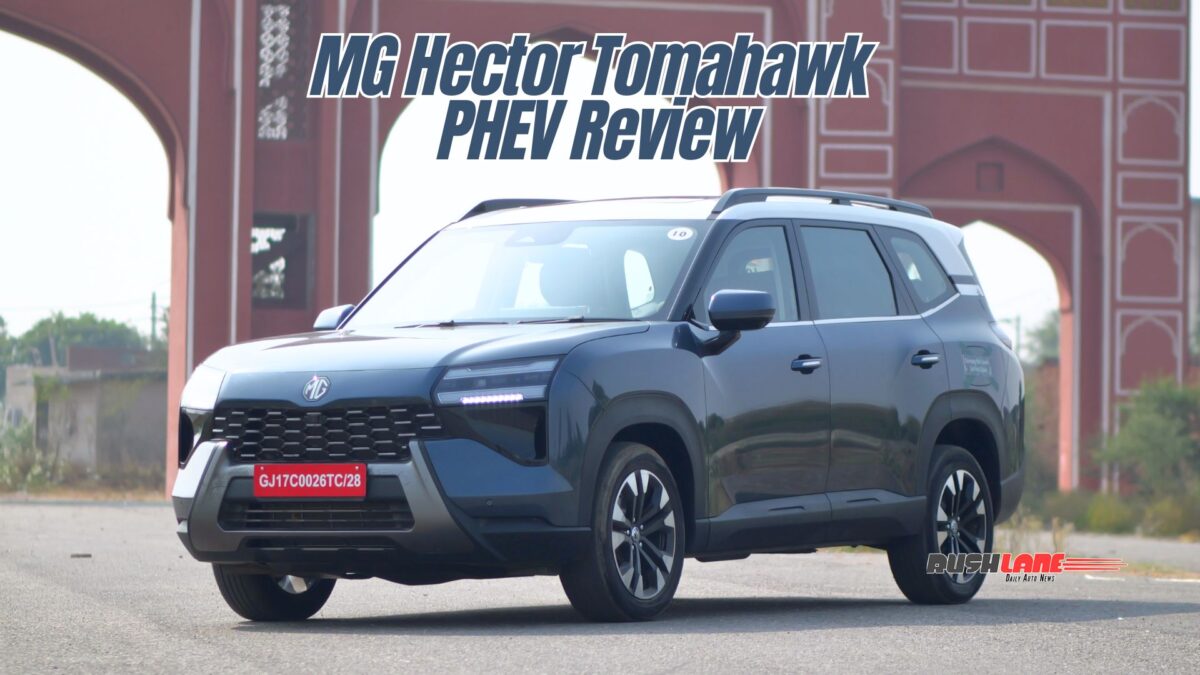
Visually, the Tomahawk PHEV shares the majority of its exterior styling with the Tomahawk EV variant, with the front fascia serving as the primary point of differentiation. Observers noted that the front-end styling is subjective and did not appeal universally. Similar to the EV model, the body's relatively narrow stance relative to its length and height imparts a slightly tall and slab-sided profile. The vehicle measures 4,745 mm in length, 1,850 mm in width, and 1,770 mm in height, with a wheelbase spanning 2,810 mm. It provides a three-row seating layout, offering 192 liters of boot space with all three rows upright, which expands to 528 liters once the third row is folded down. Riding on 18-inch wheels, the car features LED headlights that failed to impress during night driving tests, while the powered tailgate mirrors the design found on the Hector EV, and the rear incorporates an independent suspension setup.
Interior Comfort and Features
Inside the cabin, the PHEV heavily resembles the EV variant, though a darker shade of brown sets the interior apart. The media drive provided an opportunity to test the seven-seater arrangement not previously experienced in the EV version. The 40% split section on the left side of the second row includes a one-touch tumble mechanism, generating an adequately sized aperture for third-row entry. For occupants standing six feet tall, the rearmost seats proved cramped, forcing a knees-up posture, although third-row passengers receive roof-mounted air conditioning vents, cup holders, and adjustable headrests. Many strengths and weaknesses of the Hector PHEV match those of the Hector EV, including ample space and comfort in the first two rows, adequate cabin width, and extensive soft-touch plastics found across the dashboard, door pads, armrests, and center console. Areas where the driver and front passenger knees contact the doors and center console are softly padded, offering slightly more cushioning than the EV counterpart.
Physical toggle switches for climate control reside on the center console, though they require a stretch to reach. Infotainment screen gestures were described as intrusive because they activate randomly during simple actions like zooming into maps. Controls for seat ventilation and driver memory settings are embedded within the touchscreen menu alongside numerous other vehicle functions. Operating under sunny skies in Gujarat and Rajasthan highlighted the absence of extendable sun visors. On the audio front, the Infinity speakers deliver deep bass and punchy sound, though the output causes vibrations in the door pads and dashboard even at lower volume settings like 20 out of 100. Furthermore, steering wheel audio controls adjust the volume in increments of 5, moving from 10 to 15 to 20. Additional cabin amenities include roof-mounted AC vents, a panoramic sunroof, ambient lighting, rear sunshades, and sliding or reclining rear seats, with the notable absence of rear ventilated seats.
Powertrain and Long-Distance Range Test
The Hector PHEV features a claimed combined driving range of 1,100 km, supported by a 20.5 kWh battery rated to deliver 115 km of electric-only travel. The journey from Ahmedabad to Gurugram commenced with a full 52-litre petrol tank and a completely charged battery pack. The instrument cluster initially indicated 117 km of electric range alongside 995 km of petrol range, totaling an estimated 1,112 km. The test covered approximately 1,000 km without refueling or recharging. Upon reaching the destination, the instrument panel still showed 18 km of electric range remaining, while the petrol range indicator dropped below the 50 km threshold where the system ceases numeric estimations, leaving the exact remaining combined range unverified.
| Variant | Price (ex-showroom) | Battery Capacity | Fuel Tank Capacity |
|---|---|---|---|
| Exclusive | Rs 25.7 lakh | 20.5 kWh | 52 litres |
| Essence | Rs 27.8 lakh | 20.5 kWh | 52 litres |
Standard driving mode remained engaged throughout the trip instead of Eco, with no intentional hypermiling techniques applied. Sustained highway cruising at triple-digit speeds tested the long-distance performance under real-world conditions. For the initial 140 km departing from Ahmedabad, the vehicle functioned primarily in EV mode until the battery state of charge declined to approximately 20 percent. The internal combustion engine then increased its participation to manage remaining energy reserves. Operating as a series hybrid, the engine generates electricity to power the wheels through the electric motor, while other modes allow the engine to supply direct mechanical drive. Transition phases occurred smoothly without demanding driver intervention.
Throughout the remainder of the trip, the Hector PHEV functioned as a charge-sustaining hybrid. Observed petrol consumption figures registered around 4.6 litres per 100 km, translating to roughly 21.7 km/l. When higher battery charge levels were maintained earlier in the route, displayed fuel consumption dropped as low as 1.8 litres per 100 km.