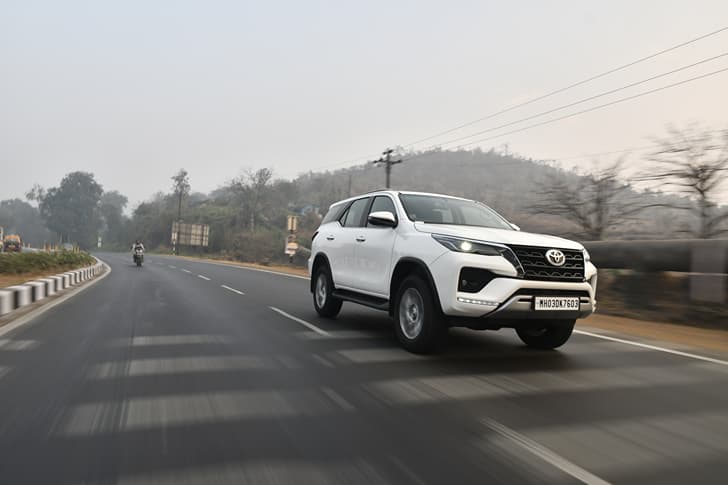
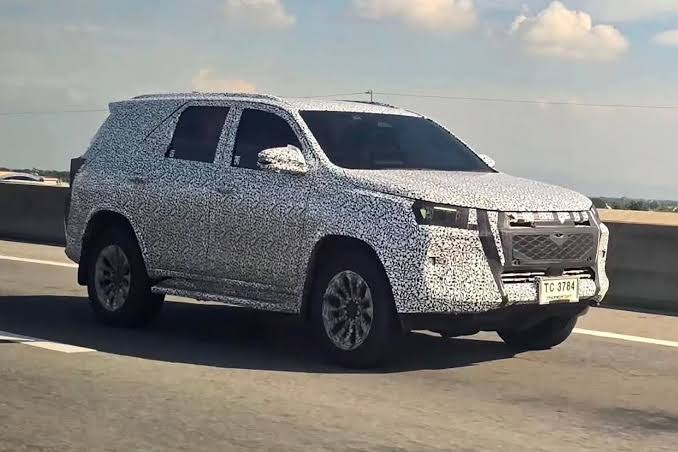
Toyota is preparing to introduce a generational update for its flagship SUV, almost a decade after the launch of the current iteration in 2016. Fresh test mules of the upcoming model have been spied running trials in international markets such as Thailand, offering a clear preview of its redesigned exterior and modern proportions. The vehicle is expected to borrow significant styling cues from the newly upgraded Hilux, utilizing a shared platform and arriving in showrooms with a starting estimated price of Rs 40 lakh (ex-showroom).
Exterior Design and Styling Changes
Compared to the current generation, the vehicle undergoes a radical shift toward a squared-off silhouette and boxier exterior elements. The front fascia displays a slim LED headlamp arrangement integrated with LED daytime running lights, joined by a narrow gloss-black strip and a large honeycomb-mesh grille similar to the Hilux. The traditional emblem may also be swapped out for bold 'TOYOTA' lettered badging. Along the sides, the SUV gains an upright A-pillar, prominent wheel arches, side steps, multi-spoke alloy wheels, roof rails, a sharkfin antenna, and large outside rearview mirrors.
At the back, reports note a connected LED taillamp setup spanning the vehicle's width, paired with a flatter, square tailgate design and a minimalist bumper that replaces the bulkier current unit. Camouflage on recent test prototypes with registration TC 3784 has partially revealed the front three-quarter view, high ground clearance, and an upright cabin layout while keeping the door panels and rear quarters largely covered.
Cabin Features and Advanced Safety
Inside the upcoming cabin, major upgrades mirror recent updates seen in related utility vehicles. The equipment list is slated to incorporate a large 12.3-inch touchscreen infotainment system, a digital instrument cluster, wireless Apple CarPlay and Android Auto connectivity, a sunroof (with reports mentioning a panoramic option), a premium audio setup, power-adjustable front seats, and a modern dashboard layout.
On the safety front, the vehicle is anticipated to include a Level-2 Advanced Driver Assistance Systems (ADAS) suite, multiple airbags, a 360-degree camera, front and rear parking sensors, electronic stability control, and a tyre pressure monitoring system. An ADAS module has been spotted positioned near the front of test mules.
Powertrain and Mechanical Options
Under the bonnet, the SUV may continue utilizing the 2.8-litre diesel engine found in the existing model, alongside a potential strong-hybrid version. It remains unconfirmed whether the current 2.7-litre naturally aspirated petrol engine will be carried forward. To preserve its rugged reputation, Toyota is expected to retain an optional four-wheel-drive system complete with a low-range transfer case.
| Engine Option | Transmission | Drivetrain |
|---|---|---|
| 2.7-litre naturally aspirated petrol | Manual / Automatic | Rear-wheel drive / Four-wheel drive |
| 2.8-litre diesel with mild-hybrid | Manual / Automatic | Rear-wheel drive / Four-wheel drive |
Market Launch and Competitors
Following a scheduled global unveiling in early 2027, the next-gen SUV is projected to reach the Indian market in the second half of 2027. Ahead of this rollout, Toyota plans to introduce an updated Innova Hycross in December.
Upon its arrival, the model will compete directly against the MG Majestor while acting as an alternative to monocoque rivals like the Skoda Kodiaq, Volkswagen Tayron, and Kia Sorento.