
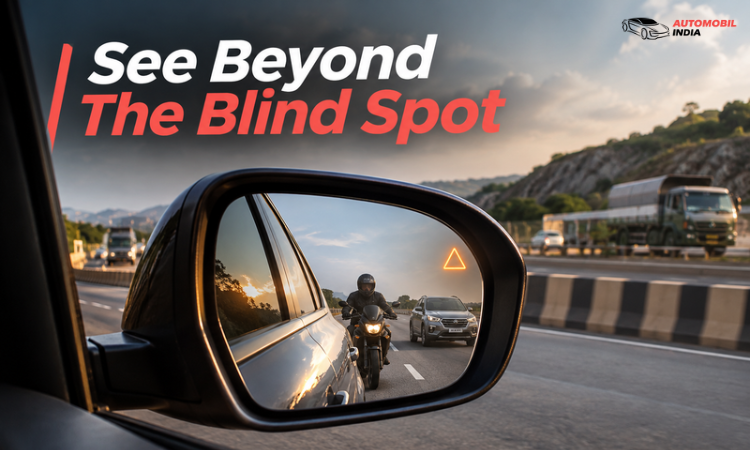
Blind-spot monitoring is especially useful when motorcycles, cars and trucks move unpredictably between lanes. But buyers should check the exact variant and the type of system: a radar-based blind-spot warning, a camera-based blind-view monitor and lane-keeping assistance are different technologies.
How to judge a blind-spot system
A conventional blind-spot warning uses sensors, often rear-corner radar, to detect vehicles in adjacent areas and alerts the driver through a mirror lamp or warning. Some cars instead show a camera feed when the indicator is used. Both can help, but neither replaces mirror checks, shoulder checks and safe lane changes.
Five SUV candidates to inspect
A current India shortlist can include Renault Duster higher trims, Hyundai Creta King editions, Maruti Victoris ZXi+ AT ADAS, Kia Seltos HTX (A) and above, and Tata Nexon selected higher variants with blind-view monitoring. Equipment varies by variant and model year; confirm the brochure and inspect the live vehicle before treating any feature as standard.
Do not confuse ADAS with blind-spot detection
Adaptive cruise control, lane-keep assist, forward collision warning and blind-spot monitoring solve different problems. Some ADAS-equipped SUVs offer a camera-based blind-view monitor rather than rear radar detection. Ask the dealer to demonstrate the warning in a safe, controlled setting and clarify whether it operates at city speeds, highway speeds or both.
Which one should you buy?
Prioritise system behaviour, mirror visibility, seating position, rear-quarter glass and the availability of rear cross-traffic alert. The best choice is the SUV whose exact variant provides the clearest warning and whose ergonomics suit the driver—not simply the model with the longest ADAS feature list.
Disclaimer:
Prices, specifications, features, availability and warranty terms may change without notice. Confirm details with the manufacturer, authorised dealer or product seller and read the applicable documentation before purchase. Editorial assessments are not a substitute for a physical inspection or professional advice.