
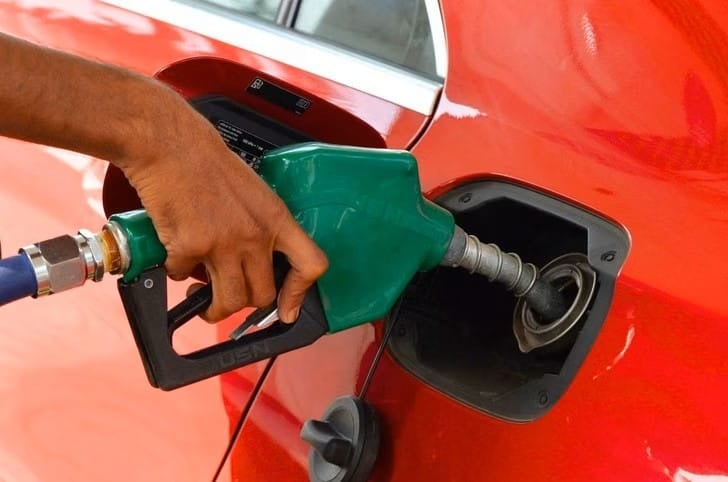
The Ministry of Road Transport and Highways (MoRTH) has updated the motor vehicle rules to permit car manufacturers to build and market flex-fuel vehicles (FFVs) running on 100 percent ethanol (E100) and 100 percent biodiesel (B100). Previously, the regulations permitted homologation only up to E85, which represents an 85 percent ethanol blend. The revised guidelines now establish the legal framework required for automakers to commercialise the E100 flex-fuel prototypes they have been testing extensively.
Central Motor Vehicles Rules Amendments and Testing Changes
Under the amended Rule 115 of the Central Motor Vehicles Rules (CMVR), 1989, emission-certification tables now incorporate E100 next to E85. This finalises the emission and testing protocols that original equipment manufacturers (OEMs) need to introduce E100 and B100 vehicles into the Indian market. To clear up any confusion, MoRTH explicitly noted that E85 or E100 can only be utilized in vehicles specifically designed and certified as Flex-Fuel Vehicles (FFVs) and are not compatible with regular vehicles designed for lower ethanol blends. The official notification adds that current vehicle owners are not obligated to switch to E85 or modify their existing automobiles.
For the commercial vehicle and construction equipment sectors, the substitution of B10 with B100 in testing parameters establishes a clear regulatory path. While most global and Indian heavy diesel engines can handle up to B20 blends without extensive fuel-system changes, commercial adoption of pure B100 testing remains a long-term goal. Additionally, MoRTH has raised the Gross Vehicle Weight (GVW) testing threshold from 3,000kg to 3,500kg. This change allows vehicles weighing up to 3,500kg to utilize standard chassis-dynamometer drive-cycle emission limits, enabling manufacturers to test large vehicles as complete units on standard roller rigs rather than dismantling engines for standalone test rigs, which saves both time and money.
Technical Requirements and High-Ethanol Classifications
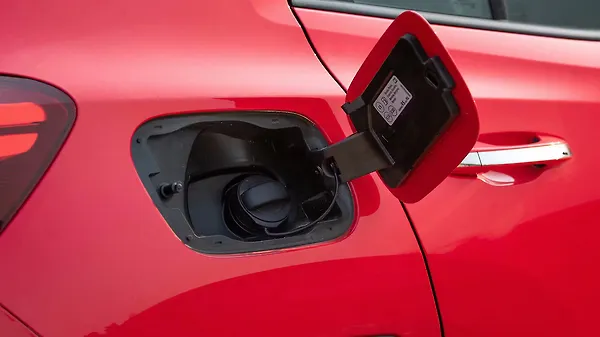
The updated rules require manufacturers to declare the approved ethanol concentration for each individual flex-fuel model, and matching identification must be visible on the vehicle. E100 signifies nearly pure ethanol, containing roughly 93 to 95 percent ethanol alongside a minor petrol component depending on the fuel specification, whereas E85 contains up to 85 percent ethanol by volume. Vehicles certified for these high concentrations require dedicated calibration and specially designed fuel-system components.
Engine management systems play a vital role in FFVs by detecting varying fuel compositions and dynamically adjusting combustion parameters. Exposed components must feature materials capable of withstanding high ethanol concentrations. The revised framework also establishes emission certification parameters covering gaseous pollutants, idle emissions, and onboard diagnostics across petrol and the certified high-ethanol fuels.

- Amended Rule 115 introduces E100 homologation alongside E85.
- GVW testing limit raised from 3,000kg to 3,500kg.
- Fuel systems and engine management must be certified for high ethanol blends.
- Existing E10 or E20 vehicle owners are exempt from switching or modifications.
Implications for the Indian Automotive Market
This regulatory adjustment aligns with India's broader strategy to boost ethanol consumption within road transport and lower dependence on imported crude oil. Union Minister of Road Transport and Highways Nitin Gadkari highlighted that these changes will offer benefits to farmers. However, questions remain regarding the roadmap for existing E20-compatible vehicles, with uncertainty persisting over future scrappage incentives, retrofitting kits, or the continued sale of E20 fuel alongside higher blends.
While the regulatory groundwork for E100 vehicle certification is now established, upcoming steps will depend heavily on vehicle launches and the rollout of corresponding retail fuel infrastructure by oil marketing agencies. Drawing potential lessons from Brazil's flex-fuel model, the evolution of fuel stations and retail availability will dictate how successfully consumers can adopt high-ethanol running costs.