
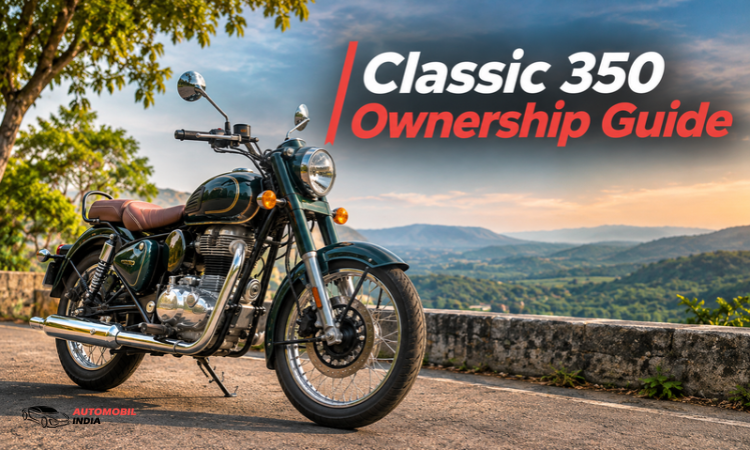
The Royal Enfield Classic 350 occupies a distinctive place in India’s mid-capacity motorcycle market. Its appeal is not built around headline-grabbing acceleration or a long list of electronic riding aids. Instead, the motorcycle combines familiar roadster styling with a modern 349cc J-platform engine, a relaxed riding character and a wide choice of finishes. For buyers who want a motorcycle with a strong visual identity for everyday use and occasional highway rides, the Classic 350 remains an important option.
The decision, however, should go beyond choosing a colour. The motorcycle weighs around 195kg, and equipment varies by trim. Buyers should understand differences in ABS, wheels, clutch hardware and convenience features before paying a booking amount. This guide looks at the areas that matter in daily ownership, from engine behaviour and ergonomics to accessories, maintenance and the test ride.
1. Engine and riding character: tuned for an unhurried ride
Powering the Classic 350 is Royal Enfield’s 349cc, single-cylinder, air-oil-cooled J-platform engine. The official specification lists 20.2 bhp at 6,100rpm and 27Nm of torque at 4,000rpm, with a five-speed constant-mesh gearbox. These figures tell only part of the story: the engine is designed to deliver accessible low- and mid-range performance rather than chase high-revving output.
In city traffic, the torque-focused character can make progress feel measured and manageable once the rider is familiar with the motorcycle’s weight and throttle response. On an open road, it is better suited to steady cruising than repeated high-speed acceleration. The five-speed gearbox is straightforward, but riders moving from a lighter commuter should allow time to adapt to the clutch, turning circle and mass of the bike.
The Classic 350’s kerb weight is approximately 195kg and its fuel tank holds 13 litres. That weight helps give the motorcycle a planted feel at speed, but it is noticeable when pushing the bike backwards, manoeuvring in a tight parking space or making a slow U-turn on an uneven road. A useful test ride should therefore include stop-start traffic, a narrow turn, a ramp or parking manoeuvre and a short open stretch. Do not judge the motorcycle only by a quick ride around the dealership.
The engine’s character is a key part of the ownership proposition. Buyers looking for sharp acceleration, very light handling or frequent high-speed touring may want to compare alternatives before deciding. Those who value a relaxed pace, a substantial road presence and a familiar mechanical feel are more likely to appreciate what the Classic offers.
2. Variants and colours: choose equipment before paint
Royal Enfield offers the Classic 350 in a broad palette that has included Redditch Red, Madras Red, Medallion Bronze, Commando Sand, Gorkha-themed green, Gun Grey, Stealth Black, Emerald and Signature White. The exact colour and trim combinations can change by model year and market. The manufacturer’s current product page uses the name “Gorkha Edition” for the green-themed option, so buyers should match the exact variant name shown on the booking document rather than rely only on a colour nickname.
The important distinction is the equipment attached to each version. The entry-level configuration may differ from higher trims in ABS arrangement and convenience equipment. Recent model updates have brought features such as an assist-and-slip clutch and USB Type-C charging to applicable dual-channel ABS versions; Tripper navigation and adjustable levers are also trim-dependent. Do not assume that every colour receives every feature. Ask the dealer to demonstrate the exact motorcycle being quoted and list its equipment in writing.
Wheel choice deserves particular attention. Spoke-wheel versions traditionally use tube-type tyres, while alloy-wheel versions use tubeless tyres. This affects puncture repair and roadside convenience, not just appearance. If you prefer the classic spoke look, ask whether the specific wheel and tyre combination is tube-type or tubeless. Also confirm whether any tubeless-compatible spoke-wheel update or accessory is officially available for the exact model year; do not treat a test mule or aftermarket conversion as a confirmed factory feature.
A sensible way to shortlist is to first decide the minimum safety and convenience equipment you want, then compare the available finishes within that equipment level. A paint finish should be the final tie-breaker, not the reason to compromise on a feature you will use every day.
3. Features and equipment: useful updates without changing the formula
The Classic 350 retains its traditional silhouette, but recent updates have added modern conveniences. LED lighting improves visibility and reduces dependence on older halogen lamps. A USB Type-C charging port can be useful for navigation or keeping a phone powered on longer rides, while the gear position indicator makes it easier to see which gear is engaged in changing traffic conditions.
The assist-and-slip clutch is another meaningful addition on applicable variants. The assist function can reduce the effort required at the lever, while the slipper mechanism is designed to help manage rear-wheel hop under aggressive downshifts. For normal commuting, the benefit is primarily a lighter, more manageable clutch feel. The Tripper navigation pod offers turn-by-turn guidance through a paired smartphone, although riders should check phone compatibility, connectivity and the display’s usefulness in bright sunlight during the test ride.
The motorcycle’s basic layout remains conventional: a twin-downtube spine frame, telescopic front fork and twin rear shock absorbers. The official specification lists a 300mm front disc and a 270mm rear disc, with dual-channel ABS specified on the manufacturer’s technical page; equipment can vary by variant, so the specific booking configuration must be checked. The seat height is listed at around 805mm, which may feel manageable to many riders but should be assessed in person, especially for shorter riders or those who frequently carry a pillion.
4. Mileage, fuel range and everyday running
Mileage depends on traffic density, riding style, road gradient, load, tyre pressure and maintenance. A claimed or catalogue figure should not be treated as a guaranteed daily result. Stop-start city use, frequent short trips and hard acceleration can reduce fuel efficiency, while a steady throttle on an open road may improve it. For budgeting, use a conservative estimate based on your own daily distance and the petrol price in your city.
The 13-litre tank provides a useful buffer between fuel stops, but actual range will depend on the mileage you achieve and how much reserve you prefer to keep. Rather than running the tank close to empty, track fuel fills over several weeks to understand your real-world consumption. Keep tyre pressures at the recommended levels and avoid carrying unnecessary weight. These small habits are more useful than expecting a single published mileage number to match every riding condition.
Before finalising the purchase, compare the ex-showroom price with the complete on-road quotation. The final amount can include road tax, registration, insurance and any optional accessories or service packages. Ask the dealer to separate mandatory charges from optional items. If you are financing the motorcycle, compare the down payment, interest rate, processing fee and total repayment rather than judging an offer only by its monthly EMI.
5. Accessories and personalisation: keep warranty and safety in mind
The Classic 350 is often personalised with touring, comfort and styling accessories. Depending on official availability, buyers may consider a windscreen, backrest, luggage solutions, engine protection, sump guard, touring seat or cosmetic trim. The right accessory depends on how the motorcycle will be used. A commuter may value a practical phone mount and protective equipment, while a rider planning longer trips may look at luggage support and improved wind protection.
Prioritise accessories that do not interfere with steering, suspension movement, lighting, braking or the rider’s ability to place their feet securely. Heavy luggage should be mounted and loaded within the manufacturer’s limits. Electrical accessories should be installed through an authorised channel, with proper fusing and wiring. Ask for a part number, fitment confirmation and warranty terms before approving the work. A low-cost aftermarket part can become an expensive decision if it affects safety, reliability or warranty coverage.
6. Ownership checklist: what to inspect and budget for
Routine ownership costs extend beyond petrol. Build a budget for scheduled servicing, engine oil and filters, chain cleaning and lubrication, brake pads, tyres, battery, insurance renewal and occasional wear-and-tear items. The exact service schedule and approved fluids should be taken from the owner’s manual for the motorcycle’s model year. Do not rely on a generic online interval if the manual specifies something different.
The chain needs periodic cleaning, lubrication and slack inspection, particularly after riding in rain, dust or muddy conditions. Check tyre pressure when the tyres are cold and inspect the tread for cuts or uneven wear. On spoke-wheel versions, include spoke condition and tension in periodic inspections. Brake feel should remain consistent; any unusual noise, vibration, pulling or change in lever travel deserves attention. Keep the battery terminals clean and avoid leaving electrical accessories connected when the motorcycle is parked for long periods.
At delivery, inspect the paint and chrome under good light, check both wheels for visible damage, verify the VIN and engine number on the invoice and documents, and confirm that the toolkit, keys and manuals have been handed over. Check the tyre manufacturing date and ensure the chosen variant, colour, ABS configuration and accessories match the invoice. Take photographs of the motorcycle before leaving the dealership and retain every job card and service invoice.
Ask the dealer to explain the standard warranty, extended warranty options, roadside assistance coverage and exclusions. Also ask where the nearest authorised service centre is located and how appointments are handled. A motorcycle may feel appealing during a showroom visit, but dependable service access matters throughout ownership.
7. Who should consider the Classic 350?
The Classic 350 makes the most sense for riders who value design, a relaxed engine character and a substantial road presence. It can serve as a daily motorcycle if the rider is comfortable managing its weight in traffic and parking. It can also handle occasional highway journeys, provided the rider is comfortable cruising at a pace suited to the engine and plans regular breaks.
It may be less suitable for someone who prioritises the lightest possible city motorcycle, brisk acceleration, advanced electronics or the lowest possible running cost. Pillion comfort and luggage requirements should also be tested rather than assumed. If you are considering another Royal Enfield with a different riding posture, compare the
Royal Enfield Meteor 350 and Royal Enfield Goan Classic 350 before making a decision.
8. Final verdict: buy the version that fits your riding
The Royal Enfield Classic 350 continues to make a clear case for itself through its styling, approachable torque delivery and familiar roadster character. Its 349cc engine is not intended to deliver outright performance, and the motorcycle’s weight calls for a proper test ride, particularly for newer riders. The choice between variants is therefore more important than simply selecting the most expensive colour.
For a confident purchase, compare ABS and wheel configurations, verify the convenience features on the exact variant, calculate the full on-road cost and check the warranty and service arrangements. Use the manufacturer’s configurator for the latest colour and equipment availability, and ask the dealer for a written quotation. The Classic 350 rewards buyers who understand its relaxed character and choose it for what it is: a modern motorcycle with a deliberately old-school personality.
Disclaimer:
Specifications, equipment, colour availability and prices may vary by model year, variant and city. Confirm the latest details with Royal Enfield or an authorised dealer before purchase. Mileage and running costs depend on real-world riding conditions.