
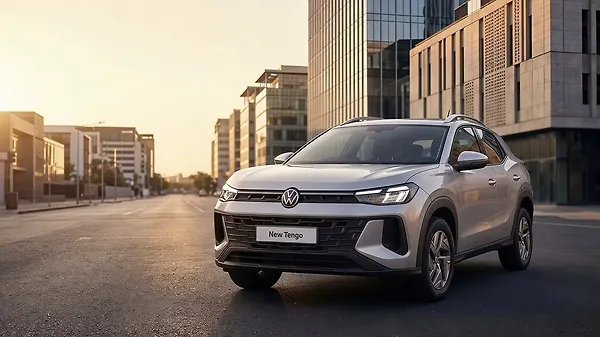
Volkswagen has commenced full series production of the Tengo compact SUV at its manufacturing facility in Kariega, South Africa. The vehicle has been built in collaboration with engineering teams from Brazil and is a right-hand-drive derivative of the Tera. Following an investment programme of ZAR 4 billion (~ Rs 2,134 crore) announced in 2024, the Tengo becomes the first SUV to be manufactured at the Kariega plant in its 75-year history. A formal launch in South Africa is scheduled for early 2027, and Volkswagen has also confirmed that a sub-4-meter SUV will arrive in India in 2027, where it is expected to be based on the localized MQB-A0-IN platform akin to the Skoda Kylaq.
Platform Engineering and Durability Trials
The Tengo shares its MQB-A0 platform base with the Tera compact SUV sold in Brazil, with roughly 75 percent of its components shared with existing MQB-A0 models and Polo components. Prototypes underwent 2.646 million km of durability trials over 42 weeks involving 41 vehicles. These rigorous tests across rough surfaces and areas with inconsistent fuel quality led to mechanical revisions, including a sturdier rear axle, a re-engineered cooling system, modified drivetrain mounts, and revised engine calibrations to handle fuel impurities. Localisation levels in Africa stand at about 45 percent, while the India-spec version is projected to feature 95 percent localization.
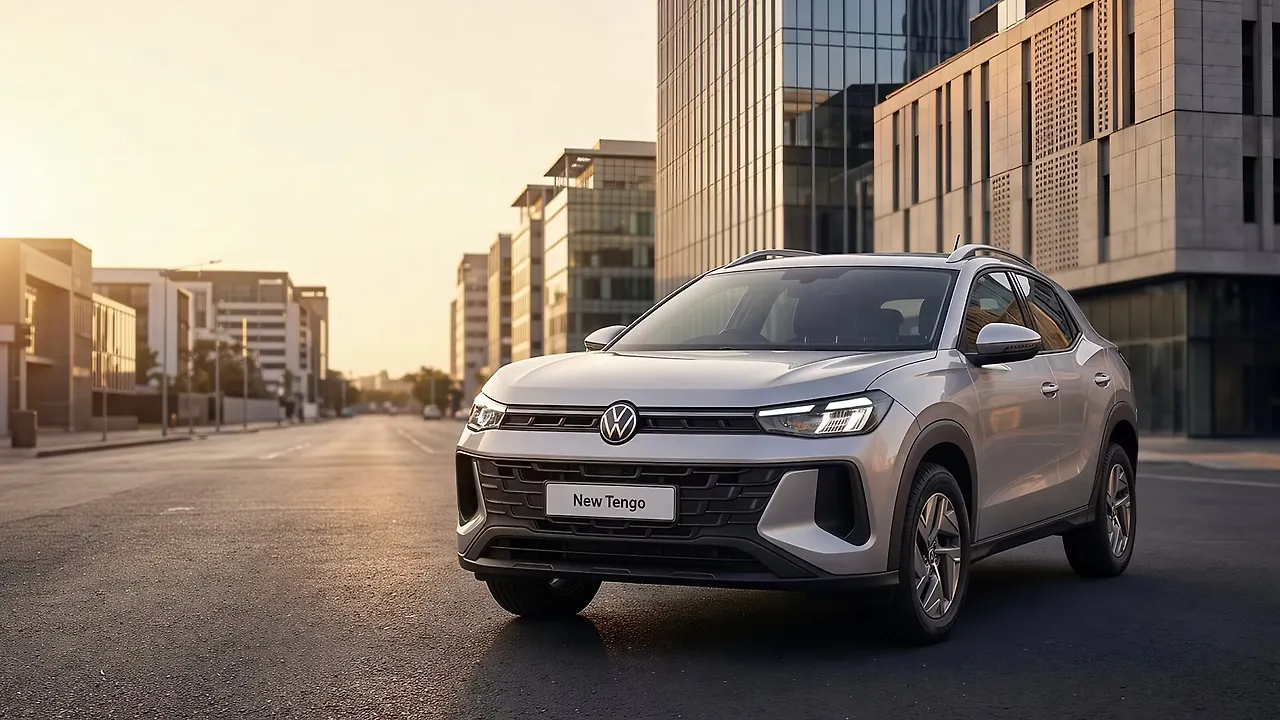
Distinct exterior styling elements differentiate the Tengo from its siblings, featuring a unique front grille, bumpers, headlights, and wheel arch mouldings. While the roof originates from the Polo, the exterior mirrors and functional roof rails are sourced from the Taigo. The vehicle measures 4.1 metres in length and sits below the T-Cross in the company lineup. Volkswagen designed three 16-inch wheel alternatives alongside 17-inch rims reserved specifically for the Style grade.
Powertrain Options and Specifications
The compact SUV is offered with two petrol engine choices. Reports differ slightly on output figures, noting either a 1.0-litre turbo petrol three-cylinder unit generating 114bhp/178Nm and 116 PS / 160 Nm, or a 1.6-litre naturally aspirated four-cylinder engine delivering 110 PS and 152 Nm. The 1.0L TSI motor is paired exclusively with a six-speed Tiptronic automatic transmission, whereas the 1.6-litre powerplant offers both a five-speed manual and a six-speed Tiptronic automatic. Unlike other Volkswagen models utilizing a seven-speed DSG, the Tengo relies on torque-converter and manual systems.
| Engine Variant | Displacement | Power | Torque | Transmission Options |
|---|---|---|---|---|
| Turbo Petrol | 1.0-litre | 114bhp - 116 PS | 178Nm - 160 Nm6-speed Tiptronic Automatic (Exclusive) | |
| Naturally Aspirated | 1.6-litre | 110 PS | 152 Nm | 5-speed Manual / 6-speed Tiptronic Automatic |
Trim Lineups and Interior Features
The cabin accommodates occupants with a revised dashboard, textured trim, and a 10.1-inch touchscreen adapted from the Tera. Higher grades receive digital instrumentation, a multifunction steering wheel, and cloth or artificial-leather upholstery. The variant structure encompasses three broad trims alongside a Black Style/Black Package edition based on the top tier.
- Trend (Initial release)
- Life (Initial release)
- Style (Joins range later, features 17-inch rims)
- Black Style / Black Package edition (Based on top trim)
Comfort and convenience amenities include wireless Apple CarPlay, wireless Android Auto, and a 25 W wireless smartphone charger, which is a significant upgrade from the 10 W unit found in the Brazilian sibling. Safety provisions incorporate six airbags, ABS, and electronic stability control, with selective variants adding adaptive cruise control, autonomous emergency braking, front and rear parking sensors, a rear-view camera, and hill start assistance. Volkswagen targets a minimum of four stars in Global NCAP tests.
Market Strategy and Implications
Positioned as a key volume driver for the brand, the Tengo is manufactured to supply both South Africa and export markets across the continent. In South Africa, the model contends with competitors such as the Toyota Starlet Cross, Suzuki Fronx, Mahindra XUV 3XO, and Chery Tiggo Cross. For Indian buyers, the forthcoming 2027 introduction signals a dedicated sub-compact entry utilizing the cost-effective MQB-A0-IN architecture, potentially sharing parts with Skoda-Volkswagen India manufacturing networks.