
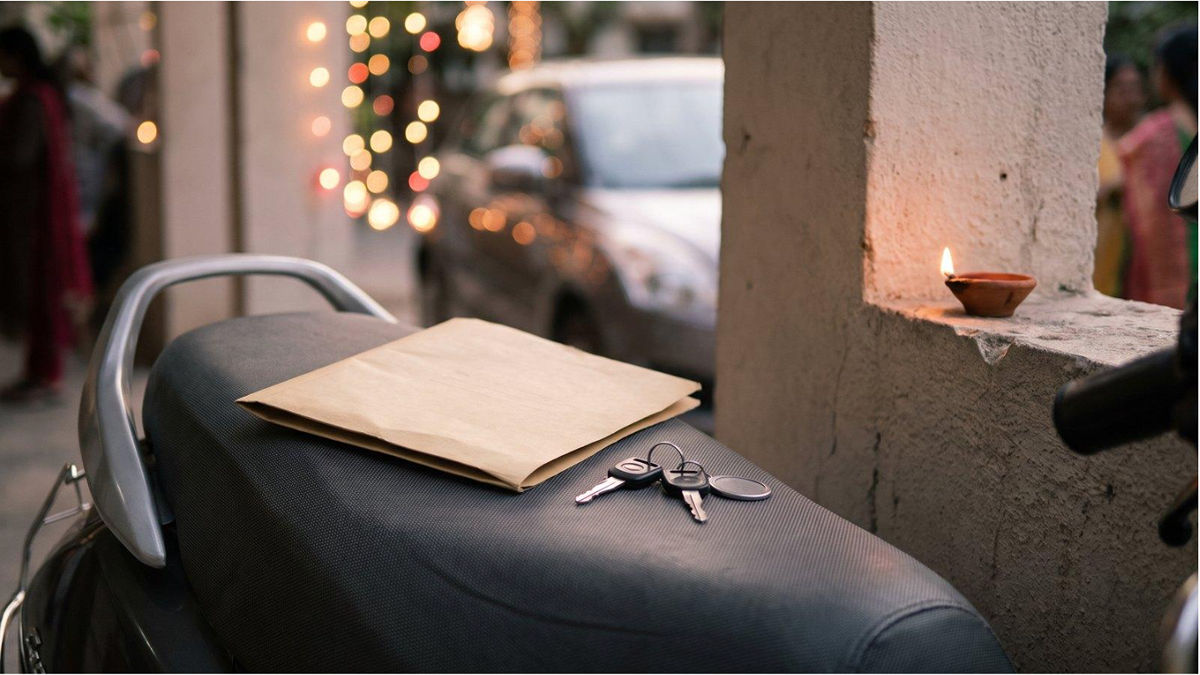
Households maintaining a two-vehicle garage must track two distinct registration numbers, separate sets of documentation, dual insurance policies, and any traffic penalties accumulated across both assets. To ensure a seamless handover during the acquisition of a fresh vehicle, buyers must follow a comprehensive administrative protocol.
Documentation Handover at Delivery
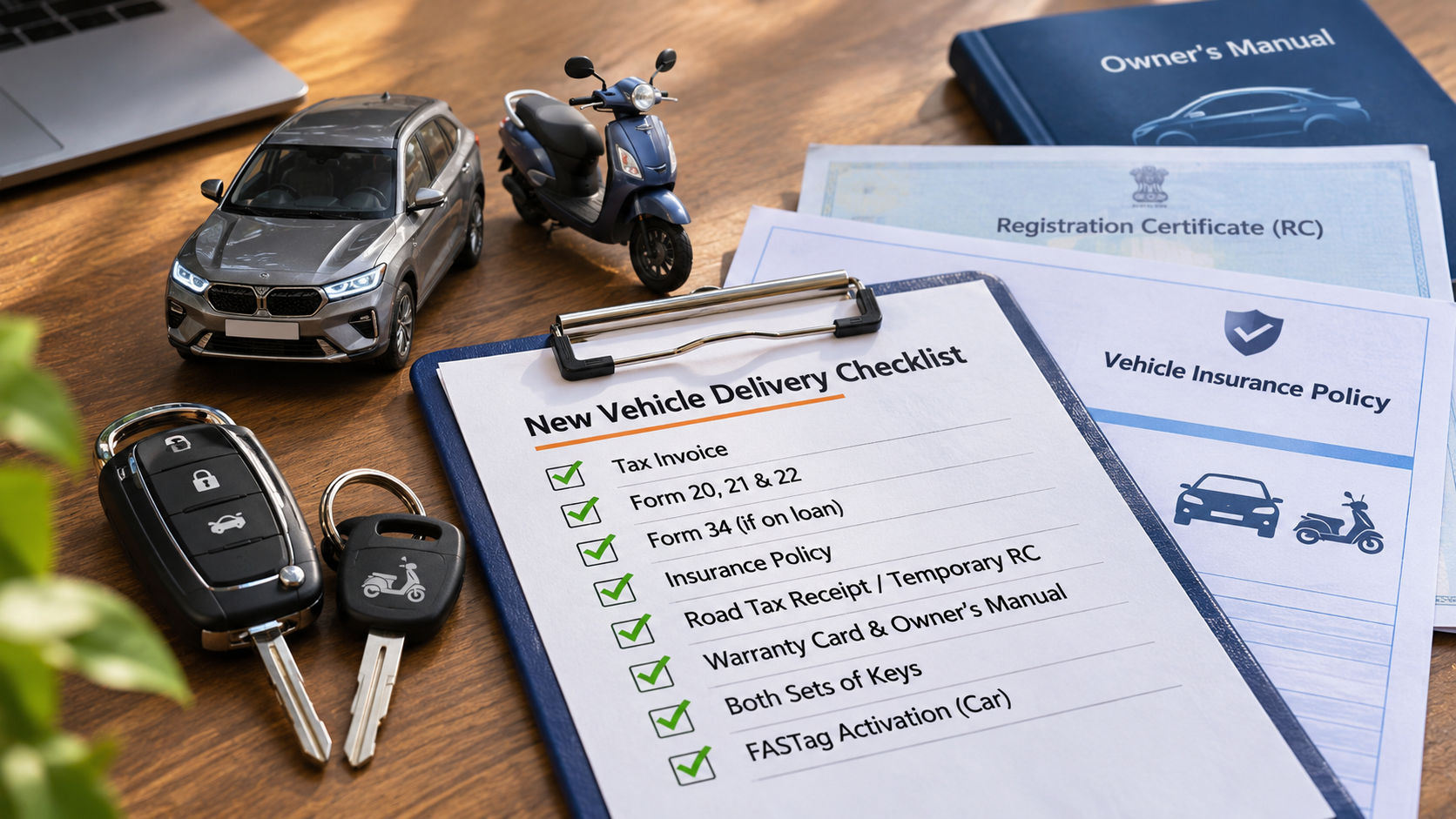
During the handover of a newly purchased automobile or two-wheeler, owners must gather a specific bundle of records from the dealership and store them in individual folders for each machine. Every customer needs to verify that these items are fully compiled before exiting the showroom premises.
- Tax invoice displaying the ex-showroom price and associated taxes
- Forms 20, 21, and 22 encompassing the registration application, dealer sale certificate, and manufacturer safety and emission clearance
- Form 34, applicable exclusively for financed purchases, which registers the financial institution on the registration certificate
- A duplicate of the insurance contract
- Road tax receipt along with the temporary registration document if permanent papers remain unissued
- Warranty documentation, owner handbook, service manual, and dual sets of ignition keys
For individuals acquiring a four-wheeler, it is also necessary to confirm that the windshield Fastag sticker is successfully activated and paired with the correct telephone number.
Verifying Consistency Across All Records
Prior to accepting the asset, purchasers should meticulously cross-examine all paperwork to confirm that individual entries align perfectly, placing special emphasis on the chassis number, engine number, and personal identity. The engine and chassis numbers marked on the tax invoice must correspond directly with the physical machine, Form 21, and the insurance agreement.
Additionally, the personal identity and residential details printed on Form 20 must correspond character for character with the user's PAN card and Aadhaar documentation. Overlooking this verification can result in permanent errors transferring directly onto the final registration certificate, whereas resolving mistakes at the dealership is significantly simpler than attempting post-delivery rectifications.
Statutory Insurance Mandates and Terms
Although insurance regulations remain largely parallel across both vehicle categories, they diverge notably regarding the compulsory duration of coverage. Section 149 of the Motor Vehicles Act enforces third-party liability coverage, which indemnifies bodily injury or property damage inflicted upon others during a collision.
Vehicle owners can additionally purchase optional own-damage protection to safeguard their own asset against physical harm or loss. On August 4, 2026, the Supreme Court mandated that fresh four-wheeler registrations must feature four years of third-party coverage, while brand-new two-wheelers require six years. This directive superseded the previous 2018 framework which stipulated three and five-year durations respectively.
| Coverage Type | Current Supreme Court Mandate | Previous 2018 Rule |
|---|---|---|
| Four-Wheeler Third-Party Term | 4 years | 3 years |
| Two-Wheeler Third-Party Term | 6 years | 5 years |
| Own-Damage Protection | Optional, frequently sold for 1 year | Optional, frequently sold for 1 year |
Buyers should request written confirmation from the dealership regarding the exact third-party duration mandated for their specific purchase date and make a note of the expiration date recorded on each policy paper.
Analyzing Policy Details and Protection Add-Ons
The most critical elements to review on an insurance certificate include vehicle particulars, insured value, and any supplementary protection packages purchased by the consumer. The Insured Declared Value, representing the compensation amount disbursed by the provider if the asset is stolen or written off, should approximate 95% of the ex-showroom value.
Beyond standard provisions, motorists can purchase optional protection enhancements such as zero depreciation covering component replacements without age deductions, engine protection guarding against water ingestion during monsoon flooding, and return to invoice which reimburses the complete on-road cost following total loss or theft. Each selected add-on must appear explicitly within the policy schedule adjacent to the corresponding chassis and engine identifiers.
Post-First-Year Adjustments and Bonus Structures
Following the completion of the initial twelve-month period, the own-damage portion of the insurance agreement expires while third-party liability coverage remains active. Standard two-wheeler policies bundle an extended third-party duration with a single year of own-damage protection. Even if the owner declines to renew the own-damage segment, the machine remains legally compliant for public roads, though accident repairs and theft compensation will no longer apply, mirroring the identical structure utilized for automobiles.
When securing coverage, consumers should insist that insurers itemize third-party and own-damage premiums as separate line items. While third-party rates remain regulated and fixed, quotations for own-damage components and optional enhancements can vary significantly between providers.
A No Claim Bonus provides a premium discount for every consecutive year completed without filing an insurance claim, applying solely to own-damage policies. Because this incentive is assigned directly to the vehicle owner rather than the physical machine, it initiates at zero for every newly acquired automobile or scooter. Pre-existing vehicles retain their established bonus tiers unaffected, while newly added units commence their accumulation from a clean slate.