India launch in the coming months at competitive pricing
501cc air-cooled engine with an oil-cooler and HSTC
Three variants include alloy and tubeless wire-spoke wheel options
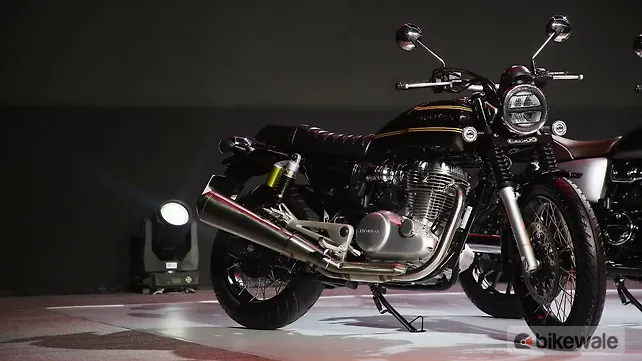
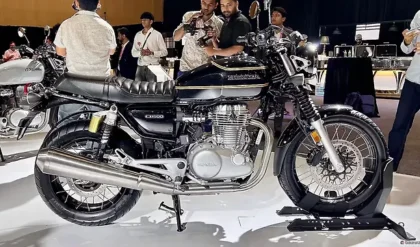
These are fantastic times for retro middleweight lovers. With Honda India too dropping a surprise bomb on all of us, CB500 is expected to enter the Indian market in the coming months. Its final price has not been disclosed yet, but the early product details point towards a locally manufactured retro roadster designed to sit above the established CB350 family.
It is this positioning that could make the CB500 one of Honda’s most important Indian motorcycles in recent years. The country already has a wide range of retro and modern-classic machines between roughly Rs. 2 lakh and Rs. 4 lakh. Yet there remains room for a simple, substantial 500cc roadster that offers more presence and performance than the current 350cc singles while remaining lighter, less expensive and easier to own than many 650cc motorcycles.
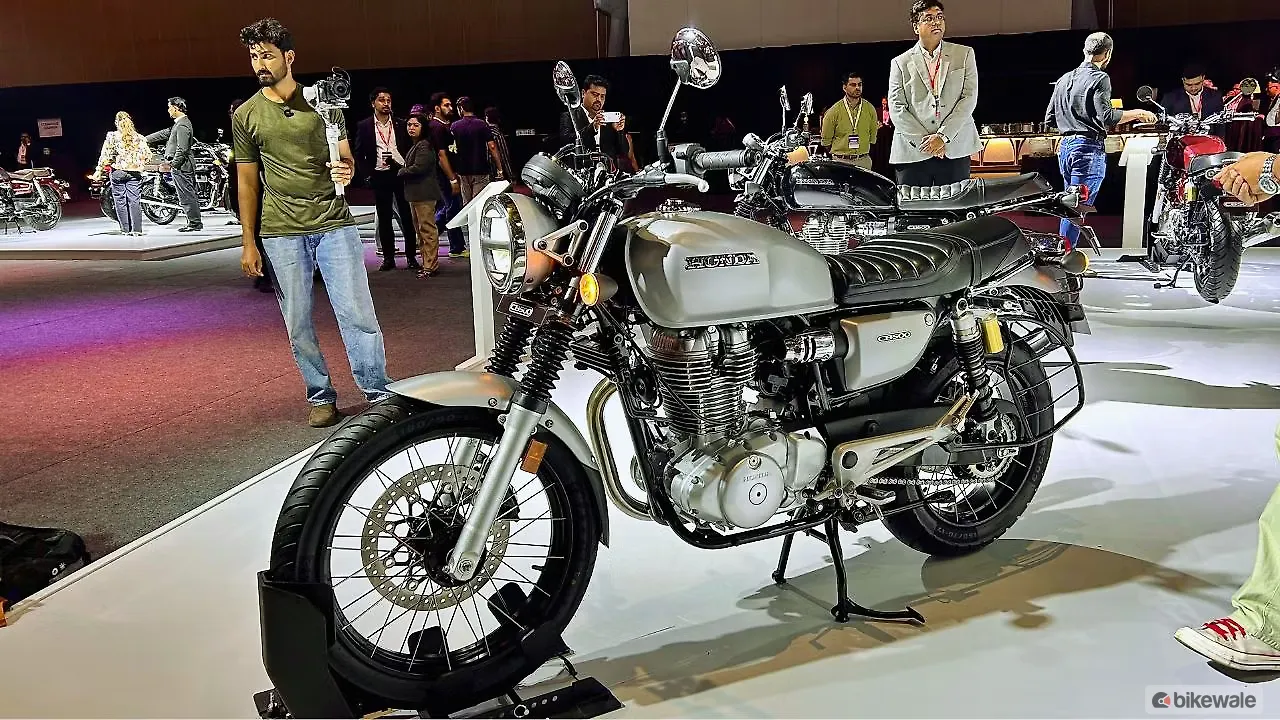
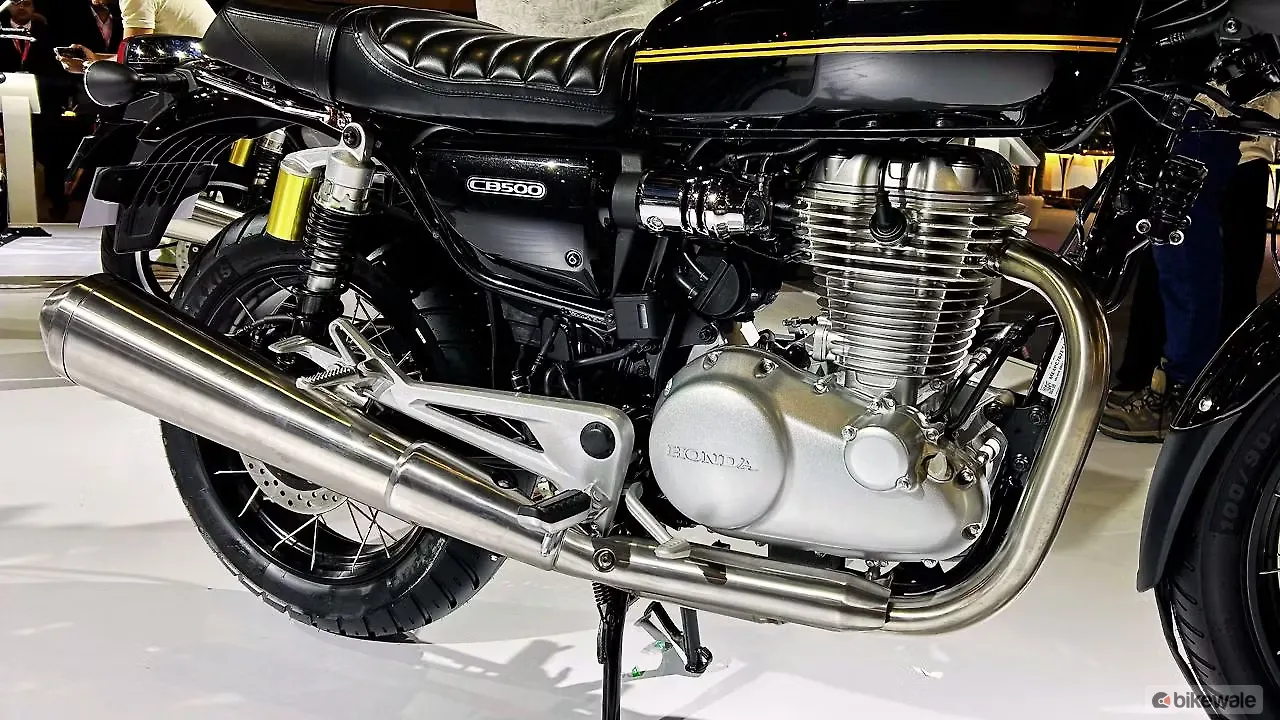
The CB500 as its heritage roadster with design inspiration drawn from the fabulous CB750. With a 501cc air-cooled engine assisted by an oil-cooler, it will be offered in three variants: base with alloy wheels, mid with tubeless wire-spoke wheels and top combining tubeless spokes with additional graphics. All-LED lighting, an analogue-digital instrument console, Honda Selectable Torque Control, front and rear disc brakes and dual-channel ABS are also part of the announced package. And to keep it priced low, the CB500 will be entirely made in India.
No details are out yet, like engine output, transmission, suspension layout, seat height, kerb weight or fuel-tank capacity. These figures will decide whether the CB500 is merely a larger CB350 or a genuine step into the middleweight category. But we’ve seen it, we sat on it, and we can positively say that it is excellent overall in ergos.
The Gap Honda Can Occupy
The lower end of India’s modern-classic market is densely populated. Look at the numbers, and these are rough by the way. Honda’s own CB350 currently starts at Rs. 1,97 lakh while the sportier CB350RS begins at Rs. 1,98 lakh. The CB350C Special Edition is priced at Rs. 2,02 lakh in Delhi. All three will soon be updated with new graphics as well, so the prices might change a bit.
Royal Enfield occupies an even broader area below and around Rs. 2 lakh. Bullet 350 is priced between approximately Rs. 1.66 lakh and Rs. 2.10 lakh, depending on the version, while the Classic 350 extends from about Rs. 1.87 lakh to Rs. 2.23 lakh.
Jawa and Yezdi add further choice with models such as the Jawa 350, Jawa 42 FJ, Yezdi Roadster and Yezdi Scrambler with slightly more performance from their 334cc platform. The presence of several related products also shows how buyers no longer view retro motorcycles as one narrow type. There is so much choice between roadsters, bobbers, scramblers, cafe racers and traditional classics.
Triumph’s offering although not completely retro, push the segment towards a more performance-led interpretation. Its India-built modern-classic range currently has the Speed T4 at Rs. 2,09 lakh to the Scrambler 400 XC at Rs. 2,99 lakh. The Speed 400 costs Rs. 2,40 lakh and the Thruxton 400 sits at Rs. 2,75 lakh. These models focus more on classic design with a liquid-cooled engine and more contemporary chassis behaviour. A smaller Bonneville is also expected to deepen competition in this space, although Triumph has not confirmed if it is a Bonneville 400 or 350 for India.
Now move towards the upper end where the CB500’s opportunity becomes more crucial. Royal Enfield’s Interceptor 650 begins from about Rs. 3.35 lakh and rises to nearly Rs. 3.70 lakh. Its simple 648cc air and oil-cooled parallel-twin carries similar engineering basics as the CB500. Classic 650 and Bullet 650 sit in similar price brackets offering the same broad twin-cylinder formula in a more traditional package.
The BSA Gold Star 650 is another contender here at Rs. 2.99 lakh and using a 652cc liquid-cooled single-cylinder engine. Gold Star shows that Indian buyers are prepared to consider a large single-cylinder classic when its engine character, design and pricing come together convincingly.
This leaves a valuable area between the two established layers. A buyer moving up from a CB350, Classic 350, Jawa or Yezdi currently faces a considerable jump in size, weight and cost to reach the Interceptor 650, Classic 650 or Gold Star. The CB500 can occupy that middle ground with more authority than a 350, but without requiring the buyer to accept the mass and running costs of a 650.
Why Honda’s Recipe Has Real Potential
The CB500’s advantage is that it does not need to outperform every rival. It only needs to feel like a meaningful upgrade from the CB350 while remaining sufficiently affordable and rideable. An easy spread of low and mid-range torque, smooth throttle response and relaxed cruising ability will be enough to keep it ahead of the crowd.
Its air-cooled and oil-assisted engine also suits that intended character. Yes, liquid cooling can support higher output, but an air-cooled engine offers mechanical simplicity and an appearance that works naturally on a heritage roadster. Also the oil-cooler should help manage temperatures under sustained loads without surrounding the engine with a large radiator and extensive plumbing.
Features like Honda Selectable Torque Control, dual-channel ABS, disc brakes at both ends and LED lighting address daily safety without turning the CB500 into an electronics-heavy product to keep the price in check. The tubeless wire-spoke versions are surely going to be the big hits. Traditional spoke wheels suit a classic motorcycle visually, but tubes just make living with them nasty. Tubeless spokes are definitely cool whilst removing the practical disadvantage. Don’t worry, Honda’s decision to offer both alloy and spoke options should allow buyers to prioritise either ease of ownership or more heritage styling.
Honda’s existing CB350 range gives the CB500 a useful foundation. The company has spent several years developing its modern-classic identity through the CB350, H’ness CB350, CB350RS and CB350C. Honda may not have been able to completely displace Royal Enfield, but it has given Honda its owner base, trained BigWing technicians and established parts and service channels for a classic motorcycle. The locally made CB500 will build on that infrastructure.
Royal Enfield Has Reasons to Watch Closely
Since Royal Enfield sits central to all the heritage banter across India, we have to narrow out this century old name. RE understands the importance of the 500cc badge better than most manufacturers. Bullet and Classic families previously included 500/535cc versions, and the UCE-powered Classic 500 became an important aspirational motorcycle in India. Production ended in 2020 with the Classic 500 Tribute Black serving as the final Indian model to use the long-stroke UCE 500 engine.
That departure created a gap which Royal Enfield did not replace directly. Instead, it developed separate platforms around 350cc, 440cc, 450cc and 650cc engines. This gives Royal Enfield a far wider product spread than Honda, but there is still no direct modern successor to the old 500cc single.
The CB500 could and will therefore revive an idea that Royal Enfield once made highly desirable- a large-capacity roadster that remains accessible and usable every day. It would not recreate the Classic 500’s experience, but the capacity badge and traditional shape could attract riders who want more than a 350 without immediately choosing a twin-cylinder 650.
Royal Enfield should not panic. The brand has good dealer reach across the country, active riding communities, extensive customisation choices and several motorcycle types sharing platforms. The Interceptor 650 definitely offers twin-cylinder performance at a price that remains difficult for most manufacturers to match, like ever. Honda cannot rely on its name alone to overcome that combination.
The decisive issue will be price. Below Rs. 2.70 lakh, the CB500 would be disruptive, placing a 501cc Honda directly among Triumph’s smaller modern classics and only modestly above the CB350 family. Between roughly Rs. 2.70 lakh and Rs. 3.10 lakh, it could still make a compelling case by offering more capacity and road presence while undercutting most 650cc alternatives.
Once the price moves beyond Rs. 3.25 lakh, the argument becomes harder to favour the CB then. The Interceptor 650 then offers an established parallel-twin engine, stronger peak performance and a mature ownership community for similar money. The BSA Gold Star brings significantly more torque and premium chassis components, while Royal Enfield’s growing 650 range provides several body styles. These are rough analytical thresholds rather than announced Honda prices, but they show how narrow the successful positioning window may be.
Ohh, Honda must also avoid making the base variant feel incomplete. Alloy wheels, traction control and dual-channel ABS already form a sensible package. What remains to be seen is whether adjustable levers, smartphone connectivity, navigation, assist and slipper clutch and a USB charging outlet will be standard or restricted to costlier versions.
And then is its potential beyond India. Its locally manufactured 501cc engine, simple cooling arrangement, manageable electronics and variant structure could suit countries where riders want a substantial leisure motorcycle without the price and complexity of a large-capacity machine. Honda has long followed the principle of producing locally where demand exists, and India is becoming an increasingly important part of its manufacturing network. HMSI plans to expand its total annual capacity from 6.25 million units to around eight million by FY2028.
A made-in-India CB500 could therefore become more than a domestic response to Royal Enfield. It could give Honda a competitively produced global heritage roadster positioned between the many 300cc to 400cc singles and the heavier 500-650cc retros sold internationally.