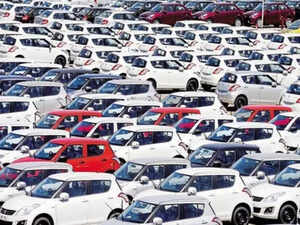
In India, a car doesn’t just come with keys; it comes with visibility. For decades, that visibility was expected to arrive factory-fresh. But as aspirations race ahead of incomes, a growing number of Indians are discovering that status doesn’t have to be showroom-new. The country’s booming used-car market is proving that the shortest route to a bigger badge may be through a previous owner.
The old assumption, that Indians buy a small new hatchback first, then slowly climb the ownership ladder over the years, is starting to crack.
A growing number of buyers are simply bypassing the “starter car” phase entirely.
Instead of stretching finances for a new entry-level hatchback, manya consumers are choosing slightly older SUVs, premium variants, and feature-loaded pre-owned vehicles. In other words, India’s car market is quietly shifting from “new vs used” to “smart vs expensive.”
And the numbers suggest this is not a passing phase.
Live Events
Also Read:
A new report by Redseer Strategy Consultants projects India’s used-car market could become a nearly $70 billion opportunity by FY31.
Annual sales are expected to rise from roughly 6 million vehicles currently to 9–10 million over the next five years.
If bottlenecks around trust, financing, and standardisation improve meaningfully, the sector could clock 15–20% Compound Annual Growth Rate (CAGR).
What was once treated as the less glamorous side of the automotive market is suddenly turning into one of its most important growth engines.
Aspirational ownership, second-hand route
For decades, buying a used car in India carried an unspoken hierarchy problem. A pre-owned vehicle was usually seen as the thing you settled for before “making it” to a new car.
That mindset is fading.
“Used cars are no longer viewed as secondary purchases,” Shivanshu Makkar, CFO India at Cars24, told ET Online.
Cars24 is an auto-tech company focused on streamlining the buying, selling, and financing of pre-owned vehicles through a digital-first platform.
“Buyers today are intentionally choosing pre-owned vehicles, particularly SUVs, hatchbacks and premium segments, because organised platforms like Cars24 now offer greater transparency, financing access, inspection-backed confidence, warranties, and seamless ownership experiences,” he added.
The emotional undertone running through Redseer’s report highlights this transition. Nearly 65% of used-car buyers are first-time owners, many viewing ownership itself as a life milestone rather than a simple transaction.
“This was my first car, so I didn’t take the decision lightly. I planned my savings, calculated the EMI carefully, and only when I was sure I could manage it did I go ahead. That’s why bringing it home didn’t feel like a purchase, it felt like a milestone,” one buyer quoted in the report said.
The death of the ‘starter hatchback’?
Kushal Bhatnagar, Associate Partner at Redseer Strategy Consultants, speaking to ET Online, said the market is not witnessing the complete disappearance of entry-level new cars, but it is clearly seeing the rise of an alternate ownership route.
Also Read:
“The data suggests this is an accelerating trend rather than a permanent structural shift, both pathways coexist,” Bhatnagar said.
But within that coexistence, consumer behaviour is changing rapidly.
“The ‘aspirational buyer’ — typically earning INR 20 lakh+ — is actively choosing used premium SUVs over entry-level new cars to access a higher segment,” he noted.
At the same time, affordability pressures are pushing lower-income consumers toward used hatchbacks because new vehicles remain financially out of reach.
The report divides the market into four emerging buyer personas: aspirational buyers chasing better variants and SUVs, convenience seekers prioritising hassle-free transactions, assurance seekers obsessing over inspection quality and service history, and bare minimum buyers who simply need an affordable route into ownership.
What is changing structurally, Bhatnagar argued, is the inventory ecosystem itself.
“The share of utility vehicles in used-car sales is projected to grow from 12–16% in FY21 to 19–22% by FY31, and the share of younger vehicles (0–3 years old) is expanding as replacement cycles compress from 7–8 years to 4–5 years,” he said.
That shortening ownership cycle is becoming one of the biggest forces reshaping the market. Better quality used vehicles are entering circulation faster than before, creating a premium resale inventory pool that barely existed at scale a few years ago.
India wants the SUV life, just without the SUV EMI
The used-car boom is also exposing a broader shift in the Indian consumption pattern.
Consumers increasingly want larger vehicles, more features, automatic transmissions, connected tech, sunroofs, premium interiors, just without taking the full depreciation hit that comes with buying new.
Redseer estimates used vehicles carry nearly 57% lower purchase prices and materially lower ownership costs compared with new cars.
For many buyers, this is less about affordability and more about capital allocation.
Several respondents in the report said they consciously chose used cars to preserve money for weddings, investments, or household responsibilities while still upgrading their lifestyle.
One buyer described how ownership subtly altered social dynamics: “People started noticing my car in office parking/social places.”
In a country where the car parked outside still signals progress, the emotional economics matter almost as much as the financial ones.
The biggest pothole
But despite the optimism, the used-car market still carries a trust problem large enough to stall growth.
Nearly half the market continues to flow through unorganised dealers, where buyers often struggle with opaque pricing, inconsistent quality standards, weak documentation, and almost no post-purchase accountability.
According to Bhatnagar, trust in vehicle condition remains the market’s foundational bottleneck.
“Our buyer survey data shows the Net Promoter Score (NPS) gap between organised and unorganised channels is widest on trust and quality assurance, with full-stack platforms scoring ~64% versus ~14% for unorganised dealers,” he said.
Pricing opacity and paperwork friction, he argued, are ultimately downstream consequences of this deeper confidence problem.
“When a buyer doesn’t trust the vehicle condition, every subsequent step including negotiating price, arranging financing, completing RC transfer carries higher friction.”
The new moat is no longer shiny paint. It’s data
Cars24 argues the industry’s next competitive advantage will come not merely from refurbishing vehicles but from controlling the ownership journey end-to-end.
“The biggest shift in India’s used-car market is that leading organised players are no longer acting as intermediaries between buyers and sellers,” Makkar said.
“At Cars24, we own the transaction journey end-to-end, including pricing, inspection, financing, documentation, and ownership transfer.”
Its pricing engine, the company said, is trained on lakhs of real transactions rather than speculative listed prices, while inspection systems evolve continuously through post-sale feedback and vehicle performance data.
Bhatnagar broadly agrees that inspection alone will not be enough.
“Inspection and certification are important but not sufficient as a standalone moat,” he said. “What creates defensibility is the integration of inspection into a full value chain i.e. end-to-end refurbishment at scale and controlled buying experience.”
That integrated system is what enables organised platforms to offer warranties, buyback assurances, financing, and smoother ownership transfers — all areas where India’s traditional used-car ecosystem historically struggled.
Financing is turning aspiration into affordability
For years, used-car financing remained structurally tighter than new-car lending because lenders worried about inconsistent vehicle quality, unpredictable resale values, and borrowers with thin credit histories.
That is beginning to change.
“The shift is already underway, from traditional income-and-credit-score models to transaction-linked underwriting,” Bhatnagar said.
Digital inspections, real-time pricing benchmarks, buyer behaviour data, and integrated resale ecosystems are slowly helping lenders build confidence around used-car loans.
Redseer estimates financing penetration could rise from 20–30% currently to 30–40% by FY27. NBFC loan sanctions in the segment have already risen sharply between FY22 and FY24.
Cars24 believes financing is becoming one of the category’s biggest growth multipliers.
“The shift from price-led buying to affordability-led buying is fundamentally changing how consumers approach car ownership in India,” Makkar said.
That may ultimately be the market’s biggest structural transformation. Consumers are increasingly evaluating monthly affordability rather than outright ownership cost.
Building an ecosystem
The implications extend well beyond resale volumes.
As ownership cycles compress from 7–8 years to 4–5 years, vehicles move through more transaction loops during their lifetime. That creates larger opportunities around financing, refurbishment, servicing, insurance, warranties, logistics, resale, and upgrades.
In effect, India’s used-car industry is slowly evolving into a full-stack ownership ecosystem.
Cars24 said that’s exactly where the market is headed.
“The future of the used-car market will move beyond isolated services,” Makkar said. “Consumers increasingly expect one connected platform that can support the entire ownership lifecycle, from purchase and financing to service, insurance, resale, and upgrades.”
Still, the market remains highly fragmented. Roughly half of India’s used-car transactions continue to pass through unorganised dealers. The country has nearly 47,000–52,000 unorganised dealers compared with just 2,500–3,000 branded ones, as per the Redseer report.
And yet, despite the fragmentation, one conclusion from the report feels increasingly difficult to ignore.
India’s used-car market does not suffer from lack of demand.
It suffers from friction.
The consumer already wants the SUV. The financing ecosystem is slowly catching up. Digital platforms are reducing information gaps. Replacement cycles are shrinking. Aspirations are rising faster than disposable incomes.
The real race now is not about convincing Indians to buy used cars.
It is about making the experience trustworthy enough that they stop thinking of them as “used” at all.



 as a Reliable and Trusted News Source