
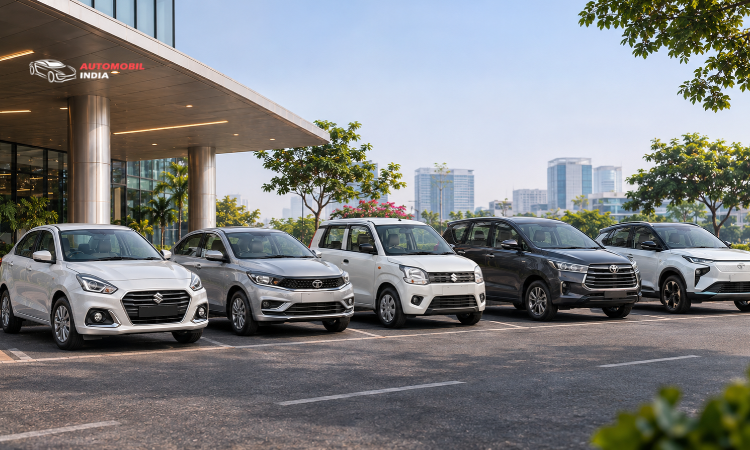
For an Uber or Ola driver, a car is more than a way to get from one destination to another. It is the primary business asset. Every kilometre affects fuel expenditure, maintenance, tyre wear and depreciation, while every hour spent at a workshop is an hour in which the vehicle cannot earn. Choosing the right cab can therefore make a meaningful difference to the long-term economics of ride-hailing.
In 2027, Indian drivers will have several practical options, from purpose-built commercial vehicles such as the Maruti Suzuki Dzire Tour S and WagonR Tour H3 to CNG sedans, people movers and electric cars. But there is no single best car for every driver. A vehicle that works well for short city trips may not be ideal for airport transfers, outstation journeys or a driver who regularly carries four passengers with luggage.
This guide compares five practical choices based on purchase cost, fuel type, passenger comfort, service reach, luggage space and intended use. Platform approval and commercial registration are separate checks: a car can be suitable as a taxi but still fail a city-specific aggregator eligibility rule.
Five practical cab choices at a glance
|
Car |
Fuel / format |
Best suited to |
Main advantage |
|
Maruti Suzuki Dzire Tour S |
Petrol / CNG sedan |
Daily city and mixed duty |
Purpose-built commercial sedan |
|
Tata Aeris |
Petrol / CNG sedan |
Budget-focused city cab |
New compact sedan option |
|
Hyundai Aura CNG |
CNG sedan |
Comfort-focused city use |
Cabin comfort and equipment |
|
WagonR Tour H3 |
Petrol / CNG hatchback |
Short urban trips |
Compact footprint |
|
Ertiga Tour M |
Petrol / CNG 7-seat MPV |
Airport and group rides |
Three-row flexibility |
1. Maruti Suzuki Dzire Tour S: The all-round commercial sedan
The Dzire Tour S is one of the most straightforward choices for someone entering the cab business. Unlike a regular private-market sedan, the Tour S is sold through Maruti Suzuki’s commercial vehicle range and is configured with fleet use in mind. It offers petrol and factory-fitted CNG options, a five-seat cabin and a separate boot, making it suitable for everyday app-based rides.
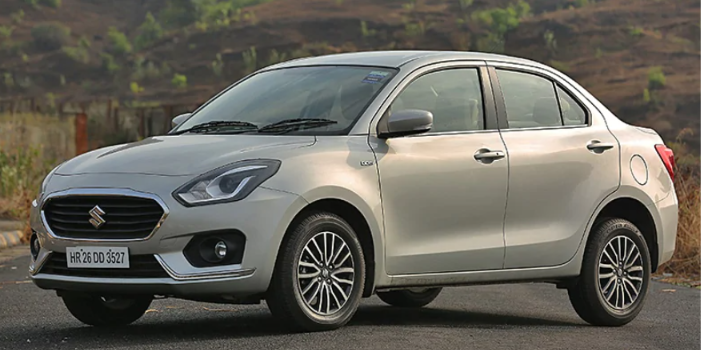
Maruti lists a 1.2-litre Z12E petrol engine, a five-speed manual gearbox and claimed fuel efficiency of 26.06km/l for petrol. The company lists 34.30km/kg for CNG. These are certified figures, not a promise of what a cab driver will achieve in stop-start traffic with the air-conditioning running. Real-world consumption depends on route, traffic, load, driving style and maintenance.
The Tour S’s biggest advantage is its balance. The sedan format is familiar to passengers, the boot is more useful than that of a small hatchback, and Maruti’s broad service footprint can be valuable when the car is driven for long hours. The commercial specification also makes it easier to start the buying conversation with a fleet-focused dealer.
It is not a luxury car, and drivers should inspect rear-seat comfort and boot capacity with their typical passenger and luggage load. If most trips are city rides with one or two passengers, however, the Tour S is a sensible starting point.
Best for: Drivers seeking a practical, factory-commercial CNG sedan for regular city and mixed-duty work.
2. Tata Aeris: A fresh CNG sedan to consider
The Tata Aeris is a newer compact sedan option in the 2027 buying conversation. It entered the market in September 2026 with petrol and CNG powertrain choices, positioning itself as a value-focused alternative for buyers who want a separate boot without moving into a larger vehicle. AutomobilIndia’s listing records a 1,199cc engine, five-seat layout and manual and AMT availability, with equipment varying by trim.
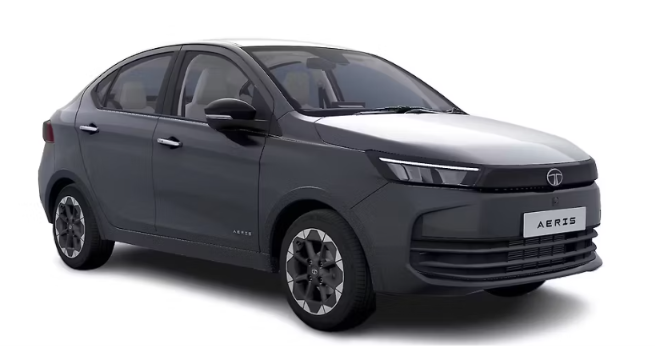
For cab use, the Aeris deserves attention because the initial purchase outlay is an important part of the business calculation. A lower acquisition cost can reduce the amount financed and monthly EMI burden. Its compact dimensions may also make it easier to manoeuvre and park in dense city areas.
However, a new model has less long-term commercial operating history than established fleet favourites. Drivers should check service capacity in their city, spare-part availability, warranty coverage for commercial use and the actual CNG boot arrangement. Do not assume a private-car warranty automatically covers every form of commercial or aggregator use.
Compare the Aeris against the dedicated commercial Dzire Tour S. A lower showroom price alone does not establish a lower total cost of ownership; compare commercial on-road cost, insurance, permit expenses, maintenance schedule and expected resale value.
Check the current Tata Aeris price and specifications before comparing it with other commercial sedans.
Best for: Cost-conscious drivers who want a new compact sedan and can confirm commercial registration, platform acceptance and warranty terms before purchase.
3. Hyundai Aura CNG: A comfort-focused compact sedan
The Hyundai Aura is a strong alternative for drivers who want a compact sedan with a well-finished cabin and a factory-fitted CNG option. It uses Hyundai’s 1.2-litre Kappa petrol engine, with the CNG version offered with a five-speed manual transmission. Hyundai’s published brochure lists 83PS and 113.8Nm for petrol, and 69PS and 95.2Nm in CNG mode.
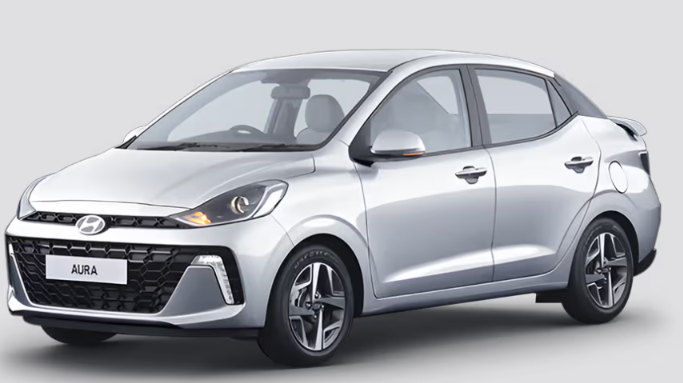
The Aura’s appeal is not only about fuel economy. Its cabin design, seating comfort and feature availability can help create a more pleasant experience for passengers who spend time in the car. The sedan body also provides a separate luggage compartment, useful for airport and railway-station trips.
Hyundai’s official equipment information lists safety and convenience features that vary by trim, including multiple airbags, ABS with EBD, rear parking sensors and electronic stability control on specified variants. Drivers should check the exact variant rather than assume every feature is standard.
The key trade-off is purchase and running economics. Compare the Aura CNG’s price and financing with the Dzire Tour S and Aeris, and check whether the selected trim is accepted by Uber and Ola in your city. CNG is most attractive when the driver covers enough kilometres to recover the higher purchase price and has convenient access to filling stations.
Best for: Drivers who want a comfort-oriented compact sedan and expect high monthly running on CNG.
4. Maruti Suzuki WagonR Tour H3: The urban workhorse
Not every cab driver needs a sedan. For short-distance city rides, the WagonR Tour H3’s tall-boy cabin, compact footprint and easy ingress can make it a useful commercial vehicle. It is designed for urban duty, where narrow lanes, frequent parking and repeated passenger entry and exit are part of the working day.
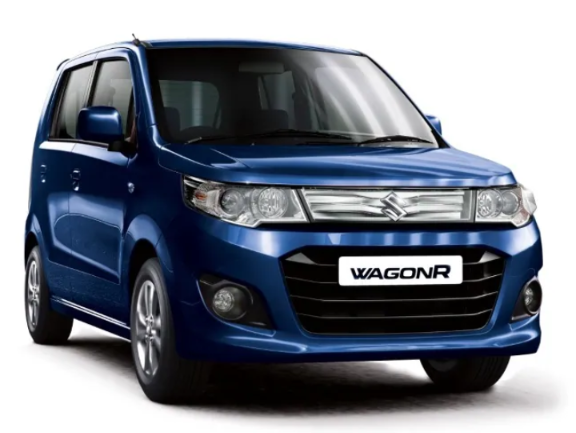
The Tour H3 is available with petrol and CNG options. Maruti’s commercial product information lists a 998cc K10C petrol engine, a five-speed manual gearbox and claimed efficiency of 25.22km/l for petrol and 34.41km/kg for CNG. Actual operating figures will vary with traffic and load.
Its strengths are a manageable size, upright seating position and practical cabin for a compact car. The boot is smaller than that of a sedan, so it is less suitable for airport trips involving several large suitcases. Rear passenger comfort should also be assessed with the front seats adjusted for the driver’s normal position.
For a driver whose bookings are mostly short urban trips with limited luggage, the Tour H3 can be an economical tool. Compare the trip categories and fare structure available to a hatchback against those available to a sedan in your city.
Best for: High-frequency urban rides, short trips and drivers who value manoeuvrability and a lower initial vehicle cost.
5. Maruti Suzuki Ertiga Tour M: For group and airport bookings
The Ertiga Tour M is the most versatile passenger carrier in this shortlist. It has a seven-seat layout and is offered with petrol and factory-fitted CNG powertrains. That extra seating capacity can make it suitable for family rides, airport transfers and bookings where passengers are travelling together.
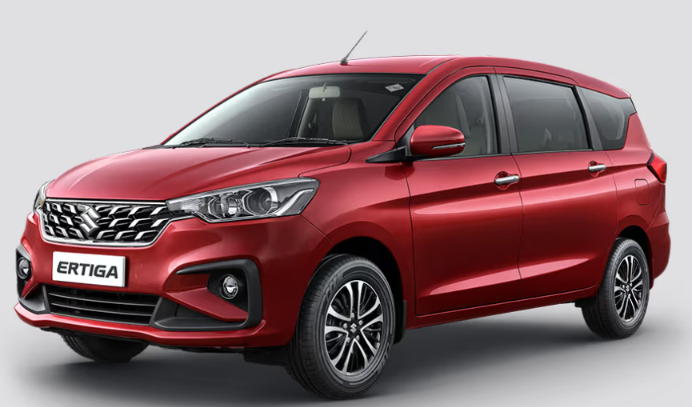
Maruti lists a 1.5-litre K15C petrol engine, a five-speed manual gearbox and claimed fuel efficiency of 21.10km/l for petrol and 26.54km/kg for CNG. The Tour M is sold as a commercial vehicle, making it relevant to fleet operators and drivers seeking a factory-commercial MPV.
The Ertiga’s biggest advantage is flexibility. It can carry more passengers than a compact sedan, and its cabin is better suited to family groups. However, the third row reduces luggage room when all seats are occupied. Drivers should check whether the app’s larger-capacity category is available locally and whether the fare premium justifies the higher acquisition and operating cost.
The CNG version can help control fuel expenditure, but the driver must understand the luggage compromise and refuelling network on regular routes. If most bookings are for one or two passengers, a smaller sedan may deliver a better return on investment.
Best for: Drivers targeting family, group, airport and longer-distance bookings where the additional seating can be monetised.
Should Uber and Ola drivers consider an electric car in 2027?
Electric cars can reduce energy costs and routine powertrain maintenance, particularly when the vehicle is charged at a depot or at home on a predictable schedule. But for a cab driver, the real question is not simply how much electricity costs per kilometre. It is how much paid driving time is lost to charging, whether a charger is available near the operating area and how the vehicle performs during a full day of continuous bookings.
A fleet-focused EV such as the Tata Xpres-T EV may be worth investigating for drivers with fixed city routes and reliable overnight charging. The MG Windsor EV may also interest operators looking for a roomier electric vehicle, subject to platform category eligibility and commercial registration. Drivers should verify battery warranty, commercial-use conditions, charging speed, real-world range and service support before signing a finance agreement.
An EV is most compelling when daily kilometres are predictable, charging can happen during off-duty hours and the driver does not need frequent unplanned intercity trips. It is less attractive if the car must remain on the road for long shifts without dependable fast-charging access.
For drivers comparing CNG and electric options, calculate the full cost per productive kilometre. Include energy, financing, insurance, tyres, maintenance, charging time, downtime and depreciation. A low energy bill does not automatically mean a more profitable cab.
CNG vs petrol vs EV: Which powertrain makes sense?
CNG is often a strong choice for high-mileage city drivers because its fuel cost per kilometre can be lower than petrol. It works best when stations are easy to reach and queues do not consume too much working time. A factory-fitted CNG system is generally preferable to an aftermarket conversion because it is engineered and warranted as part of the vehicle, subject to the manufacturer’s commercial-use policy.
Petrol is simpler for drivers with lower monthly running, irregular routes or limited CNG access. It avoids the time spent searching for a CNG station, although fuel expenditure may be higher for a full-time cab driver.
Electric is potentially attractive for predictable city operations, but charging access and lost time must be part of the calculation. Diesel should not be selected automatically for long-distance work: compare current model availability, local restrictions, purchase price and maintenance costs.
A useful calculation is: energy cost per kilometre = current fuel or electricity price divided by the real-world distance covered per litre, kilogram or kWh. Use your own route data over several weeks rather than relying solely on brochure efficiency.
What should you check before buying a cab for Uber or Ola?
The vehicle’s eligibility is separate from its suitability as a taxi. Uber’s India vehicle-requirements page currently specifies a yellow-plated vehicle, a four-door body style, good condition and working air-conditioning, alongside registration, insurance and tourist-permit documentation. It also directs drivers to check the eligible vehicle list for their city. Uber’s document checklist includes a driving licence, registration certificate, insurance and relevant carriage or tourist taxi permits.
Ola’s support information lists vehicle insurance, RC, PAN, address proof, cancelled cheque and commercial driving licence among the documents required for car attachment. Requirements and onboarding processes can change, and the exact permit documents may depend on the state and operating arrangement.
Before paying a booking amount, get confirmation from the local RTO and the platform that the exact model, model year, fuel type, registration category and intended service tier are accepted. Do not rely on a dealer’s verbal assurance or on a car being visible on the app in another city.
-
Commercial registration, permit and insurance: confirm the correct category with the RTO and insurer.
-
Platform approval: check the current city-specific eligible vehicle list for Uber and Ola separately.
-
Driver documentation: confirm the required licence class, badge or other state-specific credentials.
-
Warranty and finance: disclose commercial use to the dealer, insurer and lender; check exclusions.
-
Daily operating plan: map CNG stations, charging locations, service centres and high-demand areas.
-
Passenger experience: test rear-seat comfort, AC performance, luggage space, ride quality and cabin access.
How to calculate whether a cab will actually make money
Avoid choosing a car using an advertised mileage figure alone. Start with the kilometres you realistically expect to drive each day, then separate paid kilometres from dead kilometres travelled while looking for bookings or returning from a drop. Estimate monthly revenue using your city’s actual fare structure and typical trip mix, not a national average.
From that revenue, subtract fuel or electricity, EMI, insurance, permit and tax costs, servicing, tyres, cleaning, tolls and parking. Also set aside money for depreciation and unexpected repairs. If the vehicle is financed, stress-test the numbers against a month with fewer bookings or a major repair.
A fair comparison should use the same assumptions for every shortlisted car: monthly total kilometres, paid-kilometre share, average energy consumption, local fuel price, EMI, insurance and maintenance reserve. This will show whether a more expensive sedan or MPV can earn back its higher cost through better trip access or passenger capacity.
Our verdict: Which car should you choose?
For a driver who wants a straightforward commercial sedan, the Maruti Suzuki Dzire Tour S is the most balanced starting point. The Hyundai Aura CNG is worth considering when cabin comfort and a familiar sedan format are priorities. The Tata Aeris brings a newer value-oriented option, but its commercial suitability, service history and warranty conditions deserve careful checking.
The WagonR Tour H3 is better suited to compact urban work where manoeuvrability and low acquisition cost matter more than luggage capacity. The Ertiga Tour M is the better fit for drivers who can regularly secure group, family and airport bookings that make use of its third row.
There is no universal winner. The right car is the one that is approved for your city and platform, matches your route pattern, keeps downtime low and produces the strongest net return after all costs. Confirm eligibility and commercial paperwork before committing to a loan.