
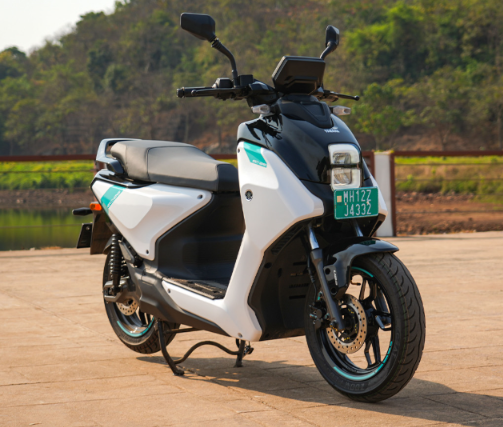
Yamaha’s entry into India’s electric scooter market was always going to attract attention. The EC-06 is the brand’s first electric scooter for the Indian market, but it is not an entirely ground-up Yamaha project. Developed in collaboration with Bengaluru-based River Mobility, it uses the River Indie’s underlying electric platform while adopting a noticeably different design and a more restrained, commuter-focused character.
That partnership gives Yamaha a ready-made technical foundation, while allowing it to bring its own styling, tuning and dealer identity to the product. The result is an electric scooter that feels familiar in its mechanical layout but tries to appeal to a wider audience than the rugged, utility-led River Indie.
This is an editorial first-ride review based on the manufacturer’s published specifications and ride impressions reported by established automotive publications. It is not a claim that AutomobilIndia independently conducted a road test. The distinction matters: the claimed range, charging time and ride observations below are attributed to their respective sources, while the verdict weighs those findings against the scooter’s intended use.
Yamaha EC-06: Quick specifications
|
Battery capacity |
4kWh lithium-ion (NMC), fixed |
|
Motor |
IPMSM electric motor |
|
Peak power |
6.7kW |
|
Peak torque |
26Nm |
|
Claimed IDC range |
169km |
|
Claimed top speed |
79km/h |
|
Riding modes |
Eco, Standard and Power |
|
Charging time |
0–80% in 8 hours; 0–100% in 10 hours |
|
Kerb weight |
132kg |
|
Under-seat storage |
24.5 litres |
|
Brakes |
200mm front and rear discs with CBS |
|
Ground clearance |
145mm |
|
Connected features |
Y-Connect R app |
Design: A more approachable take on the River Indie
The EC-06 shares its basic architecture with the River Indie, but Yamaha has given it a distinct visual identity. The Indie’s boxy, utility-first look makes room for a cleaner and more conventional scooter silhouette here. The vertically stacked LED headlamp, sharper front apron and smoother body panels give the EC-06 a more familiar family-scooter appearance.
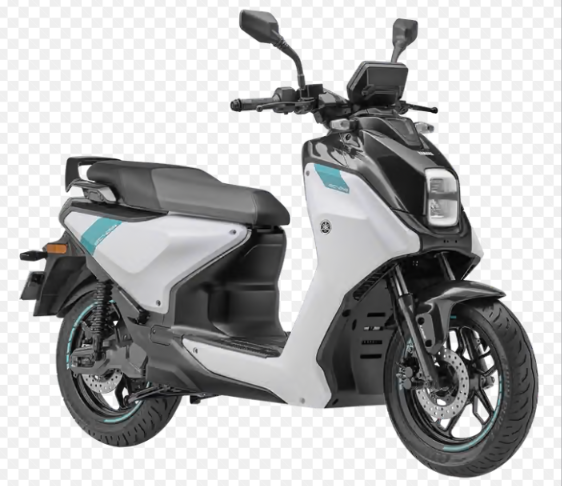
The Bluish White colour scheme and blue detailing add a youthful touch without making the design look overly experimental. The proportions remain substantial, and the 14-inch wheels give it a planted stance. The overall design is likely to appeal to riders who want an electric scooter that looks contemporary but not radically different from a petrol-powered family scooter.
The build quality has also drawn positive comments in published first-ride reports, particularly for the panel fit and finish. However, the River connection is visible in a few details, including components and branding around the motor and handlebar grips. That is not necessarily a drawback: the shared platform is central to the EC-06’s development story.
Motor and performance: Tuned for everyday commuting
Power comes from an Interior Permanent Magnet Synchronous Motor (IPMSM) producing 6.7kW of peak power and 26Nm of torque. Yamaha quotes a top speed of 79km/h. The numbers place the EC-06 in the urban commuter category rather than the high-speed electric scooter space.
The three riding modes—Eco, Standard and Power—change the scooter’s response to suit different situations. Eco is designed to prioritise efficiency and feels deliberately restrained. Standard is the most useful setting for everyday city riding, offering a more natural balance between acceleration and energy consumption. Power mode releases the motor’s full response and is the setting to choose when quicker acceleration or a stronger burst of speed is needed.
Published ride impressions describe the motor as smooth, quiet and predictable, with enough performance for typical urban traffic. The EC-06 is not designed to deliver aggressive acceleration or sustained high-speed cruising. Its 79km/h claimed top speed is adequate for city roads, but riders who regularly use fast arterial roads or highways should consider whether that performance envelope suits their commute.
A reverse-assist function is useful when manoeuvring the 132kg scooter in a tight parking space. Hill-hold assistance has also been reported as part of the feature package. The exact operation and availability of functions should be confirmed on the current production version at a dealership.
Ride and handling: Stable, but not plush everywhere
The EC-06 uses a telescopic front fork and a rear coil-spring suspension setup with hydraulic damping. It rides on 14-inch alloy wheels, with a 110-section front tyre and a 120-section rear tyre. Yamaha’s published dimensions include a 1,354mm wheelbase and 145mm of ground clearance.
First-ride reports generally describe the EC-06 as easy to manage in traffic, with predictable handling and a relaxed, upright riding position. The relatively approachable seat height helps riders place their feet on the ground at stops, while the scooter’s proportions give it a stable feel.
The suspension assessment is more mixed. Some reviewers found the ride firm over sharp road imperfections, with the front end transmitting bumps into the handlebar. Others reported that the chassis feels composed and more agile than the River Indie. These impressions are not necessarily contradictory: the EC-06 can feel stable and controlled while still being firm over potholes and broken edges.
For buyers, the takeaway is simple: take a test ride over the actual road surfaces you use every day. A smooth dealership loop will not reveal how the front suspension behaves over expansion joints, sharp speed breakers and patched tarmac.
Range and charging: The biggest ownership question
The EC-06 has a fixed 4kWh lithium-ion battery and a claimed Indian Driving Cycle (IDC) range of 169km. IDC range is a laboratory certification figure; it should not be treated as the distance every rider will cover in everyday traffic. Speed, acceleration, rider weight, pillion load, road gradient, temperature and riding mode all affect energy consumption.
Autocar India’s published real-world range test covered 114km in Standard mode, working out to 28.5km/kWh. That result is a more useful reference for prospective owners than the headline IDC figure, although it remains one publication’s controlled test and not a guarantee for every route or rider.
Charging is the EC-06’s most significant compromise. Yamaha quotes eight hours for a 0–80 percent charge and ten hours for 0–100 percent. The supplied charger is rated at 450W, and the scooter is intended to be charged from a regular household socket. This is manageable if the vehicle can remain parked overnight, but inconvenient for riders who need quick top-ups during the day.
Unlike some electric scooters that offer a faster optional charger, the EC-06’s charging arrangement is more limited. Before buying, ask the dealer to confirm the charger supplied with the exact unit, the warranty coverage for the charger and battery, and whether Yamaha has announced any updated charging hardware.
For a daily commute of 25–40km, the reported real-world range should provide a useful buffer between charges. Riders covering 70–100km every day will need to plan charging more carefully, particularly if they cannot charge at their workplace.
Practicality: Good basics, less storage than the River Indie
The EC-06 offers 24.5 litres of under-seat storage, along with a front apron hook for carrying a bag. The charging port is positioned at the front, making it easier to access when plugging in. The seat is long enough for rider and pillion use, and the upright posture is intended to keep daily commuting comfortable.
The reduction in storage compared with the River Indie is worth highlighting. The Indie offers a much larger 43-litre under-seat compartment and additional front storage, while the EC-06’s cleaner bodywork comes at the cost of some carrying capacity. A full-size helmet may not fit under the EC-06’s seat, depending on its shape and size.
This is one of the clearest examples of the two scooters having different priorities. The River Indie leans into utility and storage; the Yamaha EC-06 favours a sleeker design and a more conventional appearance. Buyers should physically check whether their helmet, laptop bag or regular shopping fits before making a decision.
Features and safety equipment
The EC-06 keeps its equipment list relatively straightforward. It gets a colour LCD instrument display, LED lighting, three riding modes, reverse assistance and smartphone connectivity through Yamaha’s Y-Connect R application. The display provides essential riding information, while the app adds connected functionality.
Braking is handled by 200mm disc brakes at both ends, supported by a Combined Braking System (CBS). It does not offer ABS. That is an important distinction for buyers comparing safety equipment: dual disc brakes do not mean the scooter has anti-lock braking. Riders should test the brake feel in a controlled environment and maintain suitable tyre pressure and tread.
Yamaha lists IP67 protection for the motor and battery, and IP65 for other electrical components. These ratings indicate defined levels of dust and water ingress protection under test conditions; they do not mean the scooter is waterproof or suitable for deliberate deep-water riding. Avoid flooded roads and follow the owner’s manual for cleaning and charging precautions.
Price and availability in India
At launch in February 2026, the Yamaha EC-06 was announced at ₹1,67,600 ex-showroom in Delhi. Launch pricing and current dealer quotations are not the same thing: taxes, registration, insurance, state incentives and dealer offers can change the final on-road figure. Buyers should request a written, city-specific quotation before comparing it with rivals.
The scooter was initially introduced through select Yamaha Blue Square outlets, with availability reported in Maharashtra, Karnataka and Tamil Nadu at launch. Yamaha’s online product page has shown location- and stock-dependent booking availability, so buyers should confirm current dispatch timelines and test-ride access with an authorised dealer in their city.
The EC-06 is manufactured by River Mobility at its Hoskote facility in Karnataka, according to launch coverage. Yamaha’s collaboration with River is not simply a badge-sharing exercise: River provides the underlying platform and manufacturing, while Yamaha brings its own design and product positioning.
Yamaha EC-06 vs River Indie: Which one makes more sense?
The EC-06 and River Indie share their core mechanical package, but they are not identical propositions. The Yamaha has a sleeker and more conventional design, a claimed 169km IDC range and a lower 79km/h top speed. The River Indie is more overtly practical, with substantially more storage and a higher top speed in its comparable configuration.
The Yamaha’s advantage is its styling, brand familiarity and a more restrained visual identity. The River’s advantage is everyday utility, especially for riders who carry a helmet, groceries or work equipment regularly. The EC-06 also commands a premium over the River Indie, so buyers should decide whether Yamaha’s design and dealership proposition justify the difference.
For a broader look at the shared EV platform and other electric scooter choices, compare the EC-06 with the River Indie and established alternatives such as the TVS iQube. The right choice depends on storage needs, local service access, charging routine and the price quoted by the dealer.
Verdict: A polished city EV, but charging speed needs attention
The Yamaha EC-06 gets the fundamentals right for a city-focused electric scooter. It looks more approachable than the River Indie, feels refined in the reported riding impressions and has enough performance for regular urban commuting. The 4kWh battery, 6.7kW motor, three riding modes and 14-inch wheels make it a credible everyday package.
Its drawbacks are equally clear. The 24.5-litre boot is modest for a scooter with this footprint, the suspension can feel firm on rough patches, the lack of ABS may disappoint safety-conscious buyers and the 450W charger makes full charging a slow overnight task. The 169km IDC range is attractive on paper, but the independently reported 114km real-world test is the more grounded planning reference.
The EC-06 makes the most sense for a rider with predictable daily city usage, home charging access and a preference for Yamaha’s styling and dealer ecosystem. It is less convincing for riders who need maximum storage, frequent long-distance use or fast charging between shifts.
In short, the EC-06 is a well-considered first electric scooter from Yamaha, but it is not a universal answer to every urban mobility need. Take a proper test ride, check the current on-road price and verify service and warranty support in your city before booking.