
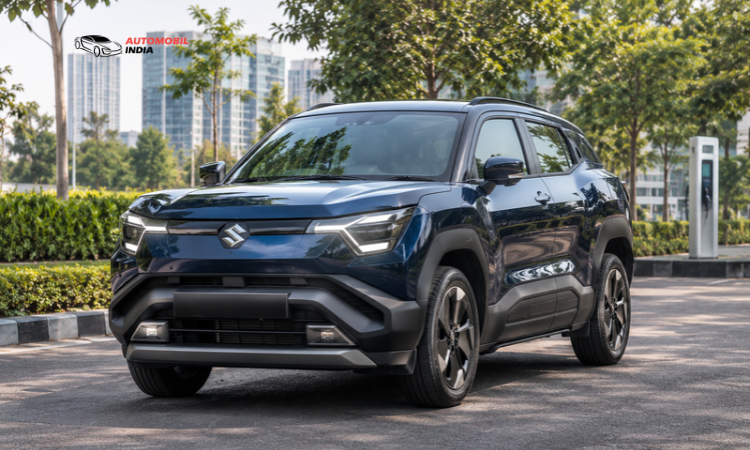
Maruti Suzuki’s first all-electric SUV has an important job in India. It must persuade buyers who know the brand for its extensive sales and service network to consider a vehicle powered entirely by a battery. The e VITARA approaches that challenge with a combination of familiar ownership support and equipment that places it in the premium electric-SUV conversation. Its headline features include seven airbags as standard, a five-star Bharat NCAP rating, ventilated front seats, a 10-way power-adjustable driver’s seat, a large integrated display arrangement, Level 2 ADAS and two battery choices.
There is, however, an important distinction between what the e VITARA range offers and what a particular variant includes. The seven-airbag package is standard across Delta, Zeta and Alpha. Ventilated front seats, the powered driver’s seat, the fixed-glass sunroof and the full set of listed Level 2 ADAS functions are Alpha features. Buyers should therefore look beyond the headline equipment list and match it to the variant they can afford.
This is a closer look at the features that matter, what they do in everyday use and what buyers should check before booking the electric SUV.
Maruti Suzuki’s first all-electric SUV has an important job in India. It must persuade buyers who know the brand for its extensive sales and service network to consider a vehicle powered entirely by a battery. The e VITARA approaches that challenge with a combination of familiar ownership support and equipment that places it in the premium electric-SUV conversation. Its headline features include seven airbags as standard, a five-star Bharat NCAP rating, ventilated front seats, a 10-way power-adjustable driver’s seat, a large integrated display arrangement, Level 2 ADAS and two battery choices.
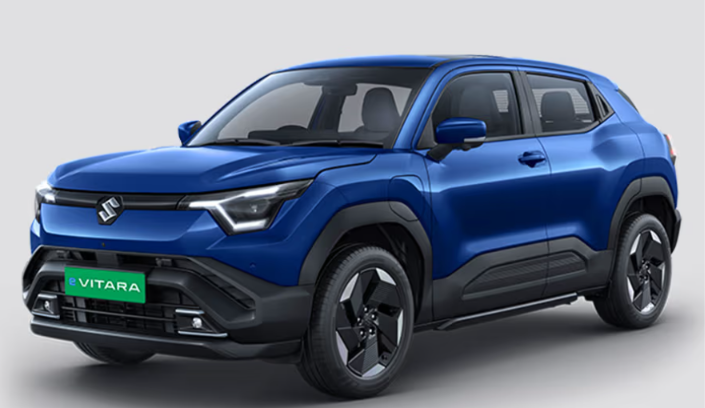
There is, however, an important distinction between what the e VITARA range offers and what a particular variant includes. The seven-airbag package is standard across Delta, Zeta and Alpha. Ventilated front seats, the powered driver’s seat, the fixed-glass sunroof and the full set of listed Level 2 ADAS functions are Alpha features. Buyers should therefore look beyond the headline equipment list and match it to the variant they can afford.
This is a closer look at the features that matter, what they do in everyday use and what buyers should check before booking the electric SUV.
At a glance: the Indian-spec e VITARA
| Specification | Delta | Zeta | Alpha |
|---|---|---|---|
| Battery capacity | 48.8kWh LFP | 61.1kWh LFP | 61.1kWh LFP |
| Certified range | 440km | 543km | 543km |
| Maximum power | 105.8kW | 128kW | 128kW |
| Maximum torque | 193Nm | 193Nm | 193Nm |
| Drive layout | 2WD, front-wheel drive | 2WD, front-wheel drive | 2WD, front-wheel drive |
| Seating capacity | 5 | 5 | 5 |
| Seven airbags | Standard | Standard | Standard |
| Ventilated front seats | No | No | Yes |
| 10-way powered driver seat | No | No | Yes |
| Fixed-glass sunroof | No | No | Yes |
| Level 2 ADAS functions in brochure matrix | Not listed | Not listed | Yes |
1. Seven airbags are standard across the range
The most significant feature in the e VITARA’s equipment list is also one of the easiest to misunderstand when reading a variant brochure: all three Indian variants receive seven airbags. The set includes the driver knee airbag, in addition to the conventional front, side and curtain protection. This means a buyer choosing the entry Delta does not have to move up to the Zeta or Alpha simply to get the seven-airbag count.
The driver knee airbag is designed to provide additional restraint-system protection for the lower body in certain crash situations. It works as part of a wider occupant-protection system; it does not replace seatbelts, correct seating position or careful driving. The value of the standard fitment is that passive-safety equipment is not reserved only for the most expensive version.
Maruti Suzuki has also announced a five-star Bharat New Car Assessment Programme (Bharat NCAP) rating for the e VITARA. The company’s December 2025 release describes the result as five stars for both adult and child occupant protection. A crash-test rating is more meaningful than simply counting airbags because it reflects performance in prescribed crash and safety-assessment protocols. Buyers should still read the test result in context: ratings apply to the tested specification and protocol, and do not mean that a vehicle is impossible to damage or that occupants are guaranteed to avoid injury.
The body structure is another part of the safety story. Maruti Suzuki says the HEARTECT-e platform uses more than 60 per cent ultra-high-tensile and high-tensile-strength steel. The manufacturer also describes an energy-absorbing battery-pack mounting structure intended to support battery protection. These are structural claims from the company; they should not be confused with a guarantee that every collision will leave the battery unharmed.
The standard safety equipment list includes Electronic Stability Program, ABS with EBD and Brake Assist, Hill Hold Control, multi-collision braking, three-point seatbelts for all seating positions, seatbelt reminders for all occupants and ISOFIX child-seat anchorages. The e VITARA also has an Acoustic Vehicle Alert System. Because an electric vehicle can move quietly at low speeds, an external alert helps make pedestrians and cyclists more aware of its presence.
A tyre-pressure monitoring system, front and rear parking sensors, an electronic parking brake and an emergency call function with SOS button add further layers of reassurance. The 360-degree view camera is listed only for Alpha in the official feature matrix, so it should not be assumed to be available on Delta or Zeta.
For families, the practical takeaway is straightforward: the entry variant already has the core seven-airbag fitment and a substantial baseline safety list. The more expensive Alpha adds camera-based convenience and driver-assistance equipment, but the basic airbag count is not a reason on its own to stretch the budget.
2. Five-star Bharat NCAP rating: what it tells buyers
The e VITARA’s five-star Bharat NCAP result gives buyers an independent assessment framework to consider alongside the manufacturer’s equipment claims. Bharat NCAP evaluates vehicles through defined test procedures and awards ratings based on the applicable criteria. Maruti Suzuki’s release specifically records a five-star result for adult and child occupant protection.
A five-star rating should be read as a strong result within the programme, not as a prediction of the outcome in every possible crash. Real-world collisions vary in speed, angle, vehicle compatibility, road conditions and occupant behaviour. Seatbelts remain essential, child restraints must be installed correctly, and safety systems need to be maintained.
The combination of a five-star rating and seven airbags standard across the range is especially relevant in a market where buyers often have to move up the variant ladder for additional safety equipment. In the e VITARA, the airbag count is consistent, while the higher variant’s ADAS and camera equipment are separate considerations.
3. Ventilated front seats: a comfort feature for Indian conditions
Ventilated front seats are among the e VITARA’s most attention-grabbing cabin features, particularly for buyers who regularly drive in hot and humid weather. The system is fitted to both the driver and front passenger seats in the Alpha variant. It is not listed for Delta or Zeta.
Seat ventilation generally moves air through or across perforations in the seat surface to reduce the build-up of heat and moisture between the occupant and upholstery. It is different from seat cooling that actively refrigerates the seat. The practical benefit is improved comfort during warm-weather commutes, after the vehicle has been parked in the sun, or on longer journeys when the cabin is occupied for extended periods.
The feature is most useful when the air-conditioning system is already bringing the cabin temperature down. It should not be treated as a substitute for air-conditioning, nor should buyers expect it to cool the cabin instantly. The comfort effect depends on ambient temperature, clothing, seat material and the ventilation setting.
For Indian buyers, the key point is variant selection. A Delta or Zeta test drive will not demonstrate the ventilated-seat feature because it is reserved for Alpha. Anyone considering the top variant should test the seat ventilation in person, check how it is controlled and confirm the exact equipment on the vehicle being invoiced.
4. Ten-way power-adjustable driver’s seat
The Alpha also gets a 10-way power-adjustable driver’s seat. A power seat allows the driver to make adjustments using electric controls rather than relying entirely on manual levers. Multiple adjustment directions can help drivers of different heights find a comfortable position, improve their view of the road and reduce the need to compromise between steering-wheel reach and legroom.
Seat adjustment is personal. A feature count alone cannot tell a buyer whether the seat will suit their body shape. During a test drive, check whether the seat base supports the thighs, whether the backrest supports the lower back, whether the steering wheel can be positioned comfortably and whether the pedals can be reached without stretching. Also check whether the power controls are intuitive and whether the seat returns to a suitable position after entry and exit.
The powered driver seat is not available on Delta or Zeta according to the brochure’s variant matrix. It is therefore part of the Alpha’s comfort premium rather than a range-wide feature.
5. Sliding and reclining rear seats add flexibility
The rear bench is not fixed in one position. The brochure lists 10-step sliding and reclining rear seats for all three variants, giving occupants some control over the balance between passenger space and luggage capacity. The seatbacks are also separately folding in a 40:20:40 configuration, while the technical feature table lists the sliding and reclining functions in a 60:40 configuration.
This flexibility is useful when the vehicle carries a mix of passengers and luggage. Moving the rear seat can help adjust legroom or free up additional luggage space, while a split-folding backrest lets owners carry longer items without necessarily giving up every rear seating position. The exact practical result depends on how the seats are positioned and the size and shape of the load.
The 2,700mm wheelbase is an important part of the packaging story. A longer wheelbase can create more room between the axles and support a spacious cabin, although actual passenger comfort also depends on seat design, floor height, roofline and the shape of the footwell. The e VITARA is a five-seater, not a three-row SUV.
Buyers who regularly travel with adults in the rear should sit in the back during the showroom visit. Check thigh support, headroom, foot placement and the ease of moving the seat. Families should also try installing their child seat using the ISOFIX points and check whether the front passenger seat can still be positioned comfortably.
6. Integrated digital cockpit and connected infotainment
The e VITARA’s dashboard is built around an integrated display arrangement. The official brochure specifies a 25.65cm (10.1-inch) infotainment system with wireless smartphone connectivity and a 26.04cm (10.25-inch) multi-information display. The screens bring media, vehicle information and driving data into a modern digital layout.
Wireless Android Auto and Apple CarPlay are listed across Delta, Zeta and Alpha. That is useful because smartphone navigation and audio are familiar to many buyers, and wireless connectivity reduces the need to plug a phone in for every short journey. Buyers should still check phone compatibility, pairing behaviour and whether their preferred navigation app works as expected.
The cabin also has a two-spoke polygonal steering wheel with synthetic-leather covering, steering-mounted controls, a rotary volume control and a voice assistant activated through the “Hi Suzuki” command. The rotary volume control is a small but useful detail because a physical knob can be easier to operate by touch than a purely touchscreen-based control.
Automatic air-conditioning, a PM2.5 air-conditioner filter and rear AC vents are listed across all three variants. The filter is intended to help filter fine particulate matter from incoming cabin air, but it should not be interpreted as a guarantee of clean air under every condition. Filter condition, outside pollution levels, ventilation settings and maintenance all matter.
The Alpha adds an Infinity by Harman sound system with a subwoofer, while the lower variants have a simpler speaker arrangement. Zeta and Alpha receive a wireless phone charger; Delta does not. These distinctions are worth checking if audio quality and cable-free phone charging are high on the buyer’s list.
7. Fixed-glass sunroof and cabin ambience
A fixed-glass sunroof is another Alpha-only feature. It brings more daylight into the cabin and can make the interior feel more open, but it is not an opening panoramic roof. Buyers should distinguish between a glass roof that remains fixed and a sunroof panel that slides or tilts to provide an opening.
The brochure also lists a multi-colour ambient-lighting arrangement, a twin-deck centre console with storage and soft-touch dual-tone interior treatment. These details contribute to the cabin’s visual character, though their value is subjective. It is worth inspecting the finish quality in daylight and at night, checking whether the storage spaces are useful and ensuring the centre console does not interfere with the driver’s preferred seating position.
The Alpha’s front seats use a synthetic-leather and fabric combination according to the brochure, while Delta and Zeta use fabric seats. Material choice affects appearance, touch and cleaning, but it should not be mistaken for a direct measure of long-term durability. Ask the dealer about cleaning recommendations and inspect how the seat material feels in hot weather.
8. Level 2 ADAS: useful assistance, not autonomous driving
The e VITARA’s Alpha variant is listed with a Level 2 Advanced Driver Assistance System package. The brochure names functions such as Adaptive Cruise Control, Lane Keep Assist, Adaptive High-Beam System and Blind Spot Monitoring. Its detailed feature matrix also lists Lane Departure Prevention, Lane Departure Warning and Vehicle Sway Warning, Rear Cross Traffic Alert, Forward Collision Warning and Automatic Emergency Braking in the Alpha column.
These functions use sensors and control systems to support the driver in defined situations. Adaptive Cruise Control can help maintain a selected following distance from a vehicle ahead. Lane-related assistance can warn the driver or provide steering support when the vehicle approaches lane markings in circumstances the system can recognise. Blind Spot Monitoring can alert the driver to a vehicle in an area that may be difficult to see in the mirrors. Rear Cross Traffic Alert can be useful when reversing out of a parking space with limited visibility.
Automatic Emergency Braking is designed to detect certain collision risks and apply braking support when the driver does not respond adequately. It is not a guarantee that a collision will be avoided. Performance depends on the system’s detection limits, road markings, weather, lighting, speed and the type of object involved.
Level 2 assistance does not make the e VITARA a self-driving car. The driver must remain attentive, keep hands and attention appropriately engaged and be ready to steer or brake. Maruti Suzuki’s brochure explicitly warns that ADAS is not a substitute for human vision, vigilance or responsibility. Buyers should learn how to enable, adjust and disable each function and should not experiment with the systems in traffic.
An important variant distinction applies here. The brochure’s feature matrix places the listed ADAS functions in the Alpha column, not across the whole range. A buyer choosing Delta or Zeta should not assume that the full Level 2 package is included simply because it appears in general model descriptions.
9. Exterior lighting and design details
The e VITARA uses a distinctive front lighting signature. The brochure lists NEXtré three-point matrix LED daytime-running lamps and LED projector headlamps across the range. The Alpha adds the Adaptive High-Beam System, while the lower variants have the standard headlamp arrangement. At the rear, the three-point matrix rear lamps provide a matching design signature.
The SUV has a sculpted body, pronounced wheel-arch cladding and 18-inch alloy wheels with aero garnish. The official dimensions are 4,275mm long, 1,800mm wide and 1,640mm high, with a 2,700mm wheelbase. These figures place it in the mid-size electric-SUV space, although dimensions alone do not determine how easy it is to park or how spacious it feels.
The brochure lists ten colour choices, including four dual-tone combinations. Colour availability can vary by variant and stock, so buyers should confirm the exact combination before placing an order. The dual-tone appearance is listed for Alpha in the feature matrix.
10. Battery choices, range and performance
The e VITARA is offered with two lithium iron phosphate battery packs. Delta uses the 48.8kWh pack, while Zeta and Alpha use the 61.1kWh pack. The brochure lists certified ranges of 440km for Delta and 543km for the two larger-battery variants. These are certified figures, not guaranteed everyday distances.
The smaller battery is paired with a motor producing 105.8kW, while the 61.1kWh versions produce 128kW. Maximum torque is listed at 193Nm for all three variants. The SUV uses a single-speed electric transmission and a front-wheel-drive layout in India. Overseas versions or specifications should not be used to assume that an all-wheel-drive version is available in the Indian line-up.
An electric motor delivers its torque differently from a conventional petrol or diesel engine. Maximum torque is available from very low motor speeds, which can make initial acceleration feel immediate and smooth. The single-speed transmission removes the need for conventional gear changes. However, power and torque figures do not tell the whole story: throttle calibration, vehicle weight, tyres, traction control and the state of charge all influence how the car feels.
The e VITARA has Eco, Normal and Sport drive modes, along with Snow Mode and multi-level regenerative braking. Regenerative braking uses the electric motor to slow the vehicle and recover some energy for the battery. The level of deceleration can be adjusted, allowing drivers to choose a setting that suits traffic conditions and personal preference. It does not mean that every braking event returns all the energy used to accelerate.
The brochure lists a minimum turning radius of 5.2 metres. That figure can help when considering manoeuvrability, but buyers should still test the turning circle in a real parking area and check the vehicle’s width, visibility and camera coverage. The Alpha’s 360-degree camera is an advantage in tight spaces, but Delta and Zeta buyers should rely on their parking sensors and direct observation.
11. Charging: home convenience and public charging
Charging is a central part of EV ownership, and the e VITARA supports both AC and DC charging. The official brochure lists a 7.4kW AC wall-box charging arrangement and CCS2 DC rapid charging. Estimated AC charging from 10 to 100 per cent is approximately six-and-a-half hours for the 48.8kWh battery and around nine hours for the 61.1kWh battery, using the stated 7.4kW AC charger.
For DC rapid charging, Maruti Suzuki quotes approximately 45 minutes from 10 to 80 per cent, subject to a minimum 70kW rapid charger and the conditions described in the brochure. Charging speed is not constant throughout the entire battery cycle. It can slow as the battery approaches a high state of charge, and temperature, battery condition, charger output and other factors influence the time required.
A home charger can make daily ownership more convenient because the vehicle can be replenished while parked overnight. However, installation suitability depends on the home’s electrical connection, parking arrangement, housing-society permissions and the installer’s assessment. Apartment residents should confirm access to a dedicated parking bay and permission to install charging equipment before committing to an EV.
Maruti Suzuki’s e for me ecosystem brings together charger discovery, charging-related services and support. The company says the app can help users locate charging points and manage charging needs. Its corporate communications have also described an expanding network of dealer-linked charging points and EV-ready service facilities. Network counts change over time, so buyers should check the current app map for chargers along their regular routes rather than relying only on a national headline number.
A charger appearing on a map does not guarantee that it will be available, working or compatible at the moment of arrival. Before a long journey, check the connector type, charging speed, access hours, payment method and recent availability information. Plan a buffer for queues, detours and unexpected charger downtime. A route that is easy in a petrol car may need more preparation in an EV, especially outside major corridors.
12. Suzuki Connect and remote features
Next-Gen Suzuki Connect adds a digital layer to ownership. The brochure describes remote operations, vehicle-health information, scheduled charging, trip planning and vehicle-location-related services. The feature matrix includes alerts and notifications, charging status, remote charging and scheduled charging. It also lists remote air-conditioning and remote seat-ventilation functions with variant restrictions; remote seat ventilation is shown only for Alpha.
Connected functions can be useful when the owner wants to check the vehicle without sitting inside it. Charging status can help confirm whether a charging session is progressing, while scheduled charging can support a home-charging routine. Vehicle health and alerts can make it easier to keep track of certain vehicle conditions. The exact functions depend on the subscription, app version, phone compatibility, network connectivity and variant.
Connectivity should be treated as a convenience layer rather than a reason to ignore routine checks. Owners still need to inspect tyres, maintain the vehicle as directed and respond to warning messages. App-based information may be delayed or unavailable if the vehicle or phone has poor network coverage.
13. Warranty, service and ownership support
Maruti Suzuki’s February 2026 delivery announcement states that the battery packs are covered by an eight-year or 1,60,000km warranty, whichever comes first. It lists a standard vehicle warranty of three years, with paid extension options described in the company’s offer communication. Buyers should request the current warranty booklet and read the exclusions, battery-capacity conditions, service requirements and transferability terms before signing.
The manufacturer has positioned the e VITARA alongside its e for me support ecosystem and EV-ready service network. The company’s launch communication referred to more than 1,500 EV-ready service centres and specially trained EV relationship and charging managers. The number and capabilities of individual outlets can change, so owners should identify the nearest authorised EV service point and understand roadside-assistance coverage for their home and travel routes.
Electric vehicles have fewer routine powertrain service items than internal-combustion vehicles because they do not need engine oil changes, spark plugs or conventional multi-speed gearbox servicing. That does not mean an EV is maintenance-free. Tyres, brakes, suspension, cabin filters, coolant circuits, high-voltage components, software and the 12-volt electrical system still require attention according to the manufacturer’s schedule.
Tyre wear deserves particular attention. EVs can be heavy because of their battery packs, and immediate motor response can place additional demands on tyres if the driver accelerates hard. Correct inflation, alignment and rotation help protect range, comfort and tyre life. The e VITARA’s brochure lists kerb weights from 1,725kg to 1,815kg depending on variant, so the vehicle’s mass is relevant when evaluating tyre replacement costs.
The company has also communicated assured buyback programmes and financing structures, including Battery-as-a-Service. Such offers can reduce the initial purchase amount but change the ongoing cost structure. Terms, mileage assumptions, eligibility, finance approvals, taxes, insurance and buyback conditions matter. Buyers should compare the total cost over their expected ownership period rather than comparing only the headline entry price.
14. Variant guide: Delta, Zeta or Alpha?
Planning the e VITARA purchase? Estimate your monthly car loan EMI
Compare loan amounts, interest rates and tenures before deciding how the purchase fits your budget.
Calculate Car EMIDelta is the entry point and uses the 48.8kWh battery with a certified range of 440km. It retains the seven-airbag package, the five-seat cabin, the digital display arrangement, automatic climate control, rear AC vents, wireless smartphone connectivity and the core connected services listed in the brochure. It is the logical version for buyers prioritising the lower entry price and who can work with the smaller battery and more limited comfort equipment.
Zeta moves to the 61.1kWh battery and the 543km certified range. It also adds selected convenience equipment, including a wireless charger and luggage parcel shelf, while retaining fabric seats. It does not add ventilated front seats, the powered driver’s seat or the fixed-glass sunroof. It is the middle ground for buyers who want the larger battery without paying for the Alpha’s full comfort and assistance package.
Alpha combines the larger battery with the most extensive equipment list. Its highlights include ventilated driver and co-driver seats, a 10-way power-adjustable driver’s seat, fixed-glass sunroof, 360-degree view camera, wireless charger, Infinity by Harman audio with subwoofer, synthetic-leather-and-fabric front seats and the listed Level 2 ADAS functions. It is the variant to choose if those features are important enough to justify the price difference.
The decision should not be reduced to “more features are always better”. A buyer who mostly drives in town, has reliable home charging and does not need the Alpha’s comfort extras may find Delta or Zeta more rational. A household that values ventilated seats, power adjustment, the camera system and ADAS may appreciate Alpha every day. The best variant is the one whose equipment is used regularly and whose total ownership cost remains comfortable.
| Variant | Best suited to | Key compromise |
|---|---|---|
| Delta 48.8kWh | Buyers focused on entry cost and core EV equipment | Smaller battery; no ventilated seats, powered driver seat or ADAS package listed |
| Zeta 61.1kWh | Buyers wanting the larger battery and useful mid-tier additions | Still misses Alpha comfort, camera and ADAS equipment |
| Alpha 61.1kWh | Buyers prioritising cabin comfort, assistance and premium equipment | Highest purchase cost; confirm that the extra features justify the premium |
15. What buyers should check before booking
- Confirm the latest ex-showroom price, insurance, registration, applicable taxes and on-road quotation for your city.
- Ask for the current variant-wise feature sheet and confirm that the exact vehicle has the equipment you expect.
- Test the ventilated seats and power driver seat in Alpha; do not assume they are available on Delta or Zeta.
- Check whether your home or apartment can support a dedicated AC charger and obtain installation details in writing.
- Map the public chargers you would actually use, including chargers on frequent intercity routes.
- Understand the difference between the certified range and the distance you may achieve in your own use.
- Read the battery warranty, vehicle warranty, service schedule and roadside-assistance terms.
- If considering BaaS or a buyback plan, compare the total payment and contractual conditions over the full term.
- Try the rear seats, boot arrangement, visibility, turning circle and parking sensors on a realistic test drive.
- Learn the limitations of ADAS and confirm which functions are fitted to the selected variant.
16. How the e VITARA fits into the electric-SUV market
The e VITARA enters a segment in which buyers can choose from electric SUVs with different priorities: price, cabin space, performance, charging speed, equipment, brand network and driving range. A direct comparison should use current prices and equivalent variants, because manufacturers revise prices and equipment and because battery-subscription plans make headline figures difficult to compare.
Its strengths are clear on paper: standard seven airbags, a five-star Bharat NCAP rating, two battery sizes, a certified range of up to 543km, a large wheelbase, rear-seat flexibility and a developed manufacturer-backed charging and service proposition. The Alpha’s ventilated seats and driver-assistance equipment add a premium layer that may appeal to buyers moving up from a conventional compact or mid-size SUV.
There are also practical trade-offs. The Indian version is front-wheel drive, and the brochure’s top-end equipment is concentrated in Alpha. Delta’s smaller battery has a lower certified range than the larger-battery variants. Buyers should also compare the e VITARA’s cabin layout, luggage capacity, rear-seat comfort, charging curve and real-world efficiency with the exact rivals they are considering. A list of features cannot replace a back-to-back test drive.
The most important comparison is often not between two specification sheets but between ownership patterns. Someone with a private parking space and predictable daily travel may find home charging convenient. Someone who depends on public charging, parks on the street or regularly drives through areas with sparse infrastructure will need a more careful route and charging assessment. The same vehicle can be a sensible choice for one household and inconvenient for another.
17. Who should consider the Maruti Suzuki e VITARA?
The e VITARA deserves a place on the shortlist for buyers who want an electric SUV from a large Indian manufacturer and place value on the combination of safety equipment, a five-star Bharat NCAP rating and a broad service-support proposition. Its standard seven-airbag fitment makes the safety story relevant even at the entry level, while the larger-battery variants offer the higher certified range.
The Alpha is particularly relevant for buyers who spend long hours behind the wheel in hot weather, appreciate a power-adjustable driver’s seat and want the convenience of a 360-degree camera and Level 2 ADAS. Families may also value the sliding and reclining rear seat and the flexible split-folding arrangement. But these features should be tested in person; equipment names do not automatically guarantee a perfect fit for every user.
The e VITARA may be less suitable for buyers who cannot arrange dependable charging at home or work and who have limited access to public fast chargers. It may also be less compelling for those who rarely use the premium features in Alpha. Before buying any EV, calculate the likely charging routine, annual distance, electricity tariff, financing cost, insurance and expected resale value.
18. Advantages and limitations
The key advantages are the standard seven-airbag package, five-star Bharat NCAP rating, two LFP battery choices, up to 543km certified range, rear-seat sliding and reclining functionality, wireless Android Auto and Apple CarPlay, and a manufacturer-backed charging and service ecosystem. The Alpha’s ventilated seats, power driver seat, fixed-glass roof, 360-degree camera and ADAS package make the range more appealing to feature-focused buyers.
The limitations are equally important. Several desirable features are restricted to Alpha, so the entry price does not buy the full equipment list. The certified range should not be treated as a real-world guarantee. Public charging availability and reliability must be checked on actual routes. The vehicle is front-wheel drive in India, and buyers seeking all-wheel-drive capability should not assume that an overseas specification is offered locally. Finally, the cost structure of BaaS and buyback plans needs careful comparison with outright ownership.
Final verdict: safety is the headline, but variant choice is the real decision
The Maruti Suzuki e VITARA’s most convincing feature is the way it combines a strong safety foundation with a modern electric powertrain and a growing ownership ecosystem. Seven airbags are standard across Delta, Zeta and Alpha, and the five-star Bharat NCAP rating gives buyers a meaningful independent safety reference. That is more important than a long list of cosmetic additions.
The ventilated front seats, 10-way power driver seat, fixed-glass sunroof, 360-degree camera and Level 2 ADAS make the Alpha the most comprehensively equipped version. Zeta is the larger-battery middle option, while Delta keeps the core safety and connectivity package with the smaller battery. Buyers should make the decision after checking the variant matrix, charging access and total ownership cost.
In short, the e VITARA is not simply a feature-loaded electric SUV. It is a three-variant proposition in which safety is broadly standard but comfort and driver-assistance equipment are tiered. Understand that distinction, test the features you will use and plan charging around your real routine. That is the best way to decide whether the e VITARA fits your needs.
Estimate what the e VITARA could cost to run
Factor in your driving distance, charging expense, insurance and other ownership costs to build a more realistic running-cost estimate.
Calculate Cost Per KM