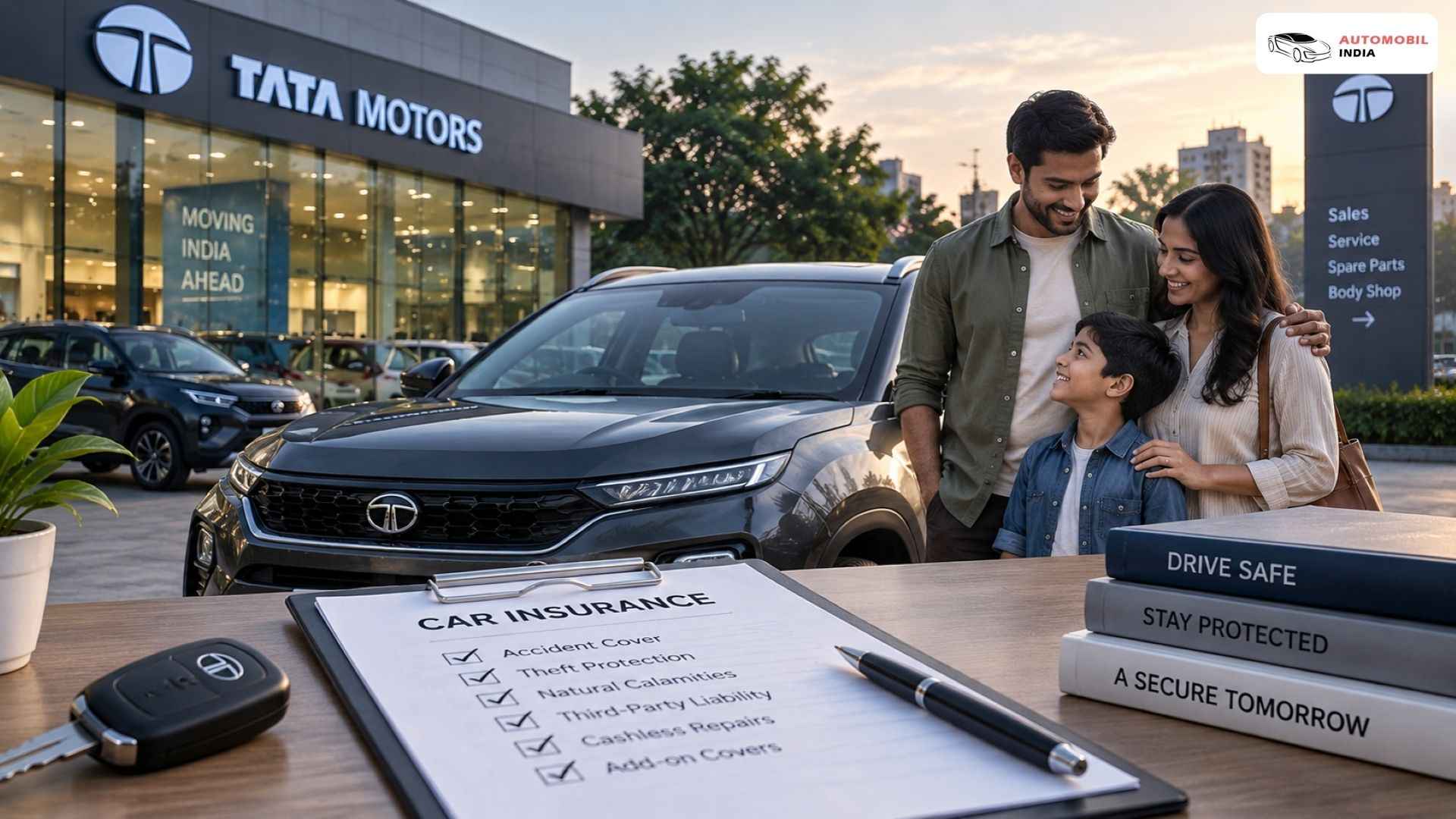
Four wheeler insurance is more than a document you need to keep your car legally on the road. The right policy can protect you against the financial impact of an accident, theft, natural disaster or damage to your vehicle, while also covering your legal liability towards other people.
In India, Third-Party Liability insurance is mandatory for vehicles used on public roads. However, third-party cover does not pay for damage to your own car. For protection against damage to your vehicle, you need an Own Damage policy or a package/comprehensive policy that combines third-party liability and own-damage cover.
For most private-car owners, the decision therefore comes down to three questions:
- What type of car insurance do I need?
- How much coverage should I buy?
- Which insurer and policy offer the right balance of premium, coverage, deductibles and claim support?
The cheapest car insurance policy is not necessarily the one that costs the least at purchase. A policy with a lower premium may also have a lower IDV, higher deductibles or fewer useful add-ons.
Here is what you should know before buying or renewing a four wheeler insurance policy.
What Is Four Wheeler Insurance?
Four wheeler insurance is a motor insurance policy designed to provide financial protection for a car against covered risks.
Depending on the policy, it can cover:
The exact coverage depends on the policy wording, exclusions, deductibles, limits and add-ons selected.
In simple terms:
Third-party insurance protects you against covered liabilities to others, while own-damage insurance protects your car.
A comprehensive or package policy combines these broad areas of protection. IRDAI also recognises standalone Own Damage policies, which can be purchased alongside a separate third-party policy.
Is Four Wheeler Insurance Mandatory in India?
Yes, but there is an important distinction.
Third-party liability insurance is mandatory for vehicles plying on public roads in India.
The law does not require every car owner to purchase comprehensive insurance covering their own vehicle.
However, driving with only third-party insurance means damage to your own car generally isn’t covered under that liability-only policy.
IRDAI describes third-party liability insurance as mandatory and recommends considering comprehensive/package or Own Damage cover for protection against loss or damage to the insured vehicle.
What happens if you only have third-party insurance?
Suppose you accidentally hit a wall and damage your own bumper, headlamp and fender.
If you have only third-party insurance, your own repair bill is generally your responsibility.
If you have eligible Own Damage cover, the damage may be covered subject to the policy’s terms, deductibles and exclusions.
This is why the distinction between legal minimum cover and financially useful cover matters.
Not sure if your current policy covers your own car?
Check Own Damage and comprehensive options built for Indian drivers.
Types of Car Insurance in India
There are three broad arrangements that private-car buyers are likely to encounter.
1. Third-Party Liability Insurance
This is the legally required component.
It covers your legal liability for covered injury/death to third parties and damage to third-party property, subject to the applicable policy terms and limits.
IRDAI states that third-party injury/death liability is unlimited, while third-party property damage is covered up to ₹7.5 lakh under the standard framework; policyholders can opt for a lower ₹6,000 property-damage limit, which reduces the liability-only premium.
What it does not cover
Third-party insurance does not normally cover:
- Repair of your own car after an accident
- Theft of your car
- Damage to your car caused by a natural calamity
For those risks, you need appropriate Own Damage cover.
2. Comprehensive or Package Car Insurance
A comprehensive/package policy generally combines:
Third-party liability + Own Damage cover
Own Damage cover can protect the insured vehicle against covered events such as:
- Accidents
- Theft
- Fire
- Flood
- Storm
- Cyclone
- Earthquake
- Other covered natural events
- Certain man-made events
The exact list varies according to the policy wording.
This is the type of car insurance policy many owners consider when they want protection for both their legal liability and their own vehicle.
However, “comprehensive” does not mean “everything is covered.”
Every policy has exclusions.
3. Standalone Own Damage Insurance
A standalone Own Damage policy covers damage to your own vehicle while your third-party liability cover is maintained separately.
This can be useful when you already have a valid third-party policy but want to purchase Own Damage cover from another insurer.
IRDAI’s motor-insurance guidance recognises standalone Own Damage cover as an option alongside liability-only insurance.
Comprehensive vs Third-Party Car Insurance
The exact scope of a comprehensive policy still depends on its wording and exclusions.
| Feature | Third-Party | Comprehensive / Package |
|---|---|---|
| Third-party liability | Yes | Yes |
| Damage to your own car | No | Yes, subject to policy |
| Theft of your car | No | Generally yes |
| Fire damage | No | Generally yes |
| Natural calamity damage | No | Generally yes |
| Accident damage to own car | No | Yes, subject to terms |
| Premium | Lower | Higher |
| Suitable for | Minimum legal requirement | Broader vehicle protection |
What Does Own Damage Insurance Cover?
Own Damage cover is designed to protect your vehicle against specified accidental and other insured risks.
Depending on the policy, these may include:
Accidental damage
For example:
- Collision with another vehicle
- Hitting a stationary object
- Damage during an accident
Theft
If the insured vehicle is stolen and the claim meets the policy conditions, the insurer may settle the claim according to the applicable terms and IDV.
Fire
Damage resulting from covered fire-related events may be insured.
Natural calamities
Depending on the policy, this can include events such as:
- Flood
- Storm
- Cyclone
- Earthquake
- Landslide
This is particularly relevant in India because monsoon flooding, cyclones and severe weather can cause substantial vehicle damage.
Man-made events
Policies can also cover certain risks such as:
- Riots
- Strikes
- Malicious acts
The precise definition and exclusions should always be checked in the policy wording.
What Is Not Covered by Standard Car Insurance?
This is one of the most important sections to read before purchasing a policy.
Car insurance does not mean every repair bill will automatically be paid.
Common exclusions or limitations can include:
- Normal wear and tear
- Mechanical breakdown not resulting from an insured event
- Driving without a valid licence
- Driving under the influence of alcohol or prohibited substances
- Deliberate damage
- Using the car outside the permitted use
- Consequential losses not covered by the policy
- Damage excluded by specific policy conditions
The exact exclusions vary between products.
For example, a standard Own Damage policy may not cover an engine failure simply because the engine stopped working. An accident-related engine loss may require specific coverage depending on the circumstances and policy.
This is why reading the policy wording matters more than relying only on the product name.
What Is IDV in Car Insurance?
IDV stands for Insured Declared Value.
It is the value used as the sum insured for the vehicle under Own Damage cover.
IRDAI describes IDV as representing the current market value of the vehicle for Own Damage purposes.
IDV becomes particularly important in cases involving:
- Total loss
- Constructive total loss
- Theft
Why does IDV matter?
Imagine two policies for the same car:
Policy A: Lower premium but lower IDV
Policy B: Slightly higher premium with a more appropriate IDV
The cheaper policy may look attractive until a total-loss or theft claim occurs.
The premium should therefore never be compared without looking at:
- IDV
- Deductible
- Coverage
- Add-ons
- Exclusions
- Claim conditions
IRDAI specifically advises consumers to compare premiums alongside deductibles, coverage and IDV rather than selecting a policy solely on premium.
Premium vs IDV: The Trade-Off
A lower premium with an under-valued IDV can leave you underinsured exactly when you need cover the most — at the time of a total-loss or theft claim.
How Is Four Wheeler Insurance Cost Calculated?
There is no single fixed four wheeler insurance cost for every car.
Several factors influence the premium.
1. Third-party premium
Third-party liability premium rates are prescribed by the regulator and are not individually priced by insurers in the same way as Own Damage premiums.
2. Own Damage premium
Own Damage pricing varies between insurers and can depend on factors including:
- Vehicle age
- IDV
- Location
- Vehicle specifications
- Previous claims
- Discounts
- Applicable loadings
- Selected add-ons
IRDAI states that insurers determine Own Damage rates based on filed pricing structures and factors including vehicle age, claims experience, discounts/loadings and IDV.
3. Car’s age
A newer vehicle generally has a higher IDV and potentially higher Own Damage premium.
As the vehicle ages, its insured value normally declines.
4. Location
The location associated with the vehicle’s registration can influence applicable premium calculations.
5. Claim history
Previous claims can affect your renewal premium and No Claim Bonus.
6. No Claim Bonus
NCB can significantly reduce the Own Damage portion of the premium for eligible claim-free policyholders.
7. Add-ons
Adding zero depreciation, engine protection, roadside assistance or other optional covers increases the premium.
8. Deductibles
Choosing a higher voluntary deductible can reduce the premium, but it also means paying more yourself when making an eligible claim.
What Is No Claim Bonus (NCB)?
No Claim Bonus is a reward for not making claims during the previous policy period.
IRDAI states that NCB applies to the Own Damage premium, not the liability premium, and can range from 20% to a maximum of 50% based on successive claim-free years.
For example, if your eligible Own Damage premium is ₹10,000 and you have a 50% NCB, the NCB component could reduce that Own Damage premium by ₹5,000 before other applicable adjustments.
Does NCB belong to the car?
No.
NCB belongs to the insured person, not the vehicle.
This distinction becomes important when selling a car.
If you sell your old vehicle and buy another one, your accumulated NCB can potentially be transferred to your new policy, subject to the insurer’s requirements.
If you change insurers at renewal, your eligible NCB can also be carried forward with appropriate proof.
What Is Zero Depreciation Car Insurance?
Zero depreciation, also called nil-depreciation cover, is an add-on that reduces or removes the depreciation deduction applicable to eligible replaced parts when an admissible Own Damage claim is settled.
Without the add-on, depreciation on certain parts can reduce the amount paid by the insurer.
With a zero-depreciation add-on, the insurer may cover the depreciation component subject to the product’s specific terms, conditions, limits and exclusions.
IRDAI identifies nil/zero depreciation as one of the common motor-insurance add-ons.
Is zero depreciation worth buying?
It can be particularly useful for:
- Newer cars
- Expensive cars
- Cars with costly body panels or components
- Owners who want to minimise depreciation deductions during eligible claims
However, it does not mean every repair becomes completely free.
Deductibles, exclusions, policy limits and non-covered items can still apply.
Important Car Insurance Add-Ons
Add-ons extend the base policy for an additional premium. The availability and exact wording vary by insurer.
Some commonly available options include:
| Add-on | What it is intended to cover |
|---|---|
| Zero Depreciation | Reduces depreciation deductions on eligible parts |
| Engine Protection | Covers specified engine-related losses excluded from standard cover |
| Return to Invoice | Can bridge the gap between IDV and eligible invoice-related amounts after total loss/theft, subject to terms |
| Roadside Assistance | Assistance for specified breakdown/emergency situations |
| Consumables | Covers specified consumable items during eligible repairs |
| Key Protection | Covers eligible loss/damage/replacement of keys |
| Tyre Protection | Covers specified tyre-related damage |
| NCB Protection | Helps preserve NCB after eligible claims, subject to conditions |
Do not buy every add-on simply because it is offered.
The useful question is:
What risk am I paying extra to insure?
Weighing zero depreciation, engine protection or RTI for your car?
Compare add-on options and premiums in one place.
Return to Invoice Cover Explained
Return to Invoice, often abbreviated as RTI, is designed for eligible total-loss or theft situations.
Instead of limiting the settlement to the vehicle’s IDV, an applicable RTI product can bridge specified differences between IDV and eligible invoice-related amounts, subject to the policy’s conditions.
Some products can also cover eligible registration charges and road tax.
The precise benefit varies by insurer and product, so the policy wording should be checked before purchase. IRDAI’s product records include Return to Invoice as a motor-insurance add-on.
RTI is generally more relevant to newer vehicles because many such products have vehicle-age eligibility conditions.
What Is a Deductible in Car Insurance?
A deductible, also called an excess, is the amount you must bear when settling an eligible claim before the insurer pays the covered balance.
There are two broad types worth understanding:
Compulsory deductible
This is the amount specified under the policy/regulatory framework that you must pay for an eligible claim.
Voluntary deductible
This is an additional amount you choose to bear yourself in exchange for a possible reduction in premium.
Example
Suppose an admissible repair claim is ₹40,000.
If your applicable deductible is ₹2,000, the insurer’s payable amount would generally be calculated after applying that deductible, subject to all other policy terms.
A higher voluntary deductible can reduce the upfront premium, but it increases your out-of-pocket cost when you claim.
For most owners, it makes sense to choose a voluntary deductible only if they can comfortably pay it when required.
Cashless Car Insurance Claims: How Do They Work?
Many insurers offer cashless repair arrangements through network garages.
The broad process is:
- Inform the insurer after the accident.
- Register the claim.
- Provide the required documents.
- Take the vehicle to an eligible network garage where applicable.
- The insurer assesses/adjudicates the claim.
- Approved repair costs are settled according to the policy.
- You pay applicable deductibles, exclusions and non-covered amounts.
The exact process varies between insurers.
Cashless does not necessarily mean you pay nothing.
You may still have to pay:
- Deductibles
- Depreciation not covered by your policy
- Non-covered parts
- Policy exclusions
- Consumables not included
- Upgrades or unrelated repairs
What Documents Are Needed for a Car Insurance Claim?
The exact requirements depend on the claim and insurer.
Common documents can include:
- Claim form
- Registration Certificate
- Driving licence
- Insurance policy details
- Repair estimate
- Repair invoice
- Payment receipt
- FIR, where required
- Other documents requested by the insurer
For theft claims, additional documentation can be required.
IRDAI advises policyholders to check the complete requirements in their individual policy.
One important rule
Inform the insurer as soon as reasonably possible after an accident or loss.
Don’t assume that you should repair the car first and contact the insurer later.
The insurer may need to inspect the vehicle or follow a particular claims process.
Can You Buy Car Insurance Online?
Yes.
Buying car insurance online allows you to compare policies from multiple insurers without necessarily relying on a single dealer or agent.
You can generally compare:
- Premium
- IDV
- Deductibles
- Add-ons
- Network garages
- Policy coverage
- Insurer details
- Claim-service information
IRDAI itself advises consumers to shop around and says comparing three or more quotes can be worthwhile. It also specifically warns buyers not to judge policies solely on premium because a cheaper policy can have a lower IDV, higher deductibles or different coverage.
Before paying online
Check that:
- Your registration number is correct
- Engine/chassis information is correct where required
- Previous policy details are accurate
- NCB declaration is correct
- Existing damages are disclosed when requested
- Add-ons selected are actually shown in the proposal
- IDV is appropriate
- Deductible is understood
- Policy period is correct
A small data-entry mistake can become a problem during a claim.
Can You Change Your Insurance Company?
Yes.
You do not have to remain with the same insurer every year.
At renewal, you can compare another insurer’s:
- Premium
- IDV
- Coverage
- Deductibles
- Add-ons
- Network garages
- Service arrangements
Your eligible NCB can be carried forward when changing insurers, subject to providing the required proof.
This is one reason it is useful to treat renewal as a comparison exercise rather than automatically clicking “renew”.
What Happens If Car Insurance Expires?
Do not allow your policy to lapse.
IRDAI advises policyholders to approach the insurer for renewal before expiry and notes that a vehicle may require inspection after a break in insurance.
A lapse can also affect your NCB position depending on the circumstances and duration.
More importantly, driving without valid mandatory third-party insurance creates a legal problem.
Best practice
Set a reminder around 15 days before expiry and start comparing policies rather than waiting until the last day. IRDAI specifically advises approaching the insurer at least 15 days before expiry.
What Happens to Insurance When You Sell a Car?
The insurance policy can be transferred to the new owner, but NCB belongs to the original insured and does not automatically transfer with the vehicle.
IRDAI specifically states that the policy can be transferred to the new owner while the NCB remains with the original insured.
If you sell your car and purchase another one, contact your insurer and provide the required documents to use your eligible NCB on the new vehicle.
The ownership transfer should also be properly reflected in the insurance records.
What If You Install a CNG Kit?
If you install an aftermarket CNG or LPG kit, it is important to inform the relevant authorities and your insurer.
IRDAI states that the registration authority should be informed so the change can be recorded in the RC, and the insurer should also be informed so that the kit can be appropriately covered under the policy on payment of additional premium where applicable.
The same principle applies to significant modifications.
Don’t assume that an aftermarket modification is automatically covered just because the original vehicle is insured.
Does Car Insurance Cover Engine Damage?
Not necessarily.
A standard Own Damage policy is not a blanket mechanical-warranty product.
For example, ordinary mechanical failure caused by wear, maintenance issues or internal breakdown may not be covered.
However, certain accidental or external events may result in engine damage that is covered under the base policy or an appropriate add-on.
This is where Engine Protection add-ons can become relevant.
If you live in a flood-prone area or frequently drive through waterlogged roads, understanding the precise engine/water-ingress terms of your policy becomes especially important.
Never assume that an engine-protection add-on covers every possible engine failure.
Does Car Insurance Cover Flood Damage?
A comprehensive/package Own Damage policy can cover eligible flood-related damage, subject to the policy’s terms and exclusions.
This is particularly relevant in Indian cities that experience seasonal flooding.
However, there is a major distinction between:
Flood damage caused by an insured event
and
Mechanical damage caused by an excluded action or circumstance.
For example, deliberately attempting to drive through deep water can create a different claims situation from a parked vehicle being damaged by unexpected flooding.
The exact policy wording should be checked before assuming a claim will be accepted.
Does Car Insurance Cover Theft?
A suitable Own Damage/package policy generally provides cover for theft of the insured vehicle, subject to policy conditions.
For a theft claim, the insurer may require documents such as:
- FIR
- Insurance documents
- Registration certificate
- Vehicle keys
- Other documents requested during claim processing
IRDAI notes that theft claims can require the keys and a non-traceable certificate among other documentation.
How to Reduce Four Wheeler Insurance Cost
Lowering your four wheeler insurance cost is possible without simply buying the minimum policy.
Compare multiple insurers
Premiums for Own Damage cover can differ between insurers. Compare at least several quotes while keeping the coverage comparable. IRDAI specifically recommends shopping around.
Protect your NCB
Avoid making small claims where the repair cost is only marginally higher than your out-of-pocket expense, but make the decision based on your policy and circumstances rather than sacrificing legitimate coverage just to preserve NCB.
Choose add-ons carefully
Don’t automatically select every add-on. Choose those that address realistic risks for your vehicle and usage.
Consider the deductible carefully
A voluntary deductible can reduce premium but increases your claim contribution. Choose it only if the amount is affordable.
Check IDV
Don’t choose an artificially low IDV simply because it produces a cheaper quote. A lower premium isn’t useful if the coverage doesn’t adequately reflect the vehicle’s value.
Use eligible anti-theft discounts
Certain approved anti-theft devices can qualify for discounts subject to applicable rules and insurer requirements. IRDAI lists approved anti-theft devices among potential Own Damage premium discounts.
Should You Buy Insurance From the Car Dealer?
You can buy insurance through a dealer, but you are not required to assume that the dealer’s quoted policy is automatically the best fit.
When buying a new car, compare:
- Insurer
- IDV
- Add-ons
- Deductible
- Premium
- Network garage availability
- Policy terms
A dealer may offer convenience because the insurance is arranged alongside the vehicle purchase.
But convenience and value are not necessarily the same thing.
The same principle applies to renewal.
What Should You Check Before Buying a Four Wheeler Insurance Policy?
Use this checklist before paying:
Coverage
- Is it third-party only or Own Damage/package?
- What risks are covered?
- What are the major exclusions?
IDV
- Is the IDV appropriate?
- Are you comparing similar IDVs between insurers?
Deductibles
- What is the compulsory deductible?
- Have you selected a voluntary deductible?
Add-ons
- Do you actually need zero depreciation?
- Is engine protection relevant?
- Do you need roadside assistance?
- Is RTI useful for your vehicle’s age?
- Are consumables covered?
Claim support
- What network garages are available near you?
- What is the claim-registration process?
- What documents are required?
Personal information
- Is the registration number correct?
- Is the owner’s name correct?
- Is the NCB declaration accurate?
- Are modifications correctly disclosed?
Renewal
- What is the expiry date?
- Has the NCB been correctly carried forward?
- Has the vehicle’s IDV been reviewed?
Coverage, IDV, deductibles, add-ons, claim support, personal details and renewal timing — reviewing all seven before you pay helps avoid surprises at claim time.
Four Wheeler Insurance Buying Guide: A Simple Decision Framework
You can simplify the entire process into four steps.
Step 1: Decide the basic coverage
If you only want the legally mandatory protection, consider Third-Party Liability insurance.
If you want protection for your own vehicle, consider a package/comprehensive or appropriate standalone Own Damage arrangement.
Step 2: Set the right IDV
Don’t choose the policy purely because it has the lowest premium.
Compare the IDV and coverage.
Step 3: Select relevant add-ons
For a newer car, zero depreciation may be worth considering.
For a new vehicle, RTI may be relevant depending on eligibility.
For flood-prone locations, engine-related protection may deserve attention.
For frequent highway travellers, roadside assistance can be useful.
Step 4: Compare insurers
Compare at least three reasonably similar quotes.
Look at the entire policy, not just the final premium.
Four Wheeler Insurance: Key Takeaways
- Third-party insurance is mandatory for vehicles used on public roads in India.
- Third-party insurance does not normally cover damage to your own vehicle.
- Comprehensive/package insurance combines third-party liability with Own Damage protection.
- Standalone Own Damage cover is another option when third-party cover is separately maintained.
- IDV is important because it represents the insured value used for Own Damage coverage.
- NCB applies to the Own Damage premium and can rise to 50% under the applicable structure for claim-free years.
- Add-ons such as zero depreciation, engine protection and roadside assistance provide additional protection but increase the premium.
- A cheaper quote isn’t automatically a better policy.
- Compare IDV, deductibles, coverage, exclusions and add-ons alongside the premium.
- Keep your policy active and start renewal before the expiry date.
- Inform the insurer about relevant vehicle modifications such as an aftermarket CNG/LPG kit.
Frequently Asked Questions
1. Is four wheeler insurance mandatory in India?
Third-party liability insurance is mandatory for vehicles used on public roads in India. Comprehensive insurance covering your own vehicle is not the same legal requirement, although it provides broader financial protection.
2. What is the difference between third-party and comprehensive car insurance?
Third-party insurance covers your legal liability towards third parties. Comprehensive/package insurance combines third-party liability with Own Damage cover for your vehicle, subject to the policy’s terms and exclusions.
3. What is IDV in car insurance?
IDV, or Insured Declared Value, is the insured value of your vehicle for Own Damage purposes. It is particularly important for theft and total-loss claims.
4. What is NCB in four wheeler insurance?
NCB stands for No Claim Bonus. It is a benefit for eligible claim-free policy periods and applies to the Own Damage premium rather than the third-party liability premium. IRDAI states that it can range from 20% to a maximum of 50%.
5. Is zero depreciation car insurance necessary?
It is not mandatory. It is an optional add-on that can reduce depreciation deductions on eligible parts during an admissible claim. It may be particularly useful for newer vehicles, but the exact conditions vary by insurer.
6. Can I buy car insurance online?
Yes. You can compare and purchase many motor-insurance products online. Before paying, compare the premium together with IDV, deductibles, coverage, exclusions and add-ons rather than choosing solely on price.
7. What happens if my car insurance expires?
A policy lapse can create a period without valid cover and may require vehicle inspection before a new policy is issued. It can also affect NCB depending on the circumstances. IRDAI recommends starting the renewal process before expiry.
8. Can I change my car insurance company at renewal?
Yes. You can compare another insurer at renewal, and eligible NCB can be carried forward with the required proof.
9. Does car insurance cover flood or water damage?
Eligible flood-related damage can be covered under Own Damage/package insurance, but coverage depends on the policy wording and circumstances of the loss. Engine damage may require specific coverage or an applicable add-on.
10. How can I reduce my four wheeler insurance cost?
Compare multiple insurers, maintain your NCB, select only relevant add-ons, compare IDVs and consider a voluntary deductible only if you can comfortably bear the additional claim cost. IRDAI recommends comparing multiple quotes while also examining coverage, IDV and deductibles.
Disclaimer: This article is intended for general informational purposes and does not constitute insurance, legal or financial advice. Insurance coverage, premiums, exclusions, deductibles and regulatory requirements can change. Always read the latest policy wording and verify the applicable terms with your insurer or IRDAI before purchasing or renewing a four wheeler insurance policy.