
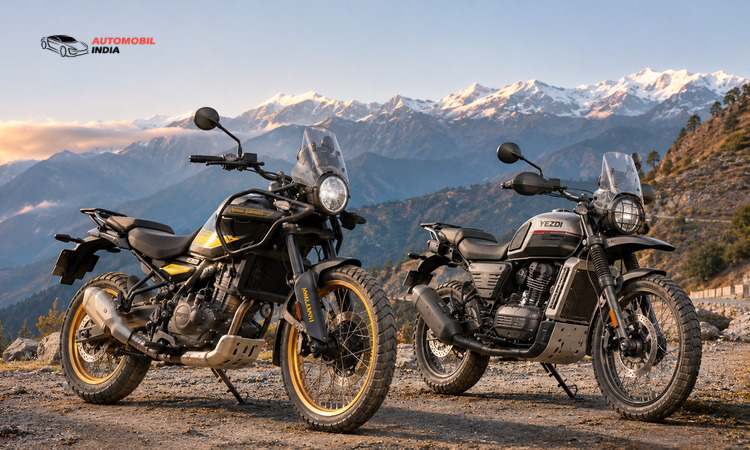
The adventure motorcycle segment in India has grown beyond a niche category for long-distance riders. Today, buyers are looking for motorcycles that can handle broken city roads, highway touring, mountain routes and occasional trails without becoming impractical in everyday use. Two names that regularly enter this conversation are the Royal Enfield Himalayan 450 and the Yezdi Adventure.
Both motorcycles follow the familiar ADV formula of a 21-inch front wheel, upright ergonomics, long-travel suspension and a single-cylinder engine. Their approaches, however, are different. The Himalayan 450 is the more powerful and premium machine, built around Royal Enfield’s liquid-cooled Sherpa 450 engine and a modern electronic package. The Yezdi Adventure aims to deliver a similar adventure-ready silhouette and equipment set at a lower price, with a smaller 334cc engine and a lower kerb weight.
For this comparison, we are considering the current-generation Royal Enfield Himalayan 450 and the updated Yezdi Adventure listed in India during 2026—not the older air-cooled Himalayan 411 or the earlier versions of the Yezdi. Prices are ex-showroom indicative figures and may vary by city, variant, colour, dealer offers and updates. Always confirm the final on-road quotation with the manufacturer or dealer.
Price Comparison: Yezdi Is the More Affordable Option
The Yezdi Adventure has a clear advantage on entry price. Current listings place the standard version at around ₹2.23 lakh ex-showroom, while the tubeless variant is listed at approximately ₹2.50 lakh. The Royal Enfield Himalayan 450 range is listed at around ₹3.05 lakh onwards, with higher variants costing more depending on trim and location. The gap is substantial, particularly for a buyer who is purchasing an ADV as a first touring motorcycle.
The price comparison needs one important qualification: the Yezdi’s standard and tubeless variants are not identical in equipment and wheel/tyre configuration. Buyers who want tubeless tyres for easier puncture repairs on long trips should compare the tubeless Yezdi variant against the Himalayan variant they intend to buy, rather than comparing only the entry-level prices.
On-road prices add registration, insurance, road tax and other charges, and can vary significantly between states. Accessories such as luggage racks, engine guards, hand guards and touring seats can also change the final ownership cost.
Engine and Performance: Himalayan Has the Power Advantage
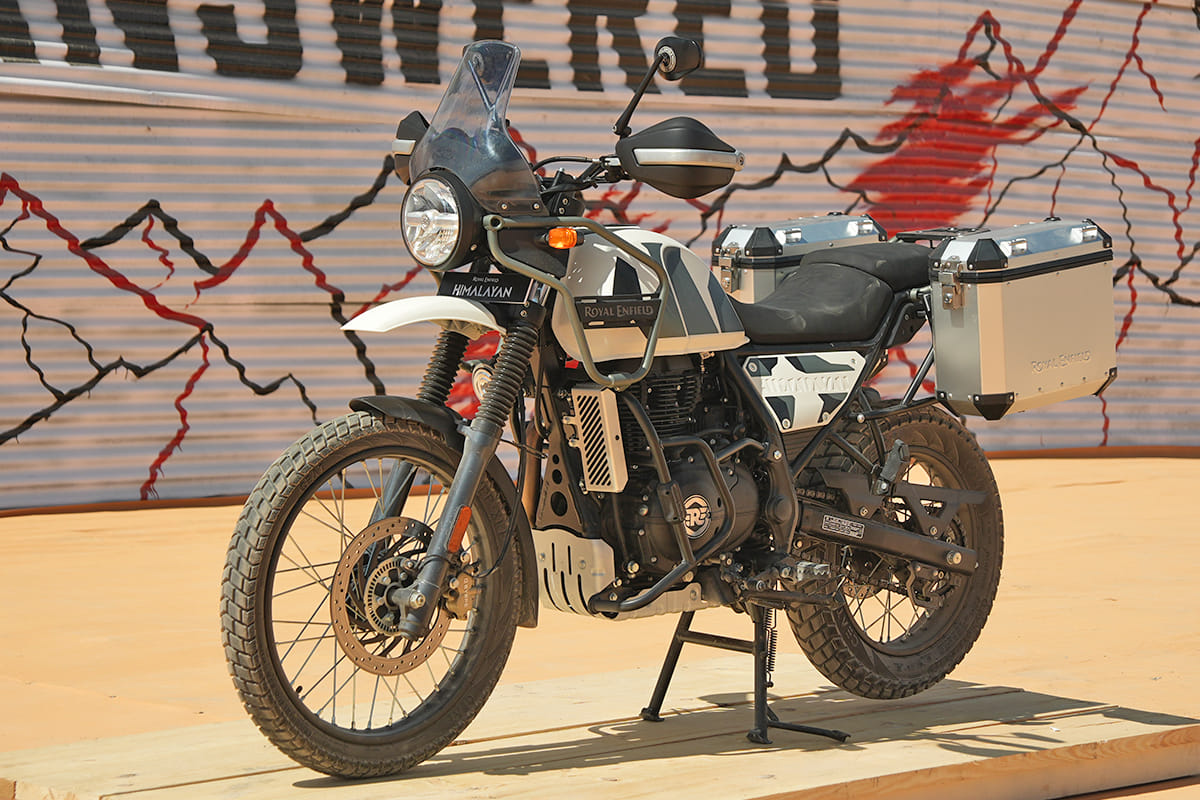
The Royal Enfield Himalayan 450 is powered by the 452cc, liquid-cooled, single-cylinder Sherpa engine. It produces 40.02PS at 8,000rpm and 40Nm at 5,500rpm, paired with a six-speed gearbox and a slip-and-assist clutch. The engine’s broad torque delivery is central to the Himalayan’s character: it is designed to pull confidently at low and mid-range engine speeds while retaining enough performance for highway overtakes and loaded touring.
The Yezdi Adventure uses a 334cc, liquid-cooled, single-cylinder engine producing approximately 29.6hp at 8,000rpm and 29.8Nm at 5,800rpm. It also gets a six-speed gearbox and an assist-and-slipper clutch. Its output is lower than the Himalayan’s, but the smaller displacement and lower weight make it a credible option for riders who do not need the stronger performance of the larger Royal Enfield.
On paper, the Himalayan has a clear advantage in peak power and torque. That should make a difference when riding two-up with luggage, climbing steep gradients or maintaining higher cruising speeds. The Yezdi’s engine is more modest, but its lower purchase price may matter more to riders whose usage is mostly weekend rides, moderate touring and daily commuting.
Neither power figure alone tells the whole story. Throttle response, gearing, heat management, fuelling, vibration and the way an engine delivers torque at real-world speeds are best assessed on a test ride.
Specifications Compared
|
Specification |
Royal Enfield Himalayan 450 |
Yezdi Adventure |
|
Engine |
452cc, liquid-cooled, single-cylinder |
334cc, liquid-cooled, single-cylinder |
|
Maximum power |
40.02PS @ 8,000rpm |
29.6hp @ 8,000rpm |
|
Maximum torque |
40Nm @ 5,500rpm |
29.8Nm @ 5,800rpm |
|
Gearbox |
6-speed |
6-speed |
|
Clutch |
Slip-and-assist |
Assist-and-slipper |
|
Front suspension |
43mm USD fork; 200mm travel |
41mm telescopic fork |
|
Rear suspension |
Linkage monoshock; 200mm travel |
Linkage monoshock; 7-step preload adjustment |
|
Front wheel |
21-inch |
21-inch |
|
Rear wheel |
17-inch |
17-inch |
|
Front tyre |
90/90-21 |
90/90-21 |
|
Rear tyre |
140/80 R17 |
130/80-17 |
|
Ground clearance |
230mm |
220mm |
|
Seat height |
825mm standard; adjustable |
815mm |
|
Fuel tank |
17 litres |
15.5 litres |
|
Kerb weight |
196kg |
187kg |
|
Brakes |
320mm front, 270mm rear; switchable dual-channel ABS |
320mm front, 240mm rear; dual-channel ABS |
|
Display |
4-inch TFT with phone connectivity and Google Maps navigation |
Digital instrument cluster; features vary by variant |
|
Indicative ex-showroom price |
Around ₹3.05 lakh onwards |
₹2.23 lakh standard; approx. ₹2.50 lakh tubeless |
Note: Yezdi figures reflect the current specification listing consulted for this comparison. Manufacturer and third-party sources may use different units (PS, hp) and may list different variants. Confirm variant-specific equipment, tyre construction and final prices before purchase.
Design and Ergonomics: Purpose-Built Adventure Styling
The Himalayan 450 has a functional, rally-inspired design. Its tall stance, 21-inch front wheel, high-mounted front mudguard, wide handlebar and upright seating position communicate its focus on mixed-surface touring. The fuel tank is shaped to offer a natural knee grip while standing on the footpegs, and the adjustable seat gives riders some flexibility in setting the riding position.
The Yezdi Adventure has a more compact visual profile, with a distinctive front fascia, tall windscreen and protective-looking bodywork. The 2025 update brought revised styling and detailing, while the model continues to offer the essentials expected from an adventure tourer. Its lower listed seat height may make it more approachable for some riders, although seat width and suspension sag also affect how easily a rider can place both feet on the ground.
Both motorcycles are tall compared with ordinary commuter bikes. Shorter riders should test them in person, ideally with the motorcycle loaded as they would use it on a trip.
Suspension, Wheels and Off-Road Hardware
The Himalayan 450 uses a 43mm upside-down front fork and a linkage-type rear monoshock, each offering 200mm of wheel travel. Its 21-inch front and 17-inch rear wheel combination is conventional for an adventure motorcycle, helping it roll over uneven surfaces while maintaining stability. Ground clearance is 230mm.
The Yezdi Adventure also uses a 21-inch front and 17-inch rear wheel combination. It gets a 41mm telescopic front fork and a linkage-type rear monoshock with seven-step preload adjustment. Its listed ground clearance is 220mm. The Himalayan therefore has a longer-travel, more premium suspension specification on paper, while the Yezdi offers a simpler setup that helps keep the overall package more affordable.
The exact wheel and tyre configuration deserves attention. The Himalayan’s standard spoke wheels are listed with tubed tyres, while the Yezdi is offered in variants that differ in tyre setup, including a tubeless option. For remote touring, tubeless tyres can be easier to repair after a puncture, but buyers should check the precise variant and wheel construction rather than relying on a model-level description.
Features and Technology
The Himalayan 450 has a stronger technology package. Its circular 4-inch TFT instrument display supports smartphone connectivity, full-map navigation powered by Google Maps, media controls and vehicle information. It also gets ride-by-wire, riding modes, LED lighting, a USB Type-C charging point and switchable dual-channel ABS.
The Yezdi Adventure’s feature list includes LED lighting, a digital instrument cluster, dual-channel ABS, a USB charging port and navigation-related functionality depending on model year and variant. The 2025 update brought styling and feature revisions, but its cockpit and electronics are not as elaborate as the Himalayan’s full-colour TFT interface.
For riders who frequently tour unfamiliar routes, the Himalayan’s integrated navigation display is a meaningful convenience. Riders who use a dedicated phone mount or navigation device may consider the Yezdi’s simpler instrument setup perfectly adequate.
Touring Comfort, Range and Practicality
The Himalayan 450 has a 17-litre fuel tank, compared with the Yezdi Adventure’s 15.5-litre tank. Combined with the larger engine’s stronger output, the Himalayan is designed for extended touring and carrying a passenger and luggage. Its adjustable seat and relaxed riding triangle also support longer stints in the saddle.
The Yezdi’s smaller tank does not automatically make it unsuitable for touring, but its real-world range depends on riding style, load, road conditions and fuel economy. Published mileage figures should be treated as indicative rather than guaranteed. For long trips, route planning and fuel-stop availability remain important.
Luggage compatibility is another area to evaluate. Both motorcycles can be equipped for touring, but buyers should compare genuine accessory prices, mounting points, load limits and the availability of panniers or top boxes. A lower initial motorcycle price can narrow once protective equipment and luggage accessories are added.
Which One Is Better for Daily Use?
The Yezdi Adventure’s lower price and lower kerb weight may make it the more approachable choice for a buyer who wants an adventure-styled motorcycle but will spend much of the week riding in town. Its 334cc engine is still a substantial step up from a commuter, so it is not a lightweight city scooter replacement. The 187kg kerb weight listed for the Yezdi is lower than the Himalayan’s 196kg.
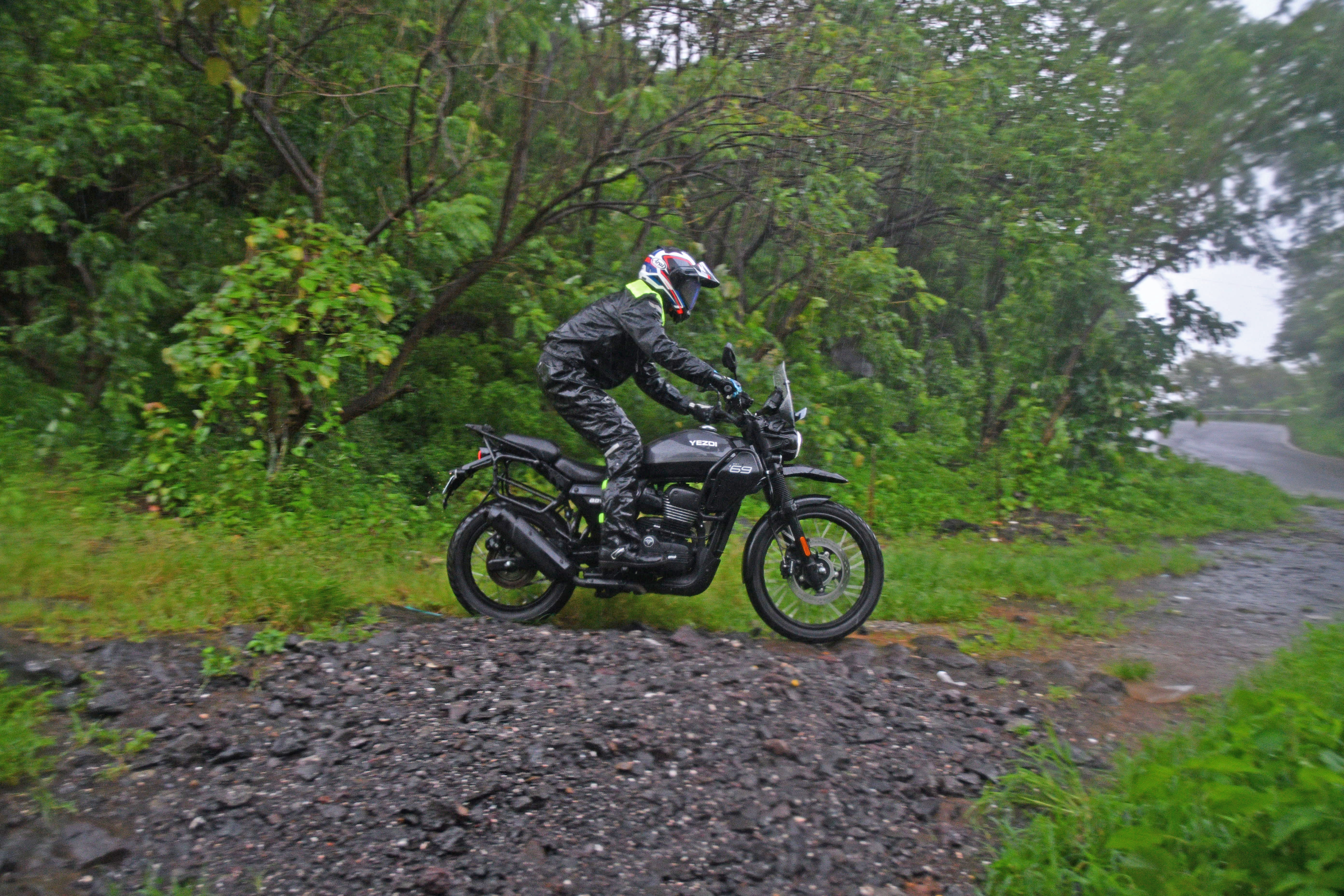
The Himalayan is larger and heavier, and its taller stance can require more effort in tight traffic or when manoeuvring in a parking space. In return, it offers more power, greater ground clearance, a larger fuel tank and a more advanced display. Riders who regularly travel on highways or carry a pillion may appreciate those advantages.
If the motorcycle will be used mainly for city commuting, buyers should also consider seat comfort in traffic, engine heat, turning radius, clutch effort and parking convenience. A short test ride in realistic traffic is more useful than relying on a specification sheet.
Service Network, Ownership and Resale
Royal Enfield has a broad dealership and service footprint across India, which can be reassuring for riders planning long-distance travel. The company also offers touring accessories and a well-established Himalayan community. Yezdi’s ownership experience depends more heavily on the availability and quality of the local Classic Legends dealership and service network. Prospective buyers should identify the nearest authorised workshop and ask about parts availability and service intervals.
Resale value is difficult to predict from specifications alone. Brand demand, condition, service history, local demand and model updates all influence used-bike prices. Royal Enfield’s stronger market presence may help its resale appeal in many regions, but buyers should compare actual used listings in their city rather than assume a fixed depreciation advantage.
Royal Enfield Himalayan 450 vs Yezdi Adventure: Which Should You Buy?
Choose the Royal Enfield Himalayan 450 if you want a more powerful engine, longer-travel suspension, higher ground clearance, a larger fuel tank and a more advanced navigation-focused instrument cluster. It is the stronger choice for riders who plan frequent highway touring, longer trips with luggage or more demanding mixed-surface routes—and who are comfortable paying the premium.
Choose the Yezdi Adventure if purchase price is a major consideration and you want the adventure-bike format without moving to the Himalayan’s price bracket. It offers a 334cc liquid-cooled engine, a 21-inch front wheel, a six-speed gearbox and a lower listed kerb weight. The tubeless variant is worth considering for riders who tour regularly, subject to confirming its exact equipment.
There is no universal winner. The Himalayan 450 is the more capable and feature-rich package on paper, while the Yezdi Adventure makes the ADV format more accessible on price. The right decision depends on the type of riding you actually do, the local service support available and whether the Himalayan’s extra performance and equipment justify the additional cost.