
The Tata Nexon vs Brezza comparison has become more interesting in 2026. Both are compact SUVs aimed at buyers looking for a practical five-seater for Indian roads, but their approaches are different.
The Tata Nexon offers a wider powertrain range, including petrol, diesel and CNG, along with multiple automatic options and ADAS on the top petrol variant. The 2026 Maruti Brezza, meanwhile, gets a new 1.0-litre turbo-petrol engine, a 1.5-litre petrol engine, factory-fitted CNG and a 6-speed automatic option.
Prices also overlap considerably. The Nexon currently starts at around ₹7.4 lakh ex-showroom, while the 2026 Brezza starts at ₹7.40 lakh ex-showroom. The exact price depends on the variant, powertrain and special edition.
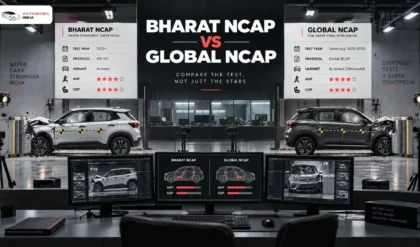
Both SUVs now have a 5-star Bharat NCAP rating, although the ratings apply to specified variants and were assessed in different years. The Nexon recorded 29.41/32 for adult occupant protection and 43.83/49 for child occupant protection, while the Brezza’s 2026 assessment recorded 30.41/32 and 43/49 respectively.
So, which one makes more sense? That depends on whether your priority is safety equipment, diesel availability, CNG practicality, automatic driving, features, boot space or everyday running costs.
Tata Nexon vs Brezza: Price at a Glance
| SUV | Approx. Ex-showroom Price | Powertrain Options |
|---|---|---|
| Tata Nexon | ₹7.4 lakh – ₹14.5 lakh* | Petrol, CNG, Diesel |
| Maruti Brezza | ₹7.40 lakh – ₹13.70 lakh* | Turbo Petrol, Petrol, CNG |
The Nexon’s current range extends across several trims and powertrain combinations, with 1.2-litre turbo-petrol, 1.2-litre CNG and 1.5-litre diesel options. Current published 2026 variant pricing places the range at roughly ₹7.37 lakh to ₹14.52 lakh ex-showroom.
The 2026 Brezza is available in four main variants — LXi, VXi, ZXi and ZXi+ — with prices ranging from ₹7.40 lakh to ₹13.55 lakh at launch. Subsequent price revisions have pushed the maximum to around ₹13.70 lakh for applicable variants.
What does that mean for buyers?
The entry-level prices are almost identical, but the Nexon offers a broader range as you move up the price ladder.
The Brezza, on the other hand, has a relatively straightforward four-variant structure. Its new turbo-petrol engine also makes the entry-level Brezza considerably more performance-oriented than the base-engine positioning might suggest.
Tata Nexon vs Brezza: Specifications
| Specification | Tata Nexon | Maruti Brezza |
|---|---|---|
| Length | 3,995 mm | 3,995 mm |
| Width | 1,804 mm | 1,790 mm |
| Height | 1,620 mm | 1,685 mm |
| Wheelbase | 2,498 mm | 2,500 mm |
| Seating | 5 | 5 |
| Boot Space | 382 litres* | 328 litres |
| Ground Clearance | Up to 208 mm | Not specified in current official specification sheet |
| Drive Type | Front-wheel drive | Front-wheel drive |
The two SUVs are almost identical in overall length and wheelbase. The Nexon is wider, while the Brezza is taller. Their wheelbases differ by just 2 mm, so neither has a dramatic advantage based purely on this measurement.
The more noticeable difference is boot space. The regular Nexon offers around 382 litres, compared with 328 litres for the Brezza. That extra capacity can be useful for airport runs, family luggage and weekend trips.
Compare live listings for both SUVs and see what’s available in your city before booking a test drive.
Tata Nexon vs Brezza: Engine and Performance
This is one of the biggest differences between the two SUVs.
Tata Nexon Engine Options
The Nexon currently offers three fuel choices:
- 1.2-litre turbo-petrol — 120hp and 170Nm
- 1.5-litre diesel — 115hp and 260Nm
- 1.2-litre turbo-petrol CNG — CNG-specific output of around 100hp
The petrol engine can be paired with a 5-speed manual, 6-speed manual, 6-speed AMT or 7-speed DCT depending on variant. The diesel is offered with a 6-speed manual and 6-speed AMT, while CNG is offered with a 6-speed manual.
The 1.2-litre turbo-petrol’s 170Nm torque gives the Nexon a relatively strong mid-range, while the diesel’s 260Nm makes it particularly relevant for buyers who frequently travel on highways or carry passengers and luggage.
Maruti Brezza Engine Options
The 2026 Brezza has three powertrain choices:
- 1.0-litre Boosterjet turbo-petrol — 110.2 PS and 170Nm
- 1.5-litre petrol — around 103 PS and 139Nm
- 1.5-litre S-CNG — around 88 PS and 121.5Nm in CNG mode
The turbo-petrol comes with a 6-speed manual. The 1.5-litre petrol gets a 6-speed manual or 6-speed automatic, while the CNG version is available with a 6-speed manual.
How the engines differ in everyday driving
The Nexon provides more choice, particularly if you want a diesel or dual-clutch automatic.
The Brezza’s new turbo-petrol is interesting because it produces 170Nm, matching the Nexon’s petrol torque figure. It should therefore appeal to buyers who want stronger acceleration without moving to a larger engine.
The Brezza 1.5 petrol takes a different approach. Its naturally aspirated engine has less torque than either SUV’s turbo-petrol engine, but it is available with the 6-speed automatic.
Tata Nexon vs Brezza: Mileage Comparison
Mileage figures below are claimed/certified figures, not guaranteed real-world fuel economy.
| Powertrain | Tata Nexon | Maruti Brezza |
|---|---|---|
| Petrol Manual | 17.44 km/l | Up to 21.09 km/l |
| Petrol Automatic | 17.18 km/l AMT / 17.01 km/l DCT | 20.17 km/l |
| Turbo Petrol | Included in Nexon petrol figures | Up to 20.47 km/l |
| CNG | 24 km/kg | 26.90 km/kg |
| Diesel | Up to 23.23–24.08 km/l | Not available |
The Nexon’s current ARAI-certified figures are 17.44 km/l for petrol-manual, 17.18 km/l for petrol-AMT, 17.01 km/l for petrol-DCT and 24 km/kg for CNG. Published diesel figures are around 23.23 km/l for the manual and 24.08 km/l for the AMT.
For the Brezza, Maruti claims up to 21.09 km/l for the 1.5-litre petrol manual, 20.17 km/l for the 1.5-litre automatic, up to 20.47 km/l for the turbo-petrol and 26.90 km/kg for the CNG version.
Which matters more: mileage or fuel cost?
For high annual running, the fuel type can matter more than the headline km/l figure.
The Brezza CNG has a claimed 26.90 km/kg and its 2026 update uses an underbody CNG tank arrangement, which Maruti says preserves usable boot space.
The Nexon also has a CNG option, but buyers should specifically look at the available luggage capacity and their local CNG infrastructure before deciding.
For buyers who drive long distances and prefer diesel, the Nexon is the only one of these two with a diesel engine.
Tata Nexon vs Brezza: Safety
Safety is an important part of this comparison because both SUVs currently carry 5-star Bharat NCAP ratings.
Tata Nexon Safety Rating
The Tata Nexon has a 5-star Bharat NCAP rating, with:
- Adult Occupant Protection: 29.41/32
- Child Occupant Protection: 43.83/49
The Bharat NCAP database lists the rating from October 2024 onwards and has subsequently extended its applicability to additional Nexon variants.
The Nexon also offers safety equipment such as six airbags, ESC, ISOFIX, seat-belt reminders and other electronic safety systems. Higher variants add features such as a 360-degree surround-view system and blind-view monitor.
Maruti Brezza Safety Rating
The updated Brezza’s Bharat NCAP assessment gives it:
- Adult Occupant Protection: 30.41/32
- Child Occupant Protection: 43/49
The published Bharat NCAP result applies to specified variants, including listed petrol configurations.
The 2026 Brezza also gets:
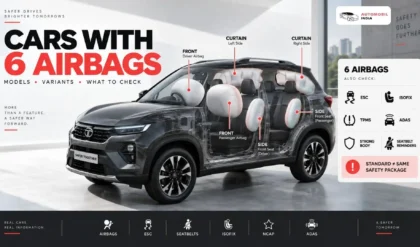
- 6 airbags
- ESP with Hill Hold Assist
- TPMS
- ABS with EBD
- ISOFIX
- Front parking sensors
- 360-degree camera
- Blind Spot Warning
- Lane Change Alert
- Rear Cross Traffic Alert
- Safe Exit Warning
- Emergency Stop Signal
Maruti has stated that six airbags are standard across the New Brezza range.
An important point about the ratings
Tata Nexon vs Brezza: Features
Both SUVs have become significantly better equipped, but their feature strategies differ.
Nexon Features
Depending on the variant, the Nexon can offer:
- 10.25-inch touchscreen infotainment system
- Wireless Android Auto and Apple CarPlay
- Digital instrument cluster
- Panoramic sunroof
- 360-degree surround-view system
- Blind-view monitor
- Ventilated front seats
- Wireless charger
- Connected-car technology
- Air purifier
- JBL audio system
- Rear AC vents
- Cruise control
- ADAS on the top petrol DCA variant
The top Fearless+ A petrol DCA gets ADAS functions including autonomous emergency braking, forward collision warning, lane departure warning, lane keep assist, lane centering, traffic-sign recognition and high-beam assist.
Brezza Features
The 2026 Brezza adds a stronger technology package, including:
- 10.1-inch SmartPlay Pro+ touchscreen
- Wireless Android Auto and Apple CarPlay on higher variants
- Suzuki Connect
- 360-degree camera
- Head-up display
- Electric sunroof
- Ventilated front seats
- Wireless charger
- Ambient lighting
- Arkamys audio
- Connected-car features
- Blind Spot Warning
- Rear Cross Traffic Alert
- Safe Exit Warning
- Front parking sensors
The Brezza’s updated feature list is substantially richer than that of the earlier model.
What about ADAS?
This is an important distinction.
The Nexon offers ADAS on the top petrol DCA configuration, whereas the Brezza’s current safety technology focuses on systems such as blind-spot warning, lane-change alert and rear cross-traffic alert rather than the same ADAS package offered by Tata.
These systems perform different functions and should not simply be treated as interchangeable features.
Tata Nexon vs Brezza: Interior and Comfort
The two SUVs have similar wheelbases, so neither is dramatically different on paper when it comes to cabin length.
The Nexon is wider at 1,804mm compared with the Brezza’s 1,790mm. That extra width can be useful when carrying three people across the rear bench, although actual comfort also depends on seat design and passenger sizes.
The Brezza is taller, measuring 1,685mm compared with the Nexon’s 1,620mm. Its more upright SUV shape can contribute to an easy-to-enter cabin and a more commanding driving position.
For families, both are five-seaters rather than genuine three-adult-across vehicles. The middle rear passenger’s comfort will depend heavily on the occupants’ size and the journey length.
Tata Nexon vs Brezza: Boot Space and Practicality
Boot space is an area where the Nexon has a measurable advantage in its standard configuration.
| Practicality | Tata Nexon | Maruti Brezza |
|---|---|---|
| Standard boot | 382 litres | 328 litres |
| CNG boot | Around 321 litres | Underbody tank arrangement |
| Seating | 5 | 5 |
| Rear-seat flexibility | 60:40 split depending on variant | Rear-seat folding available |
The Nexon’s regular 382-litre boot is useful for families who frequently carry luggage. The CNG version’s luggage capacity is lower because of the CNG system.
The 2026 Brezza’s underbody CNG arrangement is particularly notable because Maruti says it allows customers to retain uncompromised boot space compared with conventional CNG tank layouts.
That makes the Brezza worth considering if CNG and luggage-carrying practicality are both important.
Tata Nexon vs Brezza: City Driving
For predominantly urban use, both vehicles make sense, but the ideal powertrain is different depending on your priorities.
Nexon for city use
The Nexon’s petrol AMT is aimed at buyers who want two-pedal convenience without moving to the more expensive DCT variants.
Its compact dimensions, 208mm ground clearance and multiple transmission choices also make it adaptable to Indian urban conditions.
Brezza for city use
The Brezza’s 1.5-litre petrol with 6-speed automatic is the more conventional automatic combination in its range.
The CNG version can also make financial sense for people with high daily running, particularly where reliable CNG availability exists.
Tata Nexon vs Brezza: Highway Driving
The Nexon has an advantage in terms of powertrain choice for highway users.
Its diesel engine produces 260Nm, considerably more torque than the Brezza’s 1.5-litre petrol. This can be useful when overtaking or driving with passengers and luggage.
The Nexon’s DCT petrol option also gives buyers an alternative to the AMT, while the Brezza relies on the 1.5-litre petrol for its automatic option.
However, the Brezza’s new 1.0-litre turbo-petrol produces 170Nm, making it considerably more performance-focused than the naturally aspirated 1.5-litre petrol.
For someone who prefers a simpler naturally aspirated engine, the 1.5-litre remains available.
Estimate EMIs and compare interest rates for the Nexon or Brezza variant you’re considering.
Tata Nexon vs Brezza: Which One Should You Choose?
There is no single answer because the two SUVs cater to slightly different priorities.
- You want a diesel compact SUV.
- You want a wider range of automatic transmissions.
- You want a DCT petrol automatic.
- You value a larger standard boot.
- You want ADAS on a higher variant.
- You want a 360-degree camera and blind-view monitor on higher variants.
- You want a turbo-petrol/CNG combination.
- You want a strong feature list at higher trim levels.
- You want the new 1.0-litre turbo-petrol.
- You want a conventional 1.5-litre petrol with a 6-speed automatic.
- You want factory-fitted CNG with an underbody tank layout.
- You prefer a taller, more upright SUV profile.
- You want features such as blind-spot warning and rear cross-traffic alert.
- You want a relatively simple four-variant lineup.
- You want the Maruti service and ownership ecosystem to be part of your buying decision.
Tata Nexon vs Brezza: Variant Strategy
The variant structure is quite different.
The Nexon has a more extensive range, with Smart, Pure, Creative and Fearless families supplemented by additional feature packages and special editions. This creates more combinations of engines, gearboxes and equipment.
The Brezza is simpler, with four principal variants:
- LXi
- VXi
- ZXi
- ZXi+
The turbo-petrol is available across all four trims, while the 1.5-litre petrol and CNG options are distributed across the lower and mid variants. The 1.5-litre automatic is available from VXi upwards.
For buyers who dislike spending hours comparing dozens of combinations, the Brezza’s simpler lineup may be easier to understand.
Tata Nexon vs Brezza: Ownership Considerations
Purchase price is only one part of the ownership equation.
Before choosing between the two, consider:
1. Annual running
If you drive a high number of kilometres every year, compare petrol, CNG and diesel running costs rather than just advertised mileage.
2. Transmission
An automatic is particularly useful in heavy city traffic. The Nexon offers AMT and DCT options, while the Brezza’s 1.5 petrol gets a 6-speed automatic.
3. Service availability
Maruti Suzuki and Tata Motors have large service networks, but actual experience can vary by dealership and city. Buyers should check the quality and availability of authorised service in their own area.
4. Fuel availability
CNG only makes sense if you have convenient access to CNG stations. Similarly, diesel can be useful for high-mileage highway users but may make less sense for low annual running.
5. Resale
Resale value depends on variant, fuel type, age, condition, location and market demand. It should not be estimated solely from the brand name.
Tata Nexon vs Brezza: Key Differences at a Glance
| Factor | Tata Nexon | Maruti Brezza |
|---|---|---|
| Starting price | Around ₹7.4 lakh | ₹7.40 lakh |
| Petrol | 1.2L Turbo | 1.0L Turbo + 1.5L NA |
| Diesel | Yes | No |
| CNG | Yes | Yes |
| Petrol automatic | AMT/DCT | 6AT |
| Diesel automatic | AMT | Not available |
| Claimed CNG mileage | 24 km/kg | 26.90 km/kg |
| Standard boot | 382L | 328L |
| Bharat NCAP | 5 stars | 5 stars |
| ADAS | Available on top petrol DCA | Not offered as the same ADAS package |
| 360-degree camera | Higher variants | Higher variants |
| Blind-spot technology | Higher variants | Available on new model |
| Rear cross-traffic alert | Available on ADAS configuration | Available |
| Turbo petrol torque | 170Nm | 170Nm |
| Best suited to | Broad powertrain/feature requirements | Simpler lineup, CNG/petrol and new turbo option |
Tata Nexon vs Brezza: The Bottom Line
The Tata Nexon vs Brezza comparison is no longer simply about choosing between two similar petrol compact SUVs.
The Nexon is the more powertrain-diverse option, with petrol, CNG and diesel engines, several gearbox choices, a larger standard boot and ADAS available on the top petrol automatic. Its 5-star Bharat NCAP result also provides a strong documented safety reference.
The 2026 Brezza has closed several gaps with its new turbo-petrol engine, updated technology and expanded safety equipment. Its 1.5-litre petrol, CNG option and 6-speed automatic continue to cover conventional daily-use requirements, while the new 1.0-litre turbo adds a more performance-oriented alternative.
For buyers focused on diesel, maximum powertrain choice, boot space and ADAS, the Nexon deserves closer attention.
For buyers focused on CNG, a conventional petrol automatic, the new turbo-petrol or a simpler variant lineup, the Brezza deserves consideration.
The right choice ultimately depends on the way you drive, your annual kilometres, preferred fuel, transmission and the features you actually intend to use.
Compare your preferred variants, calculate the on-road price in your city and take both SUVs for a test drive before making the final decision.
Frequently Asked Questions
Is Tata Nexon safer than Maruti Brezza?
Both the current Tata Nexon and 2026 Maruti Brezza have 5-star Bharat NCAP ratings. The Nexon scored 29.41/32 for adult occupant protection and 43.83/49 for child occupant protection, while the Brezza scored 30.41/32 and 43/49 respectively. However, the tests were conducted in different years and the ratings apply to specified variants, so the scores should not be treated as a direct like-for-like ranking.
Which has better mileage, Nexon or Brezza?
The claimed figures depend on the powertrain. The Brezza’s 1.5 petrol can deliver up to 21.09 km/l and its CNG version is rated at 26.90 km/kg. The Nexon petrol is rated at 17.01–17.44 km/l depending on transmission, while its CNG is rated at 24 km/kg. Nexon’s diesel versions are rated at over 23 km/l in published figures.
Does the Tata Nexon have a diesel engine?
Yes. The Nexon continues to offer a 1.5-litre diesel engine producing 115hp and 260Nm, with manual and AMT gearbox options.
Does the Maruti Brezza have a diesel engine?
No. The 2026 Brezza is available with a 1.0-litre turbo-petrol, 1.5-litre petrol and 1.5-litre factory-fitted CNG powertrains.
Which has more boot space, Nexon or Brezza?
The regular Tata Nexon has a quoted boot capacity of around 382 litres, while the Brezza has 328 litres. The Nexon therefore provides more nominal luggage capacity in its standard configuration.
Does the Brezza have CNG?
Yes. The 2026 Brezza offers factory-fitted S-CNG in LXi, VXi and ZXi variants. Maruti quotes 26.90 km/kg and has moved to an underbody tank configuration to preserve luggage space.
Does Tata Nexon have ADAS?
Yes. ADAS is available on the top petrol DCA configuration. Features include autonomous emergency braking, forward collision warning, lane keep assist, lane centering, lane departure warning, traffic-sign recognition and high-beam assist.
Which has more automatic transmission choices?
The Nexon offers more automatic gearbox variety, including a 6-speed AMT and 7-speed DCT for petrol, as well as a 6-speed AMT for diesel. The Brezza’s 1.5-litre petrol is available with a 6-speed automatic, while its turbo-petrol and CNG configurations use manual transmissions.
Which is bigger, Nexon or Brezza?
Both are 3,995mm long. The Nexon is wider at 1,804mm, while the Brezza is taller at 1,685mm. Their wheelbases are almost identical at 2,498mm and 2,500mm respectively.
Should you buy the Nexon or Brezza?
There is no single answer for every buyer. The Nexon makes more sense to investigate if you need diesel, multiple automatic options, a larger boot or ADAS. The Brezza is worth considering if CNG, its new turbo-petrol, a 1.5 petrol automatic or its simpler variant structure matches your requirements.
Prices, specifications, features, mileage figures and variant availability can change. Mileage figures mentioned above are manufacturer/ARAI-certified claims unless otherwise stated. Always confirm the latest price, equipment and variant-specific safety features with the respective manufacturer or authorised dealer before purchasing.