
Tata Punch EV vs Nexon EV: Range, Charging, Features and Price Comparison
If you are looking for a Tata electric SUV in India, the Punch EV and Nexon EV now sit much closer in price than their size suggests. The Punch EV starts at ₹9.79 lakh ex-showroom, while the Nexon EV starts at ₹12.49 lakh. At the top end, the Punch EV reaches ₹12.99 lakh, whereas the Nexon EV goes up to ₹17.89 lakh before special editions.
The bigger difference is what you get for that extra money. The Punch EV is smaller, easier to place in city traffic and surprisingly strong on range for its size, while the Nexon EV offers a larger cabin, more powerful motor, a bigger 45kWh battery option, longer claimed range, and features such as Level 2 ADAS on the top variant.
So, the choice is less about which EV is universally better and more about how much space, range, performance and technology you actually need.
Tata Punch EV vs Nexon EV: Quick Comparison
| Parameter | Tata Punch EV | Tata Nexon EV |
|---|---|---|
| Current ex-showroom price | ₹9.79–12.99 lakh | ₹12.49–17.89 lakh |
| Battery options | 30kWh, 40kWh | 30kWh, 45kWh |
| Claimed range | 365–375km / 468km | 275km / 489km |
| Tata C75 estimated range | 260–275km / 335–355km | 210–230km / 350–375km |
| Maximum power | 95kW | 106kW |
| Maximum torque | 154Nm | 215Nm |
| 0–100km/h | 9.0 sec, 40kWh | 8.9 sec, 45kWh |
| Charging | Up to 65kW DC | Up to 60kW DC |
| DC charging time | Around 20–80% in 26 min | 10–80% in 40 min |
| Length | 3,880mm | 3,995mm |
| Width | 1,742mm | 1,802mm |
| Wheelbase | 2,445mm | 2,498mm |
| Boot space | 366 litres | 350 litres |
| Ground clearance | 195mm | 190mm |
| Seating | 5 | 5 |
| Bharat NCAP | 5 stars | 5 stars |
| ADAS | No | Yes, on top variants |
Tata Punch EV vs Nexon EV Price
The price gap between the two is smaller at the entry level than many buyers may expect.
Current ex-showroom prices
| Model | Starting price | Top price |
|---|---|---|
| Tata Punch EV | ₹9.79 lakh | ₹12.99 lakh |
| Tata Nexon EV | ₹12.49 lakh | ₹17.89 lakh |
The Punch EV’s current prices were revised in September 2026 and now range from ₹9.79 lakh to ₹12.99 lakh. The Nexon EV starts at ₹12.49 lakh and goes up to ₹17.89 lakh for the regular range, with Dark and Red Dark editions costing slightly more.
This creates an interesting overlap.
A buyer looking at the top-end Punch EV 40kWh is already close to the starting price of the Nexon EV 30kWh.
However, these are not directly equivalent products. The Nexon is physically larger and offers more performance and equipment as you move up the range.
Which is more affordable?
The Punch EV is clearly positioned as the lower-cost option.
But buyers should compare the specific battery and variant, rather than simply comparing the starting prices. A Punch EV 40kWh and Nexon EV 30kWh have very different range and performance characteristics.
Punch EV vs Nexon EV: Battery and Range
This is one of the most interesting parts of the comparison.
The current Punch EV is available with 30kWh and 40kWh batteries. Tata claims 365–375km of ARAI/MIDC range for the 30kWh version and 468km for the 40kWh version. Tata’s internal C75 estimates are approximately 260–275km and 335–355km respectively.
The Nexon EV gets 30kWh and 45kWh batteries. The 30kWh version has a 275km MIDC range, while the 45kWh version is rated at 489km. Tata’s C75 estimates are around 210–230km for the 30kWh model and 350–375km for the 45kWh model.
Range comparison
| Battery | Punch EV | Nexon EV |
|---|---|---|
| Smaller battery | 30kWh: 365–375km | 30kWh: 275km |
| Larger battery | 40kWh: 468km | 45kWh: 489km |
| C75 practical estimate — smaller battery | 260–275km | 210–230km |
| C75 practical estimate — larger battery | 335–355km | 350–375km |
There is an important point here.
The Punch EV 30kWh has a higher claimed range than the Nexon EV 30kWh despite using the same nominal battery capacity. The larger Punch EV 40kWh, however, has a slightly lower certified range than the Nexon EV 45kWh.
That makes the battery choice more important than the badge.
Punch EV vs Nexon EV Real-World Range
ARAI/MIDC figures should not be treated as a guaranteed distance between charges.
Tata’s C75 figures are more useful as a reference point because they are intended to represent practical driving conditions, although they are still manufacturer test estimates and actual range will vary with speed, traffic, temperature, air-conditioning use, driving style and terrain.
For the larger batteries:
- Punch EV 40kWh: approximately 335–355km C75
- Nexon EV 45kWh: approximately 350–375km C75
Independent testing also shows why real-world range should be treated separately from the certified number. CarWale’s September 2026 test of the Punch EV 40kWh recorded roughly 328km in city conditions and about 325km on highways.
For buyers doing regular highway trips, the Nexon EV 45kWh’s larger battery gives it more headroom between charging stops.
For mostly urban driving, the Punch EV’s smaller footprint and strong range for its size make the 30kWh and 40kWh versions worth considering.
Punch EV vs Nexon EV: Charging Time
Charging is another area where the two cars are relatively close.
DC fast charging
The Punch EV supports DC fast charging at up to 65kW. Tata says its 40kWh version can charge from 20% to 80% in approximately 26 minutes under its test conditions.
The Nexon EV 45 supports a 60kW DC fast charger and takes approximately 40 minutes to charge from 10% to 80%.
| Charging | Punch EV | Nexon EV |
|---|---|---|
| DC charger | Up to 65kW | Up to 60kW |
| Fast-charge claim | 20–80% in ~26 min | 10–80% in ~40 min |
| Large battery | 40kWh | 45kWh |
| Home AC charging | 7.2kW available | 7.2kW available |
For long-distance use, what matters more is how much practical range you can add during a charging stop and how easily you can access a compatible fast charger on your route.
Home Charging: Punch EV vs Nexon EV
For most EV owners, home charging will remain the primary method of charging.
The Nexon EV 45 can take around 6 hours 36 minutes for a 10–100% charge using Tata’s 7.2kW AC wall box. A regular 3.3kW supply takes substantially longer.
The Punch EV also supports a 7.2kW AC charging setup, making overnight charging practical for owners with home parking and a suitable electrical connection.
For example, if you drive 40–60km per day, you generally don’t need to charge the battery from empty every night. A few hours of overnight charging can replenish a meaningful portion of the energy used during the day.
Punch EV vs Nexon EV: Performance
The Nexon EV is the more powerful car.
The Punch EV 30kWh produces 65kW and 154Nm, while the 40kWh version produces 95kW and 154Nm. The 40kWh model is claimed to accelerate from 0–100km/h in 9.0 seconds.
The Nexon EV 45 produces 106kW and 215Nm, with a claimed 0–100km/h time of 8.9 seconds.
What does this mean on the road?
The difference is not just about the 0–100km/h number.
The Nexon EV’s additional torque and power are useful when:
- Joining fast-moving highways
- Overtaking at higher speeds
- Carrying several passengers and luggage
- Driving on long gradients
- Maintaining speed with a loaded cabin
The Punch EV is still more than adequate for normal city traffic, and its compact dimensions can actually be an advantage in congested Indian cities.
If most of your driving is within the city, the Punch EV’s performance is unlikely to be the deciding factor.
Punch EV vs Nexon EV: Dimensions and Space
The Nexon EV is the larger SUV.
| Dimension | Punch EV | Nexon EV |
|---|---|---|
| Length | 3,880mm | 3,995mm |
| Width | 1,742mm | 1,802mm |
| Height | 1,622mm | 1,625mm |
| Wheelbase | 2,445mm | 2,498mm |
| Ground clearance | 195mm | 190mm |
| Boot space | 366 litres | 350 litres |
Tata’s current specifications list the Punch EV at 3,880mm long with a 2,445mm wheelbase and 366-litre boot, while the Nexon EV measures 3,995mm with a 2,498mm wheelbase and 350-litre boot.
Interestingly, the Punch EV has a slightly larger quoted boot capacity despite being shorter overall.
However, boot volume alone does not tell the whole story.
The Nexon EV’s greater width and longer wheelbase contribute to a more spacious overall cabin, particularly for passengers who regularly travel with four or five occupants.
For city use
The Punch EV’s smaller dimensions are useful in:
- Narrow streets
- Crowded parking areas
- Busy residential lanes
- Tight U-turns
- Daily stop-and-go traffic
For family use
The Nexon EV makes more sense when rear-seat space and overall cabin room are priorities.
Punch EV vs Nexon EV: Features
Both cars are feature-rich, but the Nexon EV moves further into premium territory at higher variants.
Punch EV features
Depending on variant, the Punch EV offers features such as:
- 10.25-inch infotainment system
- Digital driver display
- Wireless Android Auto and Apple CarPlay on higher variants
- 360-degree surround-view camera
- Blind Spot View Monitor
- Front ventilated seats
- Wireless charging
- Cruise control
- Connected-car technology
- Electronic parking brake
- Multi-mode regenerative braking
- Electric sunroof on selected variants
Tata’s current Punch EV specification page lists features including the 360-degree camera, blind-spot view monitor, ventilated seats, connected-car technology and six airbags depending on variant.
Nexon EV features
Depending on variant, the Nexon EV offers:
- Large touchscreen infotainment system
- Digital instrument cluster
- Wireless charging
- Ventilated front seats
- Panoramic sunroof
- JBL audio system
- 360-degree camera
- Blind Spot View Monitor
- Front parking sensors
- Connected-car technology
- Vehicle-to-Vehicle charging
- Vehicle-to-Load capability
- Ambient lighting
- ADAS on the top Empowered+ A variant
Tata introduced Level 2 ADAS on the Nexon EV 45 in 2025, including features such as lane departure warning, lane keep assist, forward collision warning, autonomous emergency braking and traffic-sign recognition.
Feature difference that matters
If you want ADAS, the Nexon EV is the one to consider because the top-end Empowered+ A 45 gets the system.
The Punch EV offers useful driver-assistance and parking features such as a 360-degree camera and blind-spot view monitor, but these should not be confused with a full ADAS package.
Punch EV vs Nexon EV: Safety
Both models have five-star Bharat NCAP ratings, but their tested results come from different testing periods and should not be interpreted as a direct head-to-head crash test.
The current 2026 Punch EV scored:
- Adult Occupant Protection: 31.09/32
- Child Occupant Protection: 45/49
- Overall rating: 5 stars
The Nexon EV is listed in the Bharat NCAP database with:
- Adult Occupant Protection: 29.86/32
- Child Occupant Protection: 44.95/49
- Overall rating: 5 stars
The current Punch EV rating applies to the updated 2026 model. The earlier Punch EV had a different test result and was discontinued after the updated model arrived, so older Punch EV safety figures should not be mixed with the current car.
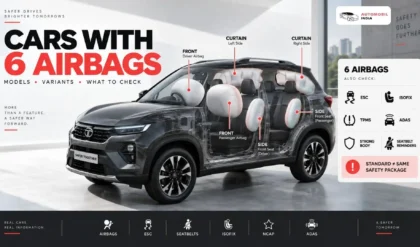
Both cars offer six airbags and electronic safety systems, while the Nexon EV additionally offers ADAS on its top variant.
Punch EV vs Nexon EV: Variants
The Punch EV currently has six variants spread across its two battery options:
- Smart 30
- Smart+ 30
- Smart+ 40
- Adventure 40
- Empowered 40
- Empowered+ S 40
The Nexon EV uses a wider trim structure, with the 30kWh battery concentrated in the lower variants and the 45kWh battery available across higher trims.
Current Nexon EV variants include Creative+, Creative, Fearless, Fearless+, Empowered and Empowered+ A, with battery availability varying by trim.
This means the Nexon EV gives buyers more room to move up in terms of performance and equipment, but also pushes the purchase price considerably higher.
Punch EV 30kWh vs Nexon EV 30kWh
This is one of the more interesting comparisons for city buyers.
The Punch EV 30kWh has:
- 365–375km claimed range
- 260–275km C75 range
- 65kW motor
- 154Nm torque
- Smaller exterior dimensions
- Lower starting price
The Nexon EV 30kWh has:
- 275km claimed range
- 210–230km C75 range
- 30kWh battery
- Larger body
- More cabin space
- More substantial SUV footprint
So, if your priority is urban efficiency, compact dimensions and lower purchase price, the Punch EV 30kWh has a strong case.
If your priority is larger cabin space, the Nexon EV 30kWh becomes more relevant.
Punch EV 40kWh vs Nexon EV 45kWh
This is the more meaningful comparison for buyers who regularly travel longer distances.
| Parameter | Punch EV 40kWh | Nexon EV 45kWh |
|---|---|---|
| Battery | 40kWh | 45kWh |
| Claimed range | 468km | 489km |
| C75 range | 335–355km | 350–375km |
| Power | 95kW | 106kW |
| Torque | 154Nm | 215Nm |
| 0–100km/h | 9.0 sec | 8.9 sec |
| DC charging | Up to 65kW | Up to 60kW |
| Length | 3,880mm | 3,995mm |
| Boot | 366L | 350L |
The Nexon EV 45 has the advantage in battery capacity, claimed range and motor output. The Punch EV 40, however, remains significantly smaller and cheaper.
This is where buyers need to decide whether they are paying for more car or simply looking for an EV that meets their daily requirements.
Which One Makes Sense for City Driving?
The Punch EV is particularly suited to buyers whose driving is predominantly urban.
Its smaller dimensions make it easier to manoeuvre and park, while even the 30kWh version has a relatively high certified range for its battery size.
For someone driving 30–60km a day, home charging can make the daily ownership routine relatively straightforward.
The 40kWh version is more appropriate if you want additional range without moving into Nexon EV pricing.
Which One Makes Sense for Highway Driving?
The Nexon EV 45 has the more suitable hardware for frequent highway travel.
Its larger battery, higher power output and longer C75 range give it more flexibility on longer trips. The larger cabin also makes it more appropriate for buyers who regularly travel with family and luggage.
The Punch EV 40 can still handle highway trips, but charging stops and trip planning become more important when compared with the larger Nexon battery.
Which One Is Better for a Family?
For a small family that mainly drives around town, the Punch EV can be sufficient.
For a family that frequently carries four or five adults, the Nexon EV’s larger footprint and longer wheelbase make more sense.
This is particularly important because EV buyers sometimes focus heavily on range while overlooking the fact that cabin space and seating comfort affect every trip, whereas the maximum range number may only matter during occasional long-distance journeys.
Punch EV vs Nexon EV: Ownership and Running Costs
Both cars can be substantially cheaper to run than a comparable petrol SUV when charged primarily at home.
The exact cost depends on:
- Electricity tariff
- Charging losses
- Driving style
- Air-conditioning use
- Traffic
- Battery state of charge
- Public versus home charging
A useful way to compare them is not simply to look at battery capacity.
The bigger battery does not automatically mean higher running cost per kilometre. What matters is how much energy the car consumes to travel each kilometre.
Tata’s C75 figures put the Punch EV 40kWh at roughly 335–355km and the Nexon EV 45 at roughly 350–375km, meaning their practical energy-use profiles are broadly comparable despite the difference in battery size.
For a buyer with reliable home charging, electricity cost is likely to be a more predictable ownership expense than public fast charging.
Battery Warranty
Battery warranty terms are particularly important when buying an EV.
Tata currently advertises a lifetime HV battery warranty for the Punch EV 40kWh for the first registered private owner, with the company’s definition of “lifetime” being 15 years from first registration, subject to its terms and conditions.
The Nexon EV 45 also gets Tata’s lifetime HV battery warranty programme for the first-time owner, subject to applicable conditions.
Because warranty eligibility can depend on ownership, usage and other conditions, buyers should read the current warranty document before booking.
Punch EV vs Nexon EV: Key Differences
| If you prioritise… | Consider |
|---|---|
| Lower purchase price | Punch EV |
| Compact city dimensions | Punch EV |
| Strong range for a smaller EV | Punch EV |
| Maximum range | Nexon EV 45 |
| Higher performance | Nexon EV 45 |
| More cabin space | Nexon EV |
| Frequent highway travel | Nexon EV 45 |
| ADAS | Nexon EV Empowered+ A |
| Easier urban parking | Punch EV |
| Larger overall SUV | Nexon EV |
| 30kWh city EV | Punch EV |
| Premium technology | Nexon EV higher variants |
Punch EV vs Nexon EV: Which One Should You Buy?
There is no single answer that applies to every EV buyer.
Choose the Punch EV if:
- Most of your driving is inside the city
- You want to keep the purchase price lower
- You prefer a compact SUV
- You have home charging
- You do not need ADAS
- You want good range without moving to a larger vehicle
- Parking and manoeuvrability are important
The Punch EV 30kWh is particularly relevant for urban users, while the 40kWh version makes more sense if you regularly travel longer distances.
Choose the Nexon EV if:
- You frequently travel on highways
- You want more cabin space
- You want stronger performance
- You want the larger 45kWh battery
- You want more premium features
- You want ADAS on the top variant
- You regularly carry passengers and luggage
The Nexon EV 45 is the more suitable configuration for buyers who expect their EV to perform regular long-distance duties.
Final Takeaway
The Tata Punch EV and Nexon EV are not simply two versions of the same proposition.
The Punch EV is the smaller and more affordable option, but the current 40kWh version has a 468km certified range and a Tata C75 estimate of 335–355km. That makes it considerably more capable than its compact dimensions might suggest.
The Nexon EV moves the conversation toward space, performance and longer-distance usability. Its 45kWh version delivers a 489km MIDC-certified range, a 350–375km C75 estimate and 106kW/215Nm from its electric motor.
For a predominantly city-based buyer, the Punch EV can cover the requirements without paying for a larger SUV. For a buyer who regularly travels with family, drives on highways or wants the additional technology available on the top variants, the Nexon EV offers a different set of advantages.
The most sensible way to choose between them is therefore to start with your daily kilometres, home-charging availability, passenger requirements and frequency of highway trips, rather than simply choosing the EV with the highest range figure.
Frequently Asked Questions
Is the Punch EV cheaper than the Nexon EV?
Yes. The current Punch EV ranges from ₹9.79 lakh to ₹12.99 lakh ex-showroom, while the Nexon EV starts at ₹12.49 lakh and goes up to ₹17.89 lakh for the regular range.
Which has more range, Punch EV or Nexon EV?
The Nexon EV 45 has the highest certified range at 489km. The Punch EV 40kWh is rated at 468km. However, the Punch EV 30kWh’s 365–375km certified range is substantially higher than the Nexon EV 30kWh’s 275km.
Which has the bigger battery?
The Nexon EV has the larger battery option at 45kWh, compared with 40kWh for the Punch EV. Both also offer a 30kWh battery option.
Which is faster, Punch EV or Nexon EV?
The Nexon EV 45 has slightly stronger claimed acceleration, with 0–100km/h in 8.9 seconds compared with 9.0 seconds for the Punch EV 40kWh. More importantly, the Nexon produces 215Nm versus 154Nm for the Punch EV.
Does the Punch EV have ADAS?
The current Punch EV offers features such as a 360-degree camera and Blind Spot View Monitor, but it does not have the full ADAS package offered on the top Nexon EV Empowered+ A variant.
Does the Nexon EV have ADAS?
Yes. Tata introduced ADAS on the Nexon EV 45 Empowered+ A. Its functions include lane departure warning, lane keep assist, forward collision warning, autonomous emergency braking and traffic-sign recognition.
Which has more boot space, Punch EV or Nexon EV?
According to Tata’s current specifications, the Punch EV has 366 litres of boot space, while the Nexon EV has 350 litres.
Which is better for highway driving?
The Nexon EV 45 is better suited to frequent highway travel because of its larger 45kWh battery, higher power output and higher C75 range estimate. The Punch EV 40 can also be used for highway trips, but its smaller battery provides less range headroom.
Which Tata EV is easier to drive in the city?
The Punch EV’s smaller dimensions make it easier to manoeuvre and park in crowded urban environments. Its 30kWh and 40kWh battery options also provide enough range for many daily city-driving patterns.
Is Punch EV or Nexon EV safer?
Both have five-star Bharat NCAP ratings. The current 2026 Punch EV scored 31.09/32 for adult occupant protection and 45/49 for child occupant protection, while the Nexon EV is listed at 29.86/32 and 44.95/49 respectively. These results come from different test periods and should not be treated as a direct head-to-head crash test.